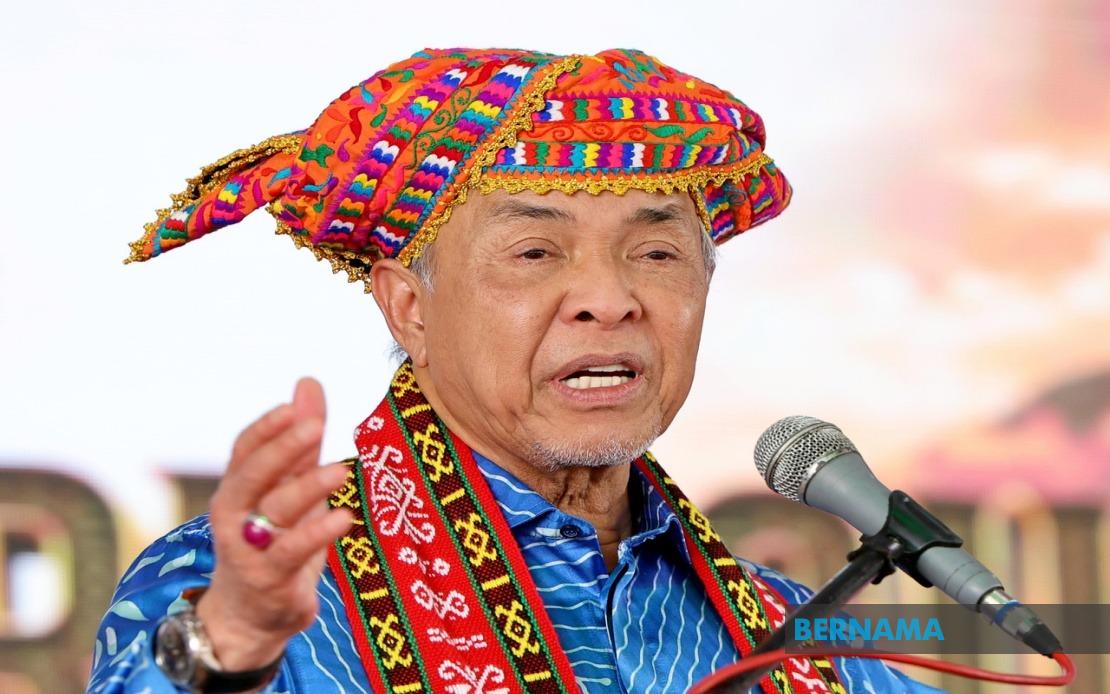
The federal government has committed RM4.06 billion to Sabah's Rural Water Supply programme, Deputy Prime Minister Datuk Seri Dr Ahmad Zahid Hamidi announced during the opening of the Rungus Cultural Festival in Matunggong. The substantial investment reflects a concerted push to address infrastructure deficits in the state's most isolated communities, where access to clean water remains a persistent challenge for thousands of families.
Ahmad Zahid, who holds the portfolio of Minister of Rural and Regional Development, framed the initiative as a fundamental obligation to ensure all Malaysians benefit from development gains regardless of geography. He emphasised that rural and outlying areas in Sabah face distinct challenges centred on water and electricity supply, issues demanding immediate and comprehensive intervention. The allocation signals the federal government's recognition that addressing these basic necessities is prerequisite to meaningful socioeconomic advancement in peripheral regions.
The Rural Water Supply projects, executed directly by the Sabah state government with federal funding support, represent a shift towards decentralised implementation while maintaining federal oversight. The Ministry of Rural and Regional Development will provide continuous technical assistance and monitoring to ensure projects remain on schedule and meet quality standards. This collaborative arrangement between federal and state authorities aims to combine the resources of Putrajaya with local knowledge and administrative capacity in Sabah.
The funding will be strategically directed towards the state's poorest districts, particularly Kudat, Kota Marudu, and Pitas, which rank among Malaysia's most economically disadvantaged areas. These constituencies have long struggled with inadequate infrastructure investment, creating a service gap between urban and rural populations. By prioritising these zones, the programme addresses not merely a technical deficiency but a matter of equity and social justice affecting vulnerable communities in East Malaysia.
Beyond water infrastructure, Ahmad Zahid outlined a broader government strategy to combat hardcore poverty and improve living standards in Sabah's rural hinterland. This encompasses complementary socioeconomic initiatives designed to elevate household incomes, particularly among families classified in the B40 bottom income bracket. The integrated approach recognises that sustainable development requires simultaneous investment in physical infrastructure and human capital development, ensuring communities gain both essential services and economic opportunities.
The allocation represents a significant federal commitment to East Malaysia, reflecting broader recognition that Sabah and Sarawak require substantial resources to bridge infrastructure deficits accumulated over decades. For Malaysian readers across the region, the announcement carries implications regarding resource distribution and the federal government's priorities in addressing regional imbalances. The initiative underscores how rural development remains a competitive political space, with Putrajaya seeking to demonstrate tangible progress in constituencies with historically weak service delivery.
Ahmad Zahid additionally pledged government support for upgrading Matunggong Sub-District to full district status, a proposal he indicated would be discussed with Chief Minister Datuk Seri Hajiji Noor and the Cabinet. Administrative elevation would enable the area to access dedicated development allocations from both federal and state treasuries, potentially unlocking additional resources beyond the current water supply programme. This administrative restructuring, though seemingly technical, carries practical significance for resource mobilisation and governance efficiency.
The ministry also directed agencies to commence repairs on the Matunggong Community Hall within three months, demonstrating commitment to tangible improvements in local amenities. While individually modest compared to the broader allocation, such projects signify government responsiveness to community infrastructure needs and local governance capacity. These smaller interventions often yield proportionally larger impact in remote areas where public facilities are limited.
For Southeast Asian context, Sabah's water supply challenges reflect broader infrastructure gaps across the region's rural zones. Many Southeast Asian nations struggle with similar disparities between urban and rural service delivery, making Malaysia's substantial federal investment noteworthy. The RM4.06 billion commitment, though directed specifically at Sabah, illustrates how middle-income countries can mobilise resources for regional equity, offering potential lessons for policymakers elsewhere addressing comparable development divides.
The initiative arrives amid intensifying competition for political favour in East Malaysia, particularly as federal and state governments navigate shared responsibility for development delivery. Ahmad Zahid's personal involvement and emphasis on ministerial oversight signal that rural development remains centrally important to the federal administration's political calculus. For Sabah voters, particularly in targeted constituencies, such announcements represent concrete evidence of federal engagement with local concerns, though implementation timelines and actual project outcomes will ultimately determine programme credibility.
The announcement also reflects Malaysia's broader development philosophy emphasising federal intervention in addressing regional disparities. Unlike some federal systems that privilege market mechanisms, Malaysia's model relies on substantial government allocation and direct implementation support to ensure peripheral regions receive adequate investment. This approach carries both advantages in terms of equity and potential limitations regarding efficiency and sustainability, questions that will emerge as these projects progress.

