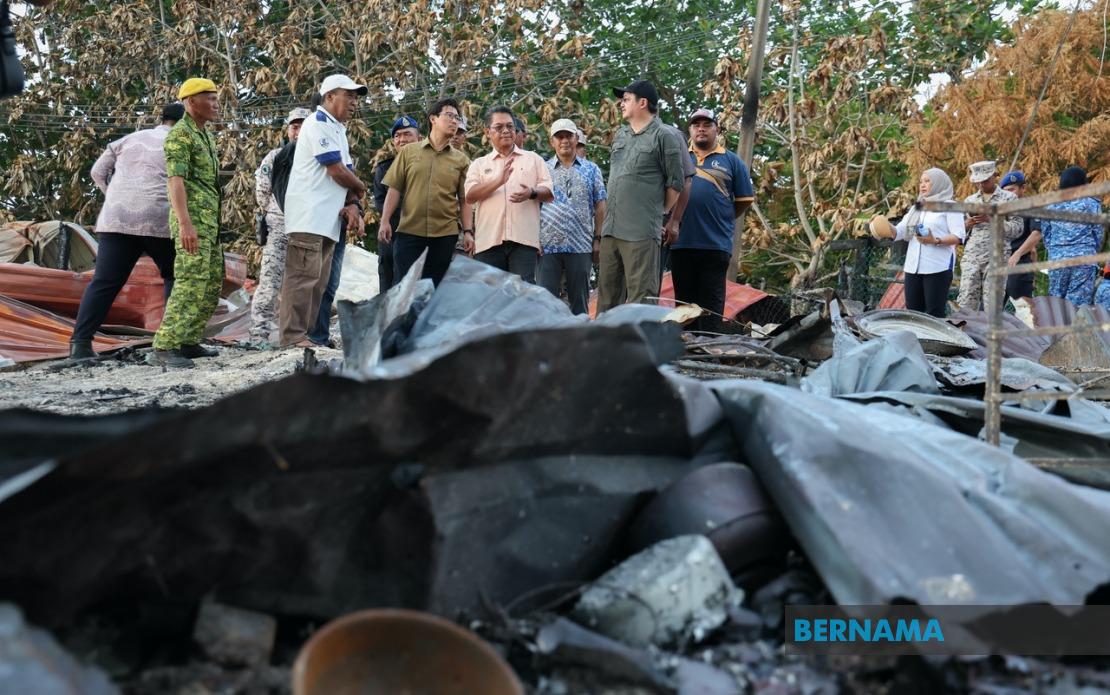
The Federal Government has swiftly moved to support residents of Pulau Nunuyan Laut in Sandakan following a devastating fire that swept through the island settlement on August 19, destroying 28 homes and displacing more than 100 people. Through the Prime Minister's Department (JPM), officials have already begun distributing initial aid to 29 heads of households affected by the disaster that struck the small community at approximately 3 am.
Datak Mustapha Sakmud, the Minister in the Prime Minister's Department overseeing Sabah and Sarawak affairs, emphasised the government's commitment to alleviating hardship among the victims. The Implementation Coordination Unit within the department has initiated a multi-faceted response addressing both immediate humanitarian needs and longer-term recovery objectives. Among the first interventions, wheelchairs have been provided to elderly residents requiring mobility assistance, reflecting consideration of vulnerable populations within the affected community.
The government's approach extends beyond simple cash transfers or material aid. Mustapha outlined a comprehensive assessment strategy, indicating that the Sandakan Municipal Council and multiple government agencies have been tasked with conducting detailed evaluations of each family's specific requirements. This systematic approach recognises that fire victims face diverse challenges ranging from shelter and food security to medical needs and psychological support following trauma.
Critical infrastructure damaged in the fire has become a priority focus for government intervention. The jetty serving Pulau Nunuyan Laut, which facilitates schoolchildren's daily commutes to and from classes, sustained damage that threatens educational continuity. Mustapha stressed that preventing disruption to students' learning schedules remains a paramount concern, signalling that infrastructure repair requests will be expedited through the Implementation Coordination Unit for swift resolution. This emphasis reflects broader government policy objectives regarding ensuring equitable access to education across Malaysia's more remote communities.
The Sandakan Municipal Council president, Datuk Walter Kenson, provided additional details regarding relocation planning for displaced residents. The Rural Development Department has assumed responsibility for identifying appropriate settlement sites that would offer residents greater security and improved living conditions compared to their previous circumstances. Government authorities are examining the possibility of utilising village reserve land designated for community development purposes, potentially streamlining the relocation process.
A significant complication affecting the resettlement efforts involves land tenure arrangements in the original settlement. Walter disclosed that the fire victims had been residing on private land comprising two separate plots or titles owned by different proprietors. These property relationships will require negotiation and coordination between government agencies and the landowners to facilitate either the victims' return to modified accommodations on the same sites or their orderly transition to alternative government-designated locations. Such arrangements are not uncommon in Sabah's coastal and island communities, where informal settlements sometimes develop on private land through long-standing but undocumented agreements.
Long-term planning for the affected community encompasses provision of essential services that would support sustainable habitation in relocated or rehabilitated areas. Authorities have committed to establishing reliable electricity connections, water supply infrastructure, and jetty facilities to ensure residents maintain adequate living standards and preserve connectivity to the broader Sandakan municipality. These commitments reflect recognition that island and rural communities require specific infrastructure investments to function effectively and that government intervention should address systemic vulnerabilities rather than merely responding to immediate crisis situations.
The Pulau Nunuyan Laut fire represents one of several significant disasters affecting Sabah's communities in recent years, underlining the region's vulnerability to natural hazards and infrastructure challenges. The coordinated response from federal and state authorities, combined with municipal-level implementation, demonstrates an integrated governance framework for disaster management. However, the incident also highlights underlying issues regarding informal settlements, land tenure security, and the need for preventive measures such as improved fire safety standards and construction regulations in densely populated island communities.
For residents of Pulau Nunuyan Laut, the coming weeks and months will prove crucial in determining whether government assistance translates into meaningful recovery and improvement of their living circumstances. The commitment to infrastructure development and systematic needs assessment suggests a serious intention to pursue comprehensive rehabilitation rather than temporary relief. Nevertheless, the success of relocation efforts will depend significantly on the willingness of landowners to cooperate with authorities and the ability of the Rural Development Department to identify sites offering genuine improvements over previous conditions.
The fire's impact extends beyond the immediate affected families to encompass broader questions about disaster preparedness, community resilience, and resource allocation in Sabah's smaller settlements. As the state continues development initiatives aimed at expanding economic opportunities and improving living standards in peripheral areas, integrating disaster risk reduction and emergency response capacity into planning frameworks becomes increasingly essential. The government's response to Pulau Nunuyan Laut will likely establish precedents influencing how future similar incidents are managed across the region.

