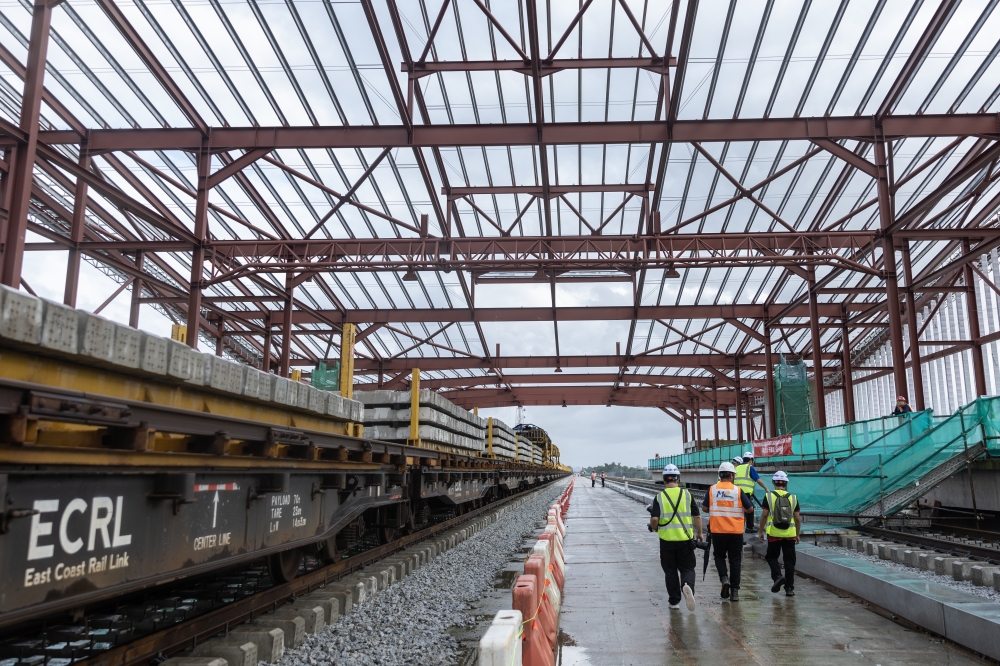
The federal government has endorsed a substantial RM207 million development pipeline spanning 46 separate projects across the Pasir Puteh parliamentary constituency, marking a comprehensive push to transform the Terengganu district into an economic hub leveraging the East Coast Rail Link infrastructure investment. This move signals Putrajaya's commitment to translating major national infrastructure into tangible regional prosperity, with planners viewing the ECRL's passage through the constituency as a catalyst for broader socioeconomic advancement.
Pasir Puteh, traditionally a rural agricultural community along Terengganu's western corridor, stands to benefit from strategic positioning near the ECRL network, which connects Port Klang in Selangor to Kota Bharu in Kelantan. The scale of the approved allocation reflects confidence that the rail line will fundamentally reshape logistics, commerce, and labour mobility throughout the East Coast region. Government agencies have identified the constituency as ripe for conversion into a mixed-use economic zone that combines light manufacturing, agribusiness processing, and residential expansion.
The project portfolio encompasses infrastructure upgrades spanning roads, water supply systems, and telecommunications networks essential for supporting industrial activity. Transportation enhancements form a critical component, as improved connectivity to the ECRL terminals will reduce distribution costs for businesses operating in the constituency. Officials anticipate that reduced freight times and enhanced modal flexibility will attract manufacturers seeking proximity to the East Coast market and regional export gateways.
Education and healthcare facilities also feature prominently in the development scheme, reflecting recognition that human capital development must accompany infrastructure provision. New schools and medical clinics will serve an expanding population as economic opportunities draw workers and families to the district. This integrated approach aims to prevent the common pattern where infrastructure investment fails to generate inclusive prosperity if social services lag behind.
The agricultural sector remains integral to Pasir Puteh's identity and economic base, prompting inclusion of projects targeting farm modernization and value-added processing. Government support for agribusiness infrastructure—such as cold chain facilities, cooperative warehousing, and quality certification systems—seeks to elevate smallholder farmers' market access and profitability. ECRL proximity enables more efficient distribution of perishable goods to urban centres and potentially to regional markets through the expanded transport network.
This initiative arrives as the Malaysian government positions itself to maximize returns on the RM110 billion ECRL investment, which has faced earlier criticism regarding cost escalation and implementation delays. Focusing development efforts on constituencies along the line's route demonstrates a strategic intent to generate economic momentum that justifies the infrastructure expenditure and addresses public concerns about value-for-money.
For Malaysian investors and businesses, the Pasir Puteh development portfolio presents emerging opportunities in real estate, logistics services, and supply chain operations. The government's signalling of commitment through substantial approved budgeting enhances investor confidence in the consistency of policy support and infrastructure completion timelines. Private sector engagement will prove critical to translating public investment into commercially viable enterprises.
Regionally, the Pasir Puteh projects contribute to broader East Coast economic diversification efforts, complementing similar initiatives in Kelantan and Pahang. Coordinated development across multiple ECRL-adjacent constituencies could eventually generate a continuous commercial corridor stretching from Selangor to Kelantan, fundamentally altering the geography of economic opportunity in peninsular Malaysia.
Implementation challenges remain considerable, requiring coordination across federal, state, and local government levels alongside private contractors and community stakeholders. The Terengganu state government's capacity and commitment to executing complementary development initiatives will significantly influence project success. Delays in any major component could cascade throughout the investment timeline.
Successful execution would position Pasir Puteh as a model for ECRL-catalyzed regional development, demonstrating how national infrastructure can stimulate constituency-level growth. Conversely, implementation shortfalls could reinforce perceptions that federal development promises exceed delivery capacity. The constituency thus becomes a test case for whether Malaysian government can credibly translate infrastructure investment into broadly distributed economic advancement.
The RM207 million commitment also reflects ongoing efforts to build political support in Terengganu, where electoral dynamics remain competitive. Visible infrastructure and economic improvements enhance government legitimacy among voters, though sustainability of development gains depends ultimately on market forces and private investment responsiveness rather than government budgets alone.
For constituencies throughout the East Coast, the Pasir Puteh approval sets a precedent for infrastructure-linked development planning, potentially prompting similar demands from other areas. How government manages expectations and prioritizes among competing regional claims will shape the credibility of broader development commitments beyond the ECRL corridor.

