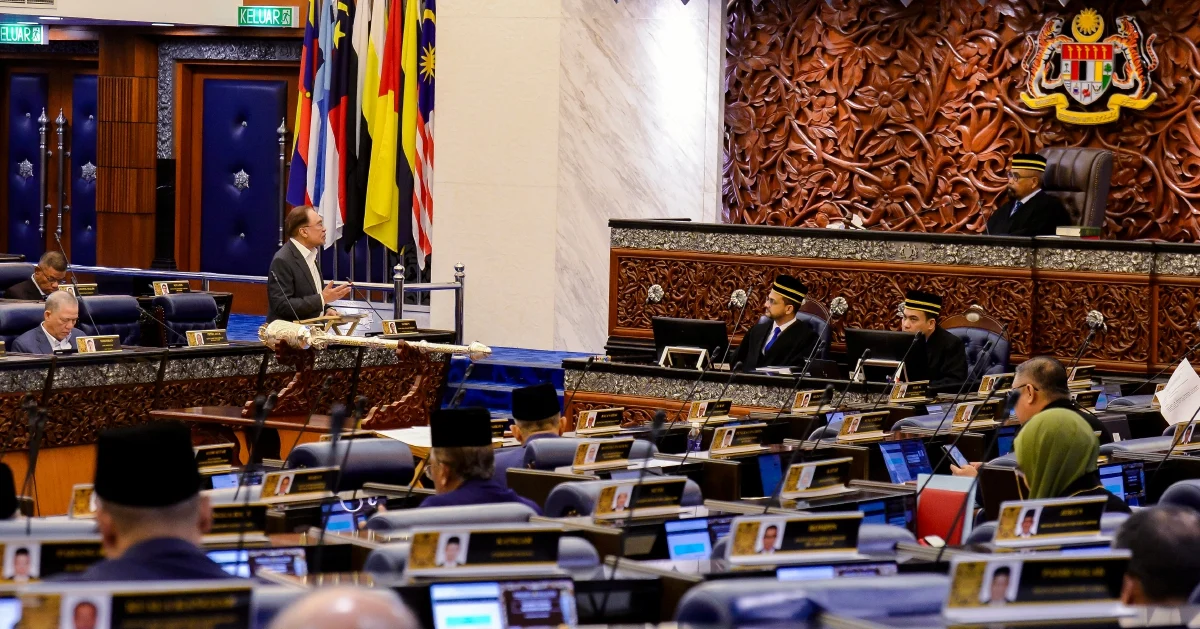
Prime Minister Datuk Seri Anwar Ibrahim has clarified that the federal government will not automatically shoulder financial burdens created by autonomous decisions made at the state level, signalling a more defined boundary between federal and state fiscal responsibilities in Malaysia's evolving governance structure.
The statement reflects mounting tensions over resource allocation and financial responsibility between Kuala Lumpur and Malaysia's 13 state governments, particularly as states increasingly pursue independent development agendas and infrastructure projects. This issue has become increasingly acute as the country emerges from pandemic-related fiscal pressures and states seek to recover economically through ambitious spending initiatives.
Anwar's position underscores a fundamental challenge facing Malaysia's federal system: determining which tier of government bears responsibility for unforeseen costs when state-level decisions create financial implications that ripple upward. Whether driven by policy missteps, inflation impacts, or genuine budgetary miscalculation, these costs have historically defaulted to federal resolution, straining Putrajaya's own fiscal constraints.
The Prime Minister's remarks carry particular weight given his administration's focus on fiscal consolidation and reducing Malaysia's overall debt burden, which stands at concerning levels relative to GDP. Any additional unbudgeted expenditure at federal level directly undermines these macroeconomic objectives. By establishing clearer cost accountability, Anwar signals that state governments must exercise greater discipline in financial planning and assume ownership of their budgetary commitments.
This stance also addresses a structural problem within Malaysia's federal system: states sometimes make decisions without fully costing their implications or securing adequate funding beforehand, assuming federal bailouts are inevitable. Such moral hazard encourages poor financial governance at state level. By refusing automatic assumption of state costs, Anwar creates incentive structures that encourage more prudent fiscal management.
For Malaysian readers, the implications extend beyond abstract governance theory. State governments provide essential services—public healthcare, education infrastructure, local road maintenance, and social welfare—that citizens depend upon daily. If states cannot count on federal bailouts for their spending decisions, they must either improve internal revenue generation, prioritise more carefully among competing needs, or seek alternative funding sources such as public-private partnerships.
The statement also reflects the political complexity of Malaysian federalism, where states range from wealthy oil-producing jurisdictions like Sarawak and Sabah to less developed states dependent on federal transfers. Some state governments control significant revenue sources; others depend almost entirely on federal allocations. This heterogeneity means that applying uniform rules about cost responsibility carries different implications across the country.
Regionally, Malaysia's approach to state-federal fiscal relations carries lessons for neighbouring federations grappling with similar tensions. Indonesia's decentralisation programme, for instance, has created ongoing disputes between Jakarta and regional governments over financial responsibility. Thailand's centralised system avoids some of these conflicts but sacrifices local accountability. Malaysia's emerging clarification could offer instructive models for other Southeast Asian nations refining their own governance structures.
Anwar's position likely stems from specific recent incidents where state spending decisions created unexpected federal liabilities. Without knowing the precise catalysts, observers can reasonably infer that at least one state government has proposed or undertaken commitments that would generate ongoing costs requiring federal support. Such scenarios have become more frequent as states assert greater autonomy in economic policymaking.
Implementing this principle requires clarity about which decisions constitute state-level responsibilities versus those where federal government partnership is genuinely expected and budgeted. Infrastructure projects affecting interstate commerce, universities serving national needs, and programmes addressing major demographic shifts may legitimately require federal participation. Routine operational costs and optional developmental initiatives should remain state responsibility.
The Prime Minister's statement also carries implications for Malaysia's credit ratings and international investor perception. Global rating agencies scrutinise federal governments' exposure to subnational liabilities. By signalling that Putrajaya will not automatically absorb state costs, Anwar demonstrates fiscal discipline that could positively influence Malaysia's sovereign ratings and borrowing costs—matters affecting ordinary Malaysians through interest rates on mortgages and business loans.
Moving forward, expect the government to articulate clearer protocols distinguishing between federal and state financial responsibilities, potentially through revisions to intergovernmental transfer mechanisms or explicit cost-sharing frameworks. States, meanwhile, must invest in stronger financial management capacity to avoid creating crises that force federal intervention by circumstances rather than policy choice.

