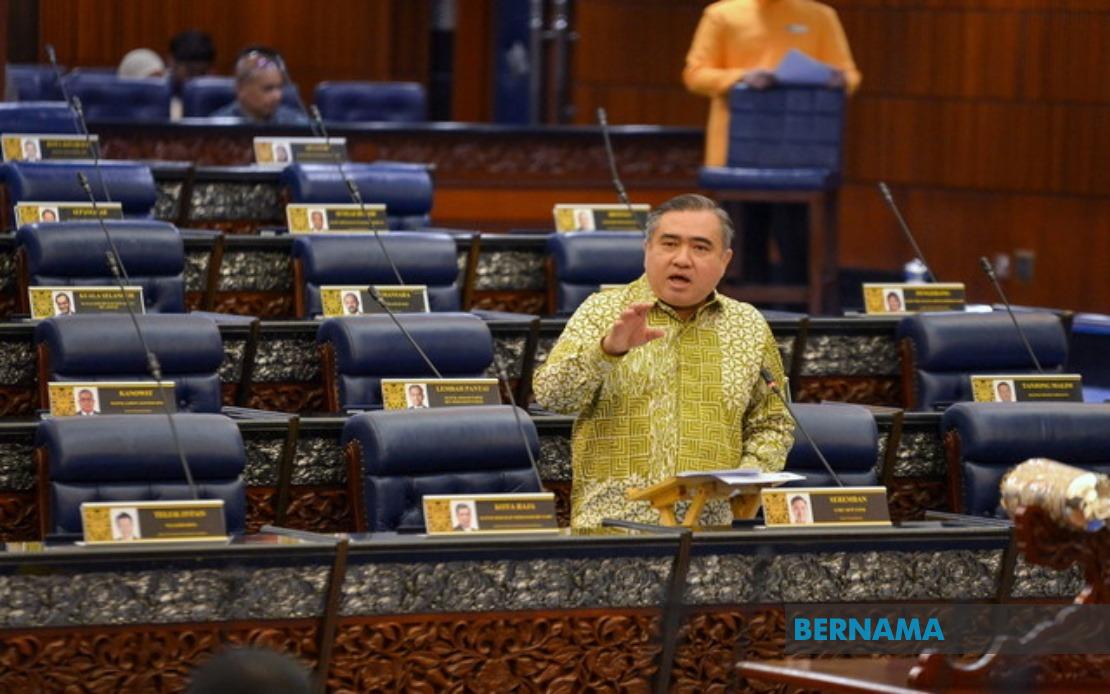
Transport Minister Anthony Loke has assured Parliament that the Federal Government will inject funding into Johor's Elevated Autonomous Rapid Transit (E-ART) project, marking a significant shift in the infrastructure's financing approach and reflecting concerns about commercial viability in a competitive transport market. Speaking during question-and-answer proceedings in the Dewan Rakyat, Loke responded to queries about the massive rapid transit initiative that has attracted considerable attention as Johor seeks to modernise its congestion-prone urban transport network ahead of major connectivity developments.
The confirmation comes after initial assessments revealed that the E-ART project—conceived as a transformative piece of infrastructure for the state—cannot sustain itself purely through private sector involvement without government backing. This finding aligns with broader regional trends where ambitious public transport systems across Southeast Asia increasingly require mixed-financing models combining private investment with state support. Loke elaborated that while a specially appointed consortium will initially bear project financing costs, the financial realities demand federal intervention to ensure the project's completion and long-term operational success.
The specific mechanisms governing how the Federal Government will finance the initiative remain under negotiation, with details concerning the actual financial commitment, repayment schedules across the concession period, and broader terms still being finalised between stakeholders. These discussions will eventually be presented to Cabinet for formal consideration and approval before any Concession Agreement is executed. This deliberative process, whilst potentially extending timelines, reflects the complexity inherent in structuring public-private partnerships of this magnitude, where balancing fiscal responsibility against infrastructure ambitions requires careful legal and financial architecture.
The E-ART project carries particular strategic importance given its relationship to other major transport developments in southern Johor. The Johor Bahru-Singapore Rapid Transit System (RTS) Link is scheduled to commence operations in January 2027, providing direct rail connectivity to Singapore. The E-ART project is expected to take four years from the issuance of its Letter of Acceptance to complete, meaning the two systems will overlap during critical operational periods. Rather than viewing this as a setback, transport planners have positioned the E-ART as a complementary network that will help distribute passenger flows and manage congestion patterns across the broader metropolitan region.
To address anticipated traffic challenges during the transition period before E-ART becomes operational, Loke outlined a comprehensive traffic dispersal strategy developed jointly by the Transport Ministry and Johor state government. This plan emphasises strengthening existing public transport infrastructure rather than relying solely on the forthcoming major projects. The expansion of BAS.MY services to 28 routes utilising 254 buses—including a growing fleet of environmentally conscious electric vehicles—demonstrates commitment to immediate, practical relief measures that complement longer-term infrastructure investments and cater to diverse commuter needs across the state.
Additional capacity enhancements are being implemented through the Stage Bus Service Transformation (SBST) 2.0 programme, which will dedicate 157 buses specifically to priority routes connecting Johor Bahru Sentral and Bukit Chagar. These enhanced services are scheduled to launch in early 2027, strategically timed to coincide with the RTS Link's commencement and provide alternative routing options during the E-ART construction phase. Meanwhile, efforts to procure 12 new KTM Komuter Southern train sets remain pending formal approval, though interim measures have already been deployed in the form of the Shuttle Selatan service launched on June 16, which connects Kulai, Kempas, and Johor Bahru with daily capacity for 14 trips.
The financing confirmation also touches on a broader policy question concerning fare structures across public transport projects. When questioned about implementing fare ceilings, Loke acknowledged that government price controls necessarily reduce project financial competitiveness and necessitate continuing state subsidies. This creates a policy triangle familiar to transport planners: affordable fares that serve the public interest typically cannot be sustained through commercial operations alone, forcing governments to choose between operational deficits or fare increases that burden lower-income commuters. The Federal Government's stated position prioritises keeping public transport accessible at the lowest feasible cost, accepting the budgetary implications this entails.
For Malaysian transport stakeholders and regional observers, the E-ART funding commitment signals confidence in Johor's long-term development trajectory and recognition of the state's critical role in the broader Malaysia-Singapore economic corridor. The decision to provide federal backing also reflects evolving thinking about how middle-income countries structure mobility investments, moving away from purely private-led models toward hybrid approaches that distribute risk while maintaining government oversight. This approach mirrors strategies adopted by other Southeast Asian economies managing rapid urbanisation and cross-border integration pressures.
The E-ART project's progression will carry implications extending beyond Johor's immediate transport landscape. As one of the region's largest infrastructure undertakings, its implementation trajectory will influence investor confidence in subsequent transport megaprojects across Malaysia and potentially influence how other Southeast Asian nations calibrate public-private partnership frameworks. The willingness to provide federal funding, whilst maintaining consortium participation, suggests policymakers believe that shared investment models create better alignment of incentives and accountability than purely government-operated systems, an important precedent for future infrastructure financing discussions.
Looking ahead, successful delivery of the E-ART project within its four-year timeframe, coordinated effectively with RTS Link operations and complementary bus and rail services, will demonstrate whether Malaysia can execute complex transport solutions matching the scale and sophistication of comparable regional systems. The transport ecosystem taking shape in southern Johor will ultimately serve as a testbed for integrated mobility approaches that other Malaysian states may seek to replicate, making the federal funding commitment a decision with implications extending well beyond Johor's administrative boundaries and timeframe.

