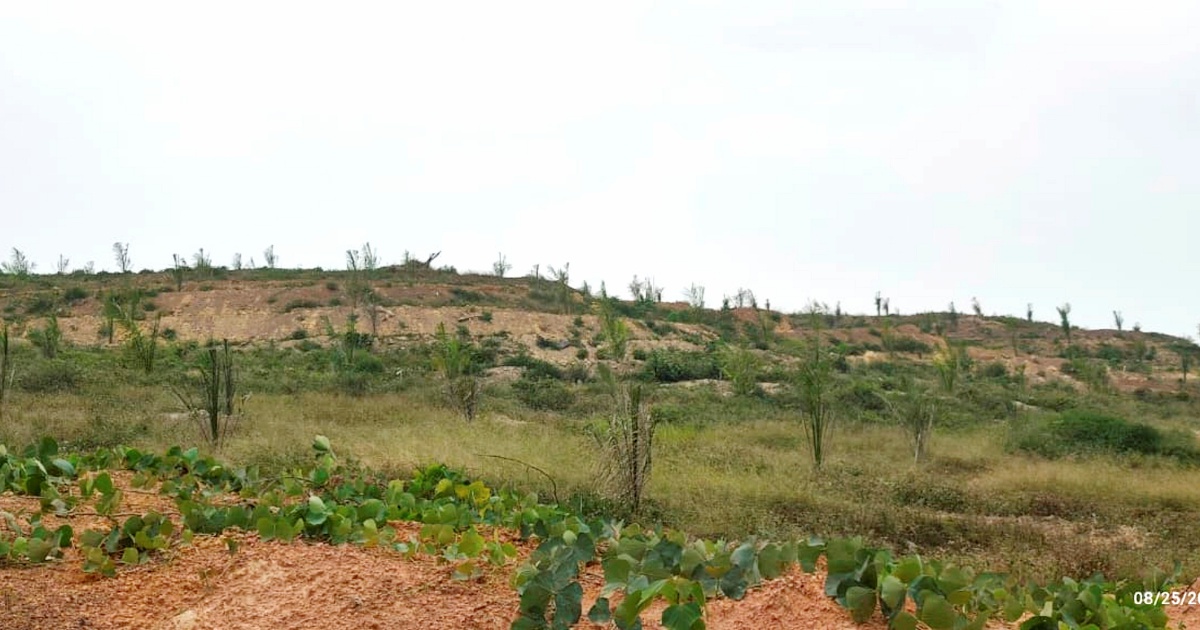
Settlers in the Jempol-based Felda Palong 7 scheme have escalated grievances over inferior oil palm seedlings by filing a formal complaint with the Malaysian Anti-Corruption Commission, bringing attention to a critical agricultural supply issue that extends beyond simple quality assurance into potential governance failures within Malaysia's plantation sector.
The complaint specifically highlights problems with seedling uniformity and overall quality, matters that carry significant implications for the Federal Land Development Authority's operational credibility and the economic viability of settlers who depend on consistent, productive planting materials. When oil palm seedlings lack uniformity—meaning they vary substantially in size, vigour, and developmental stage—farms experience uneven maturation cycles, fragmented harvesting periods, and ultimately diminished yield reliability across plantation plots.
This issue strikes at a fundamental tension within Malaysian agriculture: while the country remains a global leader in oil palm production, the supply chains supporting smallholder and scheme-based farmers sometimes struggle to meet international best-practice standards. Felda settlements represent a critical component of Malaysia's rural development framework, providing structured farming opportunities to thousands of participating families across peninsular and East Malaysian territories. Any degradation in input quality—whether seeds, fertilisers, or technical support—directly threatens the income security these families depend upon.
The decision to approach the anti-corruption authority suggests settlers view this as more than a simple vendor performance problem. By engaging MACC rather than pursuing conventional agricultural channels, they indicate suspicions that irregularities in procurement, quality certification, or supply chain oversight may have occurred. Such concerns warrant institutional scrutiny, particularly given MACC's expanding mandate to investigate economic waste and governance lapses in state-linked agencies.
Oil palm seedling quality controls represent a surprisingly complex intersection of horticultural science, supply logistics, and institutional accountability. Reputable nurseries maintain rigorous protocols around seed sourcing, germination conditions, pest management, and developmental monitoring before seedlings reach farmers. Non-uniformity often reflects shortcuts in these processes—inconsistent watering, inadequate pest control, mixed genetic sources, or rushed growing schedules designed to meet delivery deadlines rather than quality benchmarks.
For Felda Palong 7 settlers, the practical consequences are substantial. Farmers receiving weak or inconsistent seedlings face immediate cost pressures as establishment rates decline and supplementary planting becomes necessary. More insidiously, even modest variations in seedling quality cascade through the entire plantation lifecycle, creating productivity bottlenecks that can suppress yields for years. In an industry where margins compress continuously due to global commodity price volatility, input quality becomes a crucial controllable variable that directly influences farm profitability.
The Felda context adds particular weight to these complaints. As a government-linked agency managing approximately 660,000 hectares across multiple schemes, Felda's operational choices significantly influence smallholder prosperity throughout rural Malaysia. Settlers typically participate within defined frameworks emphasising collective efficiency and prescribed practices. When centrally-sourced inputs like seedlings fall below standard, farmers lack the independent purchasing flexibility that commercial operators might exercise—they work within institutional supply systems designed partly for administrative convenience and partly for quality assurance.
This complaint also reflects a broader pattern of plantation-sector quality concerns documented across Southeast Asia. Indonesia and Papua New Guinea, major competing producers, have themselves grappled with seedling supply disruptions and quality controversies that undermined farmer competitiveness. Malaysia's response to such challenges often determines whether domestic smallholders maintain productivity advantages or gradually lose market share to competitors managing supply chains more systematically.
The MACC investigation will likely examine procurement documentation, nursery certification records, quality inspection protocols, and communication patterns between Felda headquarters, regional management, and supplier entities. Investigators may also interview settlers regarding when quality issues first emerged, which seedling batches proved problematic, and whether adequate remediation occurred. Such investigations establish accountability while generating institutional learning that can prevent recurrence.
For Malaysian agriculture more broadly, this complaint underscores the importance of maintaining rigorous supply-chain governance within scheme-based farming systems. Productivity and farmer welfare ultimately depend on every input meeting established standards consistently. When seedlings arrive non-uniform and degraded, entire seasons' worth of settler labour and investment prove compromised, undermining both individual family incomes and Malaysia's aggregate production capacity.
The Felda Palong 7 complaint thus represents more than a localised quality-control failure. It highlights institutional mechanisms through which smallholder grievances can reach senior oversight authorities, ensuring that governance standards protecting farmer interests receive serious attention. As Malaysia seeks to strengthen agricultural competitiveness amid demographic shifts, climate pressures, and global competition, input quality and supply integrity remain foundational prerequisites that merit the sustained focus both settlers and investigating authorities are now directing toward this situation.

