The biennial Islamic heritage festival originating from Selangor is undergoing a significant transformation, graduating from state-level status to become a federally-backed national initiative. Festival Turath Islami Malaysia (FTIM) 2026 represents an institutional endorsement of the intellectual and spiritual traditions that have anchored Islamic scholarship in the Malay-Muslim world, with the escalation reflecting Malaysia's commitment to preserving and promoting classical Islamic thought among contemporary audiences.
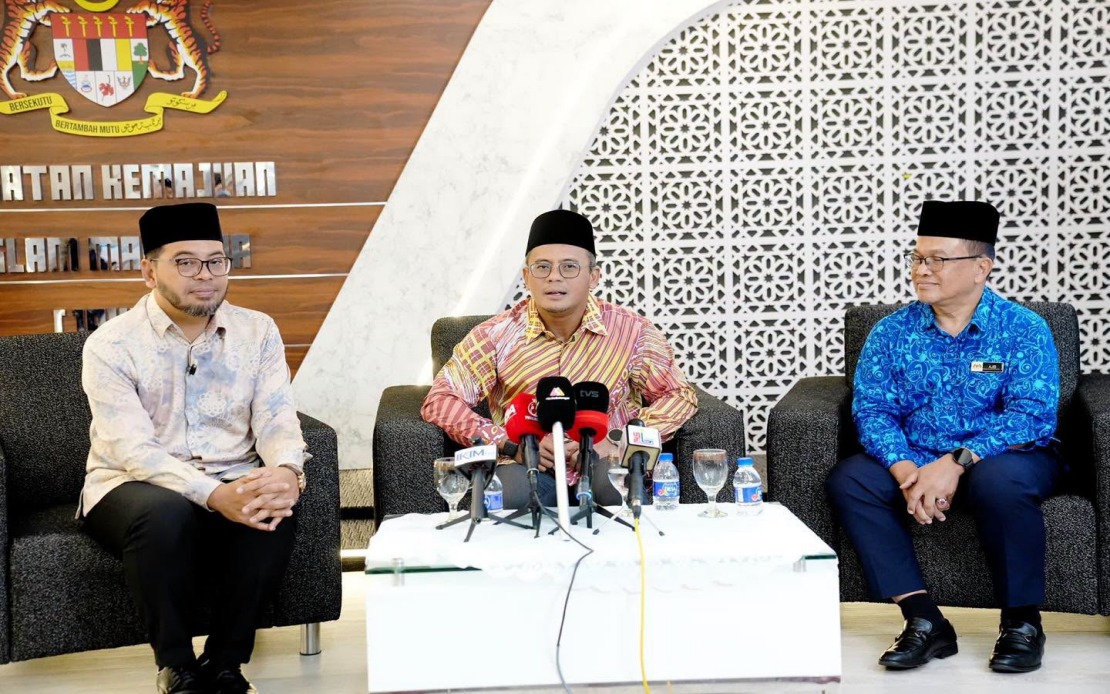
Selangor Menteri Besar Datuk Seri Amirudin Shari announced the expansion during a media briefing in Putrajaya, unveiling plans for an eight-day programme commencing September 13. The relocation from Selangor's state mosque to the iconic Putra Mosque in Putrajaya symbolises the shift from regional to national governance, underscoring federal involvement through the Prime Minister's Department (Religious Affairs). Minister Dr Zulkifli Hasan's presence at the announcement reinforced the government's prioritisation of Islamic heritage as a foundation for societal development and intellectual advancement.
This iteration will anchor its scholarly discourse on Al-Hikam al-Ata'iyyah, a seminal classical Sufi text authored by the 13th-century scholar Ibn Ata-illah As-Sakandari. The work, celebrated across Islamic intellectual circles and particularly influential throughout the Malay World, expounds upon themes of spiritual sincerity, reliance upon divine providence, and the intricate relationship between believers and their creator. Its selection as the festival's thematic centrepiece reflects deliberate curation designed to engage contemporary Muslims with timeless philosophical and spiritual guidance embedded in scholarly tradition.
The festival builds upon three years of institutional continuity, having debuted in 2023 with examinations of Ihya' 'Ulumuddin by Imam Al-Ghazali, subsequently progressing to Al-Arba'in al-Nawawiyah by Imam al-Nawawi and Tafsir al-Jalalain by Imam Jalaluddin al-Suyuti. This pedagogical progression demonstrates a systematic approach to reviving classical Islamic scholarship, each year introducing audiences to foundational texts that have shaped Islamic jurisprudence, ethics, and interpretation across centuries. The scaling up to national status validates this curriculum-building methodology and signals institutional confidence in the model's resonance with Malaysian Muslim constituencies.
FTIM 2026 will convene an impressive scholarly contingent, drawing 23 academics and religious specialists from domestic and international institutions. The assembly includes internationally-recognised figures such as Sheikh Dr Ali Jum'ah alongside Malaysian authorities including Selangor Mufti Datuk Setia Dr Haji Anhar Haji Opir, Prof Dr Sayyid Idris al-Fasi al-Fihri, and lecturers Ustaz Dr Adi Hidayat and Ustaz Wadi Annuar. Over 42 scholarly sessions, these intellectuals will deliver lectures, conduct seminars, and facilitate discussions designed to render classical texts intelligible and applicable to contemporary Muslim audiences navigating modern complexity.
The festival's programming encompasses multiple devotional and educational strands reflecting diverse approaches to Islamic learning. Morning Qur'anic lectures, recitations of the classical devotional text Dalail al-Khairat, and serialised readings of Al-Hikam over consecutive evenings create sustained engagement with source material. Inaugural addresses, ceremonial recitations of traditional poetry, and a dedicated Islamic book marketplace position scholarship within broader cultural contexts, acknowledging that heritage transmission operates through multiple registers—intellectual, emotional, and commercial.
A particularly significant inaugural element, the National Muzakarah Ulama Turath, will gather Islamic scholars from across Malaysia in structured consultation aimed at strengthening intellectual cooperation and formulating responses to contemporary Muslim challenges. This convocation model, rooted in Islamic consultative traditions, modernises age-old methodologies of scholarly consensus-building. By deliberately addressing practical difficulties confronting Malaysian Muslims today whilst grounding discussions in classical textual authority, the muzakarah bridges historical scholarship and present necessity, potentially generating policy-relevant insights for religious governance and community engagement.
The federal government's investment in scaling this initiative reflects broader strategic calculations regarding Islam's role in nation-building and social cohesion. By positioning classical Islamic scholarship as foundational to human development and knowledge-society formation, policymakers articulate a vision wherein religious intellectual traditions contribute substantively to national progress. This framing distinguishes heritage preservation from nostalgic antiquarianism, instead presenting classical Islamic thought as offering enduring wisdom applicable across contemporary domains including ethics, governance, and social relationships.
The relocation to Putrajaya carries additional symbolic weight within Malaysian politics. The capital city, engineered as a purpose-built administrative centre, increasingly hosts federal cultural and religious initiatives, reinforcing its positioning as the locus of national-level activity. The Putra Mosque, an architecturally distinctive federal monument, becomes a material symbol of state endorsement and resource allocation toward religious-intellectual pursuits. This centralisation may enhance accessibility for participants across Malaysian states whilst establishing precedent for federally-coordinated heritage programming.
For Malaysian Muslim intellectuals and seekers of classical Islamic learning, the expansion offers unprecedented opportunity to engage with internationally-calibre scholarship within domestic contexts, eliminating barriers of geography, cost, and language that historically restricted access to advanced Islamic studies. The programme's documentation and dissemination mechanisms—through official websites and media coverage—extend intellectual reach beyond those attending physically, democratising access to scholarly discourse previously confined to madrasas and specialised circles.
The festival also reflects Malaysia's softer cultural diplomacy within the Islamic world. By attracting international scholars and creating platforms for transnational intellectual exchange, Malaysia positions itself as a custodian and interpreter of Islamic classical traditions for contemporary audiences. This enhances Malaysia's reputation within global Islamic intellectual networks and differentiates the nation within Southeast Asian contexts where alternative approaches to Islam-state relations prevail.
For the Malaysian Islamic establishment, FTIM 2026 signals institutional confidence in heritage-centred pedagogy as counterweight to alternative Islamic narratives potentially perceived as destabilising or unorthodox. By investing resources and prestige into classical scholarship, authorities affirm particular intellectual lineages and methodological approaches, implicitly legitimising certain Islamic understandings whilst marginalising others. This represents soft power deployment through cultural validation rather than coercive enforcement.

