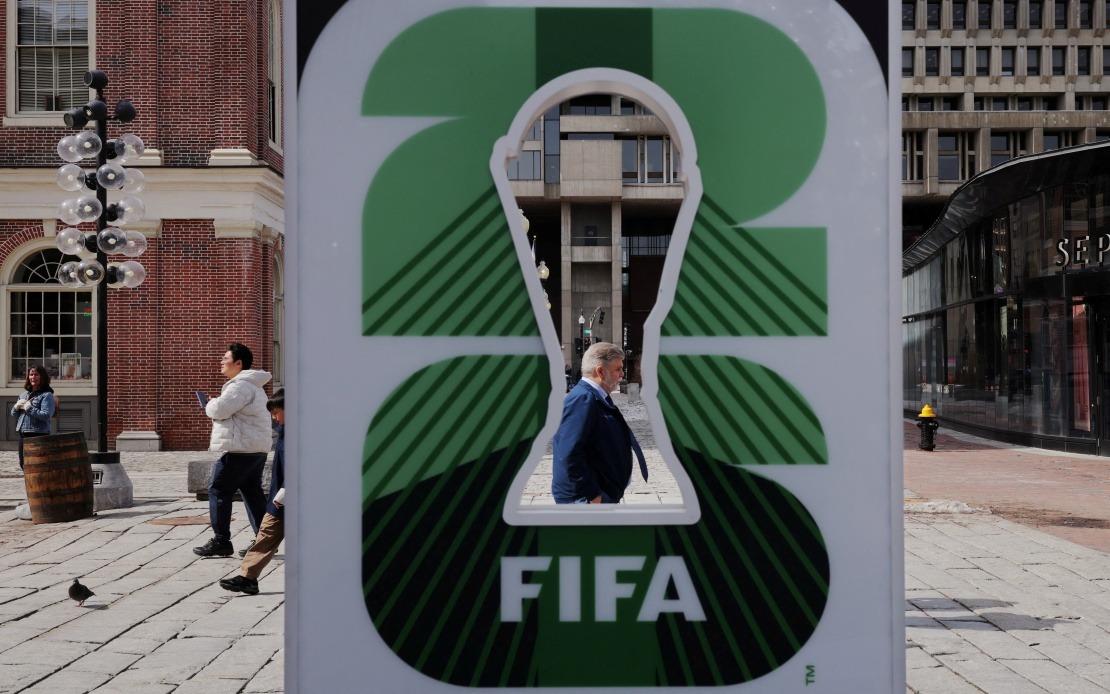
FIFA President Gianni Infantino has decided to abandon a controversial initiative to sell equity in the World Cup, marking a significant reversal for the international football governing body just days after publicly announcing the scheme. The decision came following mounting resistance from various stakeholders within football's global ecosystem, with Infantino acknowledging that the proposal had created rifts incompatible with FIFA's stated objectives of unity and progress.
Infantino disclosed his change of direction in remarks to Sky News, characterising the plan as increasingly divisive despite whatever level of backing it might have retained. He explained that after carefully weighing the perspectives of interested parties, it had become apparent that the initiative ran counter to FIFA's fundamental purpose. The FIFA chief reiterated that the organisation's core mission remains centred on fostering global football development and mutual cooperation across the sport's diverse constituencies.
The now-shelved proposal would have involved establishing a new US$20 billion subsidiary entity known as FIFA Forward Enterprise, designed to oversee operations of the World Cup alongside other major competitions. The privatisation component would have permitted outside investors to acquire more than 20 percent of this subsidiary, a move intended to unlock capital for infrastructure and tournament expansion. FIFA had formally unveiled this corporate restructuring plan on Tuesday, positioning it as a mechanism to generate revenue and modernise the competition's financial architecture.
Infantino signalled his intention to reconvene with various stakeholders to chart a revised path forward, emphasising FIFA's commitment to amplifying football's reach, particularly within nations that would benefit most substantially from organisational support and investment. This framing suggests the federation remains committed to its development agenda whilst seeking mechanisms that command broader consensus within the football community.
The reversal represents a notable setback for Infantino's administration, which had presented the privatisation scheme as a cornerstone of FIFA's modernisation strategy. The speed of the pivot—announced merely days after the initial proposal—underscores the intensity of opposition that materialised across football's governance structures, member associations, and potentially among player representatives and other constituencies whose voices carry weight in FIFA's decision-making architecture.
Contextually, this retreat occurs amid Infantino's broader effort to strengthen FIFA's relationship with the United States, a paramount consideration given America's role as a major football market and the upcoming 2026 World Cup co-hosted by the United States, Mexico, and Canada. During the recently completed World Cup, Infantino cultivated visible ties with Donald Trump, even presenting the US president with FIFA's inaugural Peace Prize in December, suggesting that maintaining positive relations with American political leadership features prominently in his strategic calculations.
The decision also reflects evolving sensitivities around private capital's role in football governance. Proposals to introduce private equity into previously public or non-profit structures have faced resistance across multiple sports in recent years, as stakeholders worry about conflicts of interest, commercialisation, and dilution of the sport's regulatory autonomy. Football federations, national associations, and fan groups have become increasingly vocal about maintaining independent governance structures, making Infantino's retreat a acknowledgment of these political realities within global football.
For Southeast Asian football bodies and the region's growing engagement with FIFA's development programmes, this episode illuminates the tensions between financial innovation and institutional legitimacy. Malaysia and other nations in the region benefit from FIFA Forward programmes, which direct development funding toward grassroots expansion and infrastructure. The scrapped privatisation plan, had it succeeded, would theoretically have expanded such resources, but the governance concerns it raised evidently outweighed projected financial benefits in Infantino's calculus.
The incident also signals that despite FIFA's president holding considerable executive authority, the organisation remains constrained by consensus-building requirements when pursuing transformative restructuring. This dynamic may influence how FIFA approaches future capital-raising or structural reform initiatives, suggesting that proposals involving equity dilution or external stakeholder influence in governance require substantially broader buy-in than Infantino anticipated.

