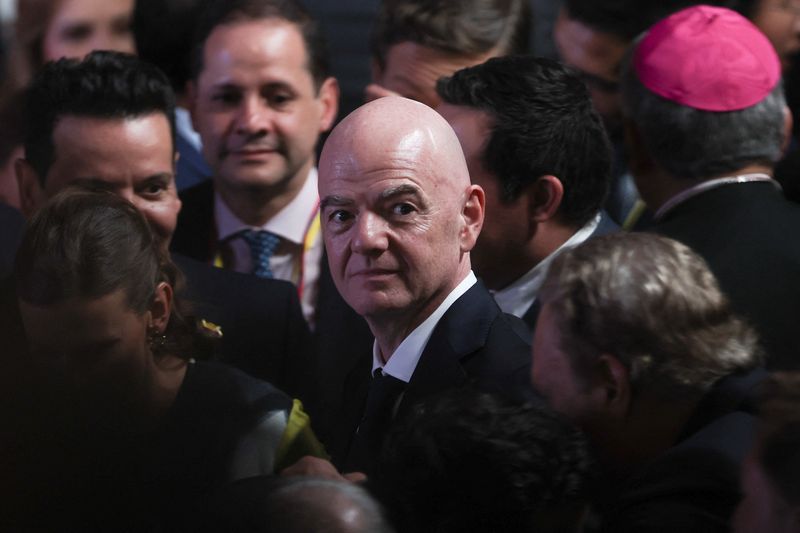
FIFA has thrown its weight behind President Gianni Infantino in an increasingly fractious power struggle, issuing a forceful statement on Saturday that cautioned against what it termed a "concerted and ongoing effort" to destabilise his leadership. The world football body insisted that any challenge to Infantino's position must adhere strictly to its established statutes and democratic procedures, signalling determination to protect its president from what officials perceive as orchestrated attacks.
The dramatic statement emerged as the international football community remains deeply divided following the spectacular collapse of Infantino's ambitious proposal to generate approximately $4.2 billion by selling commercial rights to the World Cup and other major tournaments. What was intended as a transformative financial restructuring instead ignited a firestorm of opposition, exposing fault lines within FIFA's fractious membership and triggering calls for the Swiss executive's resignation from multiple quarters.
Criticism has emanated from powerful quarters including UEFA, the European football confederation, national football associations across the continent, and senior FIFA officials who questioned both the proposal's merits and Infantino's judgement in pursuing it without adequate consultation. The backlash forced FIFA to convene an emergency leadership meeting in Morocco this week, where officials sought to contain the damage through a carefully choreographed show of solidarity. At that crisis summit, FIFA's leadership formally reaffirmed its backing for Infantino, attempting to project an image of institutional unity despite evident internal turbulence.
Yet FIFA's statement conspicuously refrained from identifying which parties it accused of orchestrating efforts to undermine the president, nor did it specify which particular reports or allegations triggered its defensive response. This opacity hints at the murky nature of the dispute roiling world football, where accusations and counter-accusations circulate through multiple channels without clear attribution or acknowledgement.
The warning followed investigative reporting by The Daily Telegraph concerning payments UEFA allegedly made to a former employee during Infantino's tenure as the European body's general secretary. Infantino has categorically denied these allegations, and FIFA has dismissed them as entirely baseless, yet the story has continued circulating and damaging his credibility among sceptical observers.
FIFA's statement deployed notably sharp language when addressing what it characterised as the campaign against Infantino, declaring that those unable to achieve their objectives through FIFA's recognised democratic channels should not resort to "allegation, insinuation or misinformation" in pursuing their agenda. The organisation criticised recent media coverage as containing "unsubstantiated assertions and demonstrably false claims" about FIFA and its president, vowing to contest inaccurate or misleading reports with vigorous legal and public relations countermeasures.
The escalating confrontation threatens to overshadow Infantino's pursuit of a fourth consecutive term at the FIFA Congress scheduled for Morocco in March. So far, no credible challenger has materialised to contest him, though the accumulating pressure suggests potential rivals may eventually emerge to test his support among the confederation.
Europe presents the stiffest opposition to Infantino's continued leadership. UEFA has formally declared it lacks confidence in the president, while Lise Klaveness, president of the Norwegian Football Federation, explicitly called for his resignation Friday, arguing that he has forfeited the institutional credibility necessary to lead FIFA. Such public denunciations from historically influential football figures represent a significant erosion of Infantino's standing in the world's most developed footballing continent.
However, Infantino's position remains substantially stronger across other regions. The Confederation of African Football unanimously backed his leadership this week, reflecting the substantial support he enjoys among African member associations who have consistently prioritised FIFA's continental development initiatives. Similarly, South America's CONMEBOL confederation rejected any attempt to unseat Infantino except through a full vote of FIFA's membership, effectively defending him from regional power plays.
Mexico's football federation provided additional backing for Infantino despite regional tensions, with the FMF pledging that it would "neither recognise nor approve any process" initiated outside FIFA's official institutional framework. This statement underscores a crucial dynamic shaping the crisis: although many powerful confederations harbour reservations about Infantino, they resist any effort to circumvent formal procedures, suggesting fundamental respect for institutional order despite personal or professional disagreements.
The crisis illuminates persistent tensions within FIFA's global structure between wealthy European confederations seeking greater accountability and influence, and developing football associations in Africa, Asia and Latin America who view Infantino's presidency as beneficial to their interests and competitive standing. These fault lines will likely determine whether Infantino successfully secures another term or faces unexpected competition at the March Congress.

