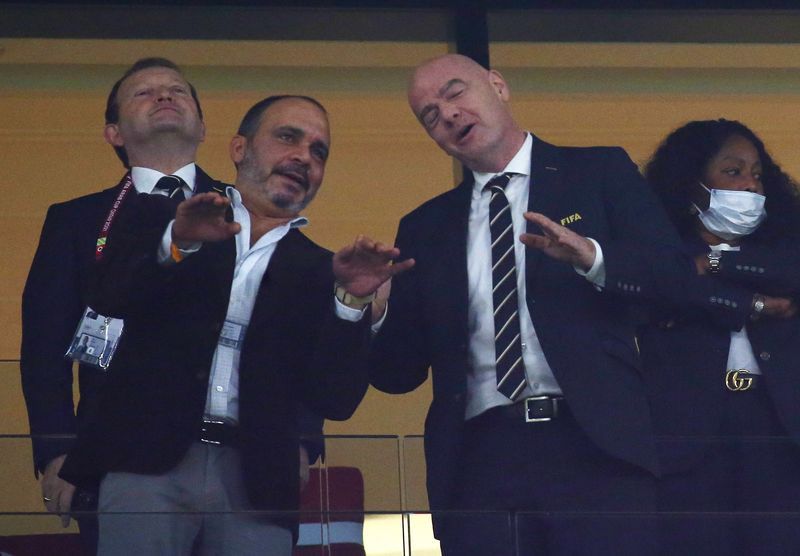
The Jordanian national football team and its coaching staff have finally received the prize money owed to them for their participation in last year's Arab Cup, according to an announcement Thursday from Jordan Football Association President Prince Ali bin Hussein. The timing of the payment came just two days after Prince Ali publicly accused FIFA of engaging in what amounted to financial coercion, reigniting tensions between the governing body and one of Asia's football associations at a particularly sensitive moment in FIFA's internal politics.
Jordan's delayed compensation stemmed from their run to the final of the 2024 Arab Cup tournament held in Qatar. The association had been seeking these funds since December—a gap of approximately eight months—forcing the federation to function without money that should have been distributed routinely. The prolonged withholding of these payments raised eyebrows within the football community and prompted Prince Ali to take the unusual step of publicly naming FIFA's conduct as potentially coercive, escalating a dispute that had simmered beneath the surface of international football governance.
Prince Ali's grievances extend beyond simple administrative tardiness. He alleged that FIFA officials had made verbal overtures during the World Cup period, suggesting that his personal endorsement of FIFA President Gianni Infantino would facilitate assistance with the federation's financial and operational difficulties. This characterisation of conditional support strikes at broader concerns within the footballing world about FIFA's governance practices and whether member associations feel pressured to offer political loyalty in exchange for basic services and financial obligations. The accusation implicitly questions whether FIFA maintains clear separation between administrative functions and presidential politics.
The catalyst for Prince Ali's public criticism appears connected to FIFA's botched attempt to secure commercial rights to future World Cups—a proposal that generated substantial pushback from confederations and national associations worldwide. When Infantino retreated from this initiative, he found himself facing organised resistance from the very stakeholders whose votes he would need for re-election. Jordan's president seized this moment of vulnerability to air longstanding grievances about how his federation had been treated, transforming a financial dispute into a broader statement about FIFA's institutional culture.
FIFA has maintained silence regarding Prince Ali's accusations of leveraging financial assistance for political support, declining to respond to specific inquiries about the alleged verbal communications. This silence may itself signal discomfort with the allegations, particularly given that similar complaints have surfaced from other member associations questioning whether FIFA applies consistent standards across all federations. The lack of public rebuttal from FIFA suggests the organisation may be calculating that engagement would only amplify the controversy during a period when it is attempting to stabilise its relationship with member bodies.
Despite receiving the overdue payment, Prince Ali made clear that the belated transfer would not alter his stance toward FIFA's leadership structure. He framed the delayed funding as emblematic of deeper systemic problems within FIFA, suggesting that financial irregularities and apparent conditional conduct are recurring issues rather than isolated incidents. This positioning allows him to accept the payment without appearing to have been pacified by FIFA's gesture, maintaining his credibility with other associations that may share similar concerns about how the organisation distributes resources and allocates opportunities.
Prince Ali explicitly stated that Jordan will not endorse Infantino's candidacy and will not support the FIFA president in upcoming electoral contests. This represents a significant withdrawal of potential support at a juncture when the presidential succession question looms increasingly large. Given Jordan's geographic position in West Asia and its role within Asian football structures, such a public defection could embolden other associations to reconsider their positions on FIFA's current leadership, potentially fracturing the consensus that Infantino has previously relied upon for re-election victories.
The incident underscores a pattern visible in FIFA's relationship with smaller member associations: decisions that appear administratively reasonable at headquarters can seem arbitrary or punitive when viewed from federation offices facing budgetary constraints. Prize money represents contractual obligations that ought to be discharged predictably; when payments stretch beyond reasonable timelines without explanation, recipient federations naturally begin attributing motivations to the delays. Whether intentional or merely symptomatic of organisational dysfunction, such delays corrode trust and invite speculation about FIFA's priorities and fairness.
FIFA's leadership held a crisis meeting in Morocco on Wednesday, where the body acknowledged mistakes surrounding the failed World Cup commercial rights proposal but ultimately reaffirmed support for Infantino. This demonstrates that despite mounting criticism and the withdrawal of backing from associations like Jordan, FIFA's internal power structure remains consolidated around the incumbent president. However, each public defection incrementally increases the political cost of any future Infantino campaign, potentially shaping the trajectory of FIFA's institutional politics over the coming years, particularly as Asian federations increasingly assert their interests in international football governance.

