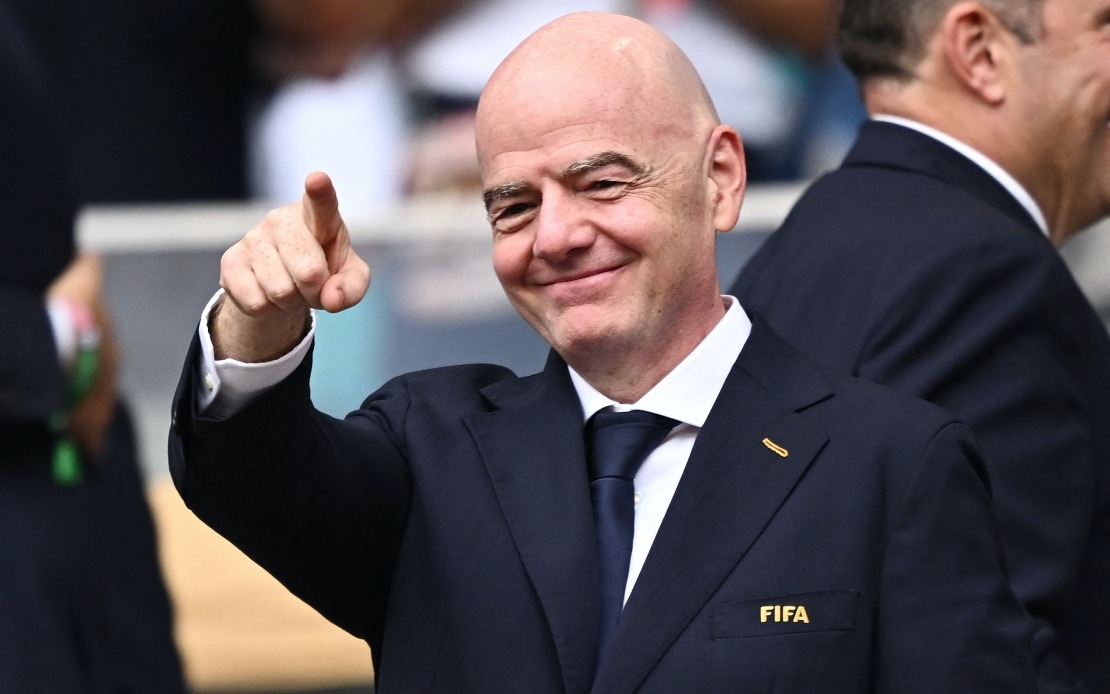
Europe's governing football body delivered a stinging rebuke to FIFA's leadership on Saturday in Istanbul, declaring that the organisation has squandered the trust of the football world through its handling of a failed attempt to sell stakes in its flagship tournaments to private investors. The censure came as FIFA formally abandoned the polarising initiative, though UEFA's statement made clear that the plan's withdrawal represents merely the first step in a broader reckoning over governance and decision-making at the world governing body.
UEFA's condemnation extended beyond mere disapproval of the specific proposal. The statement directly challenged FIFA President Gianni Infantino's credibility, noting that he has failed to honour promises of transparency and fiscal responsibility that formed the cornerstone of his 2016 election campaign. This accusation strikes at the heart of legitimacy questions that have dogged FIFA for years, suggesting that senior leadership has not merely made tactical errors but has fundamentally departed from commitments made to stakeholders across the game.
The scale of opposition to the privatisation scheme underscores the depth of feeling among football's diverse constituencies. UEFA's member associations unanimously rejected the proposal, and this rejection was echoed by numerous other national federations and continental confederations representing every corner of the sport. This breadth of opposition—spanning wealthy European leagues and smaller football associations alike—indicates that concerns about the plan transcended regional interests or competitive anxieties.
What particularly troubled UEFA was the methodology behind the initiative rather than its substance alone. The organisation characterised the process as secretive, moving at artificial speed, and designed by unnamed decision-makers operating outside normal accountability structures. This critique reflects deeper anxieties within global football about closed-door governance and the risk that FIFA might pursue transformative changes affecting the sport's future without meaningful consultation with the organisations most directly impacted.
For Malaysian and Southeast Asian football observers, the dispute holds particular significance. Smaller footballing nations and confederations often lack the resources to mount sustained campaigns against decisions made at FIFA's highest levels, making UEFA's willingness to champion democratic processes and transparency especially important as a counterweight to centralised authority. The principle that major structural changes affecting world football require consensus rather than top-down imposition has implications for how Asian Football Confederation members' interests are protected.
UEFA's appeal to a broad coalition—including fans, professional leagues, clubs, player representatives, national governing bodies, and even political leaders—demonstrates that opposition to FIFA's direction extends well beyond the administrative sphere. This grassroots and institutional alignment suggests genuine concern about the trajectory of international football governance and the risks posed by allowing profit motives to reshape the sport's most prestigious competitions.
The statement's assertion that FIFA cannot continue functioning through "secret schemes on fast-track timelines" reflects frustration with an approach to governance that sidelines consultation and ignores established procedures. Such criticism gains weight from FIFA's history of controversial decisions and from the organisation's previous struggles to restore credibility following scandals. Infantino's administration entered office promising reform and renewed faith in the institution, making the current rupture especially damaging to those reform ambitions.
Yet UEFA's final message carried both warning and conditional hope. The statement acknowledged the privatisation proposal's withdrawal as a victory for the entire football community while cautiously noting that this outcome merely marks the beginning of a longer process of rebuilding institutional trust. This framing suggests that UEFA views the struggle not as concluded but as an opening phase in broader questions about FIFA's future direction and governance structures.
The European confederation's commitment to investigating how such a proposal ever reached advanced stages signals that accountability mechanisms may yet be strengthened. By working with other confederations and member associations to examine the initiative's origins, UEFA aims to establish safeguards preventing similar ventures from progressing without proper oversight. This investigative impulse addresses the procedural failures that allowed secret planning to advance so far.
For the global football community, including Southeast Asia, the standoff raises urgent questions about FIFA's legitimacy and its capacity to command universal support for initiatives affecting the sport's future. Smaller nations with fewer resources to influence decision-making at the highest levels have particular reason to welcome UEFA's insistence on transparent, consultative processes. The outcome demonstrates that even FIFA's most powerful body cannot unilaterally reshape football's commercial structures without mobilising broad opposition.
Infantino's position has been visibly weakened by the episode. Having promised to reform FIFA and restore public confidence, his administration instead pursued an opaque initiative that galvanised unprecedented opposition across competing interests. This contradiction undermines claims about transformational leadership and suggests fundamental misalignment between stated values and operational practice at FIFA's apex.
Moving forward, UEFA's qualified vindication comes with an implicit challenge to FIFA to demonstrate that it can govern football in ways that reflect the sport's collective interests rather than narrow institutional preferences. The current leadership's credibility deficit cannot be resolved through tactical retreats alone but requires sustained demonstration of commitment to genuine transparency and stakeholder engagement across the global game.

