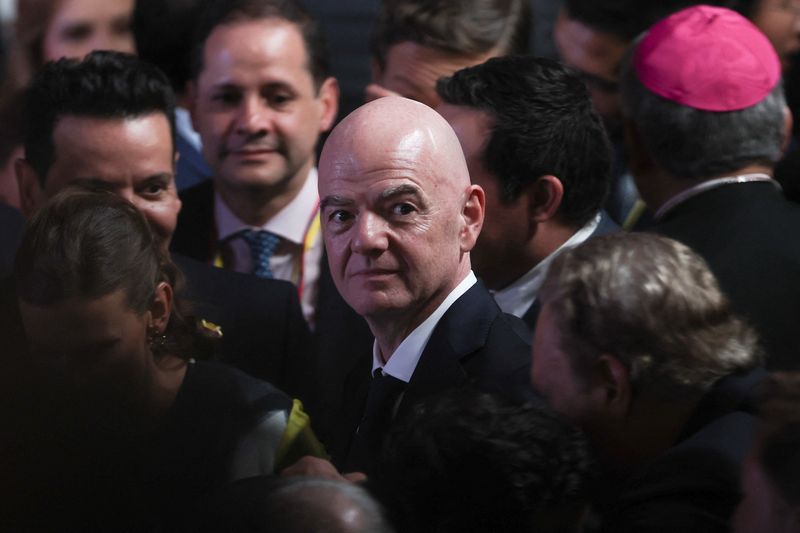
The Confederation of African Football president Patrice Motsepe has defended FIFA president Gianni Infantino's right to seek re-election, arguing that the organisation's democratic process should determine whether he continues in the role when member associations gather for the 77th Congress in Rabat, Morocco on March 18, 2027. Rather than caving to external pressure, Motsepe believes the 211 FIFA member nations should have their say through the ballot box, allowing the democratic machinery of world football's governing body to function as intended.
Infantino currently faces considerable opposition from three major continental confederations—UEFA, AFC and CONCACAF—who have publicly attacked his leadership and demanded his resignation. Their revolt centres on his failed initiative to introduce private investment into FIFA competitions, including the World Cup itself, a proposal that triggered significant backlash from multiple stakeholders in global football. The orchestrated campaign against the FIFA president marks an unusually public and coordinated challenge to his leadership from some of the world's most influential football bodies, creating genuine uncertainty about his political standing heading into the election cycle.
Motsepe's intervention reflects an important geographical and political divide within FIFA's leadership structure. African football, represented by CAF, has thus far remained supportive of Infantino despite the criticisms levelled by European, Asian and North American confederations. This continental split underscores how FIFA's global membership remains deeply fractured on questions of governance and commercial direction, with developing football nations often taking different positions from established footballing powers on institutional reform.
Speaking to Sky News, Motsepe articulated a defence of FIFA's electoral processes while also acknowledging legitimate calls for institutional accountability. He emphasised that criticism of FIFA leadership should not bypass established channels, and that if member associations harbour concerns about Infantino's conduct or vision, they possess the mechanism to express those concerns through competitive elections. This measured stance contrasts sharply with the more combative rhetoric emerging from UEFA, AFC and CONCACAF, which have essentially called for Infantino to be removed without facing the membership vote.
The CAF president stressed that all leaders, including FIFA president, must remain subject to scrutiny and questioning regarding their governance practices and adherence to due process. He acknowledged that FIFA administrations should face interrogation if they deviate from proper procedures, and that transparency represents a non-negotiable principle in international sports administration. However, Motsepe argued that this scrutiny functions most effectively within FIFA's established institutional framework rather than through external pressure or informal coalitions of continental bodies.
Motsepe's emphasis on unity and cooperative development of football globally suggests an alternative priority to the destabilisation campaign unfolding across multiple confederations. Rather than allowing FIFA to become consumed by internal conflict over Infantino's future, the CAF president appears to favour resolving outstanding governance questions while maintaining focus on football development initiatives and addressing the substantive challenges facing the sport. This reflects a perspective common among leaders from developing football nations, who may prioritise institutional stability and continued investment over questions of leadership change.
The CAF president's statement that Infantino retains African football's backing provides the FIFA president with crucial support from a voting bloc controlling over 50 member associations. With UEFA and the AFC together representing a similarly substantial portion of FIFA's membership, the outcome of any contested election would likely depend on how CONCACAF members vote and which way the remaining confederations align themselves. Infantino's African support therefore becomes genuinely consequential in any electoral scenario, making Motsepe's public endorsement strategically significant for the FIFA president's political prospects.
For Malaysian and Southeast Asian football stakeholders, this dispute carries implications for FIFA's commercial direction and the future structure of international competitions. The failed private investment initiative proposed by Infantino signalled an ambition to fundamentally reshape how FIFA finances itself and operates its flagship tournaments. Whether this vision continues depends partly on FIFA's election outcome, which in turn depends on how member associations from the AFC—including Malaysia—ultimately position themselves in the dispute between continental confederations.
Motsepe's insistence on following proper processes and allowing democratic institutions to function reflects broader debates within international sports governance about how to balance demands for leadership change against institutional stability. The tension between accountability and continuity remains unresolved; the pressure from UEFA, AFC and CONCACAF suggests that maintaining the status quo no longer satisfies major stakeholders, yet the African perspective emphasises that wholesale institutional disruption carries its own risks and costs.
The coming months will reveal whether other confederation leaders embrace Motsepe's legalistic approach or continue pressing for Infantino's removal outside the formal electoral process. If the campaign against him intensifies, FIFA faces the prospect of entering the election cycle badly fractured and potentially unable to focus on football development and major tournament planning. Conversely, if Infantino successfully navigates the election with broad membership support, it would vindicate Motsepe's faith in FIFA's democratic mechanisms while strengthening the hand of those seeking to reshape the organisation's commercial model.

