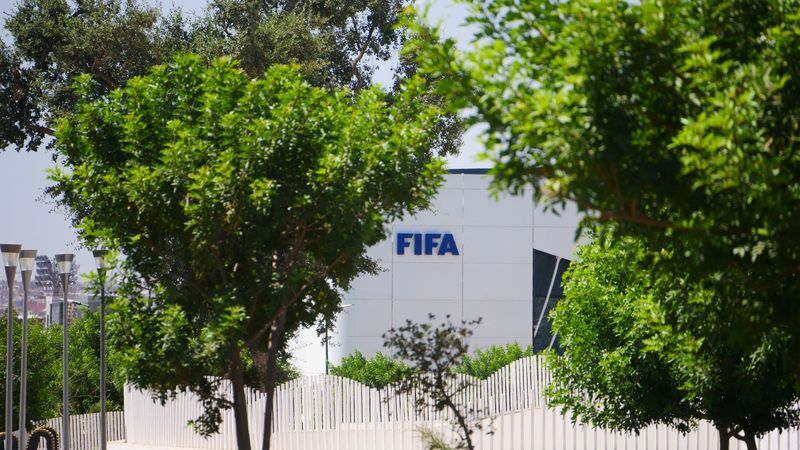
The world football governing body is in crisis, and the answer does not lie in simply replacing its leader. This is the stark message from FIFPRO Europe president David Terrier, who has diagnosed FIFA's problems as deeply systemic and far more serious than the current drama surrounding Gianni Infantino's reelection bid next March. Speaking in Paris this week, Terrier shifted the conversation away from personality politics toward the institutional fractures threatening to undermine global soccer, arguing that superficial leadership changes will prove meaningless without wholesale governance transformation.
The immediate trigger for Terrier's warning is Infantino's controversial proposal to monetize World Cup commercial rights—a plan so badly mishandled that it triggered coordinated revolts from three of FIFA's six continental confederations. UEFA, AFC, and CONCACAF have all publicly questioned Infantino's fitness for office, with some calling outright for his resignation. Yet Terrier's analysis suggests that even removing Infantino would leave the fundamental problems untouched. The real disease, he argues, is the concentration of power within FIFA's presidency itself, a structure that invites abuse and erodes trust among the member federations that ultimately drive world soccer.
Terrier's framing is particularly important for understanding the scope of FIFA's predicament. He explicitly stated that the organization now faces a "real war" characterized by collapsed trust among confederations and federations. This is not merely political theatre or personal animosity between executives; it reflects genuine concerns about how decisions are made and whose interests they serve. The breakdown became visible only when multiple confederations, representing hundreds of millions of soccer fans and dozens of national associations, decided simultaneously that they could no longer remain silent. Such coordinated action suggests deep structural problems rather than isolated grievances.
Following a crisis meeting in Morocco last week, FIFA attempted damage control by apologizing for errors in how it communicated the World Cup proposal while simultaneously reaffirming full confidence in Infantino. The organization also warned member associations against attempting to undermine the president outside proper statutory procedures. Yet this response, in Terrier's view, exemplifies precisely the governance failures that demand attention. FIFA's leadership essentially treated the incident as a communication problem requiring an apology, while leaving untouched the concentration of presidential power that enabled such a proposal to advance in the first place.
What makes Terrier's intervention particularly significant is his explicit comparison to the Sepp Blatter era, which ended in 2015 amid corruption scandals that severely damaged FIFA's international reputation. Blatter's decades-long tenure had been characterized by opaque decision-making, unchecked presidential authority, and a systematic absence of meaningful checks and balances. FIFA went through a reform process after Blatter's departure, yet Terrier contends that the current crisis reveals those reforms as insufficient. The power dynamics remain too similar; the safeguards remain too weak; and the opportunity for presidential overreach remains too great.
Terrier's most provocative statement was his insistence that any FIFA president genuinely committed to reform must be willing to subordinate their own political survival to the institutional changes required. He suggested that a leader unwilling to put their mandate at risk in service of real reform is, by definition, not the person to lead that reform. This touches on a fundamental tension in organizational change: the person with power to implement systemic reforms is usually the person who benefits most from the existing system. Terrier appears to be arguing that FIFA has reached a point where only a leader willing to diminish presidential authority—and thus their own power—can credibly lead the necessary transformation.
The players' union chief proposed that FIFA's future governance structure should distribute power more widely, with a president functioning as guarantor of rules and values rather than the primary decision-maker. This represents a significant conceptual shift from the current model where the presidency concentrates enormous authority. Under Terrier's framework, the president would operate within a stronger institutional framework with genuine peer oversight, creating countervailing powers to check unilateral action. Such a model would make it harder for any single executive to advance controversial proposals without broader consensus among stakeholders.
Terrier also highlighted a structural vulnerability that has long plagued FIFA: the absence of internal mechanisms capable of holding the president accountable to FIFA's own statutes and regulations. When FIFA's administrative apparatus lacks the independence or authority to enforce its own rules against the president, accountability becomes external and reactive rather than internal and preventive. This gap helps explain how serious governance violations can occur and persist—there is simply no institutional infrastructure empowered to stop them from within.
For Malaysian and Southeast Asian readers, this governance crisis carries particular significance given the region's growing stakes in global soccer. The AFC represents some of FIFA's most diverse and economically dynamic member nations, and the confederation was among those calling out Infantino's conduct. The credibility and stability of FIFA's leadership directly affect how decisions are made regarding tournament hosting, revenue distribution, developmental support, and continental federation autonomy. A FIFA locked in internal conflict and lacking trusted governance structures serves nobody's interests, least of all smaller footballing nations dependent on fair processes.
Terrier framed the current moment as potentially "the last opportunity" to enact meaningful reform. This language suggests urgency and irreversibility—if FIFA fails to undertake genuine governance transformation now, when the defects are visible and multiple confederations are demanding change, the window may close. Future presidents might consolidate power further, or the organization might muddle through with cosmetic adjustments that preserve the underlying problems. The players' union chief is essentially warning that FIFA stands at a fork in the road: genuine institutional reform or continued deterioration toward another scandal.
The contrast between FIFA's official response and Terrier's analysis is instructive. FIFA emphasized that its actions complied with regulations and that problems were merely procedural and communicative. Terrier countered that even lawful actions taken within technically proper procedures can still reflect fundamentally broken governance when the underlying power structure remains imbalanced. A president can follow the rulebook while still possessing excessive authority that invites abuse and destroys institutional trust.
Moving forward, attention will focus on whether FIFA's membership will demand the structural changes Terrier advocates, or whether the organization will attempt to stabilize around Infantino with minor adjustments. The players' union position carries weight in these deliberations, as FIFPRO Europe represents the collective interests of thousands of professional players across Europe's clubs and national teams. Their diagnosis that FIFA needs overhaul rather than merely new leadership provides intellectual weight behind calls for genuine reform. The question now is whether FIFA's leadership will embrace transformation voluntarily or whether confederation pressure will force change upon a reluctant establishment.

