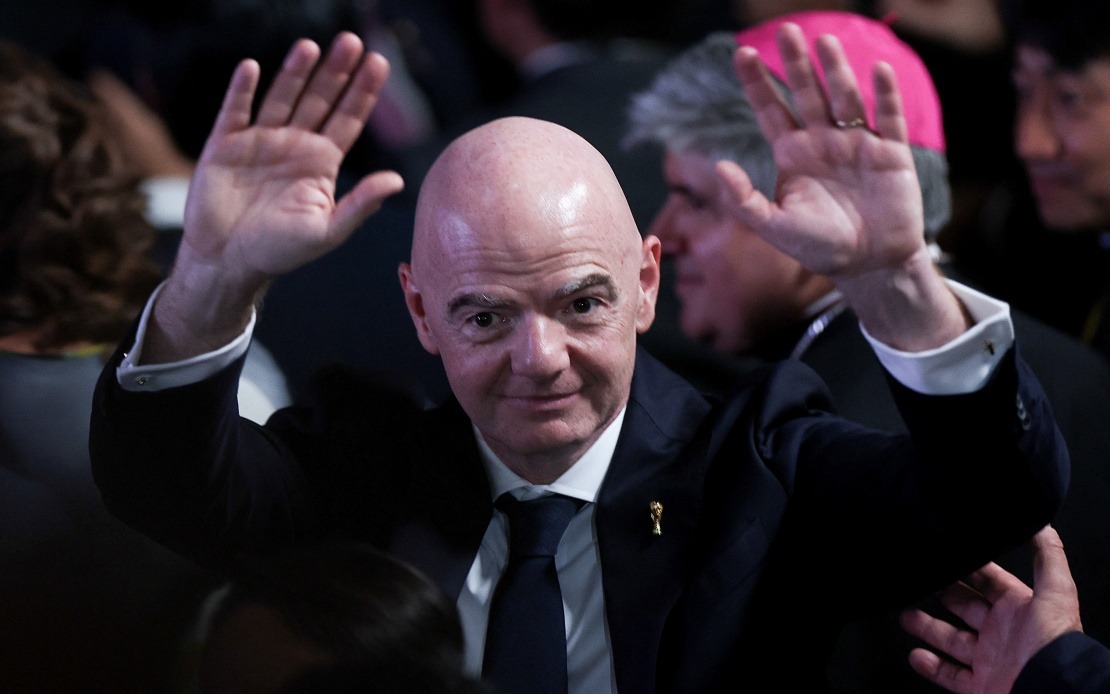
FIFA has issued a forceful defence of Gianni Infantino's continued leadership, declaring it will neither support nor tolerate any attempt to hold a presidential election outside the organisation's established governance framework. The statement, released late Saturday in Istanbul, represents an unusually direct intervention by football's governing body at a moment of visible internal tension over the direction of the sport's administration.
The federation explicitly stated that Infantino carries a democratic mandate from FIFA's member associations, who originally elected him to his current position. This assertion appears designed to rebuff criticism from various quarters questioning both his leadership approach and his qualifications for another term. By emphasising democratic legitimacy, FIFA attempts to frame ongoing scrutiny as illegitimate challenges to a properly constituted process rather than legitimate oversight concerns.
The statement further indicates that support for Infantino's continued tenure extends beyond FIFA's headquarters, with the South American Football Confederation (CONMEBOL) and the Confederation of African Football (CAF) publicly backing his position. These endorsements carry particular weight given that these continental bodies represent hundreds of millions of football supporters across two continents crucial to the sport's financial and competitive ecosystem. Their alignment suggests Infantino retains substantial backing among the power brokers who control voting at FIFA congresses.
However, beneath this show of unity lies evidence of significant fragmentation. FIFA's accusation that some individuals are engaged in a "concerted and ongoing effort" to undermine both the organisation and its president reveals awareness of coordinated opposition that extends beyond isolated complaints. The federation's unusually defensive tone—accusing critics of relying on "unsubstantiated assertions" and "demonstrably false claims"—suggests the criticism has struck deeper than typical governance disputes.
For Malaysian and Southeast Asian readers, these internal divisions carry tangible consequences. The region's football development depends partly on FIFA's strategic priorities and resource allocation. Infantino's tenure has been marked by expansion of global competitions and investment in emerging football nations, including Asian markets. Instability at FIFA's apex could disrupt long-term development initiatives that smaller confederations, including the Asian Football Confederation, have come to rely upon.
FIFA's reference to repeated allegations and manufactured distractions points to a broader communications crisis affecting the organisation. When an institution finds itself repeatedly explaining that allegations are false rather than substantively addressing underlying governance questions, it signals erosion of institutional trust. The federation's insistence that "repetition does not make an allegation true" ironically emphasises how persistently these allegations have circulated, suggesting they have achieved considerable currency despite official denials.
The defensive framing around Infantino's record—citing his three decades of service to European and world football, and crediting him with expanding access and resources—illustrates how FIFA seeks to reposition criticism as ingratitude rather than legitimate concern. Yet this approach risks appearing patronising to member associations seeking greater voice in strategic decisions. The assertion that FIFA "welcomes legitimate scrutiny" rings hollow when paired with rejection of questioning as mere "distortion" and "insinuation."
The timing of this statement, made during what should otherwise be a period of consolidation before the next presidential election cycle, underscores how contested Infantino's fourth-term bid already appears. In past eras, sitting FIFA presidents typically enjoyed a presumption of continuity. That Infantino's reelection requires this level of public intervention by the organisation itself suggests his political standing has weakened significantly among some influential member associations.
For observers across Southeast Asia, this institutional turbulence raises questions about FIFA's capacity to serve its global constituency effectively when senior leadership itself faces such visible challenges. The federation's insistence on procedural orthodoxy—elections conducted according to statutes, decisions made through established frameworks—rings true as principle but masks deeper questions about whether current governance structures adequately represent the interests of smaller football nations or primarily serve established power structures centred on Europe and the Americas.
The path forward remains uncertain. FIFA's statement attempts to foreclose debate through procedural assertion, essentially declaring that any challenge to Infantino must occur within channels it controls. Yet this approach may only deepen resentment among those seeking broader reform of how football's global body operates and responds to its membership.

