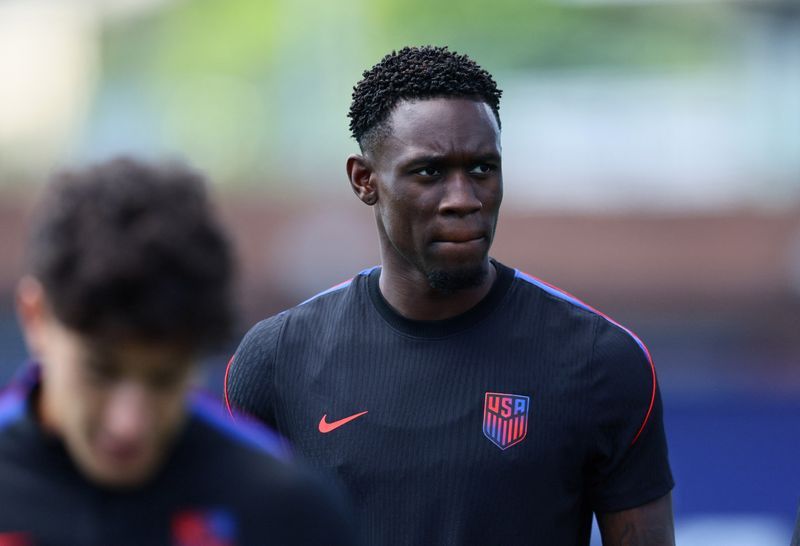
FIFA's controversial decision to suspend the automatic red-card suspension for United States striker Folarin Balogun has ignited a firestorm of criticism, with multiple European football federations warning that the move represents a dangerous breach of sporting principles and potentially sets a troubling precedent for tournament fairness. The reversal, announced on Sunday ahead of the United States' World Cup last-16 encounter against Belgium, came after U.S. President Donald Trump personally intervened by contacting FIFA President Gianni Infantino to request a review of the disciplinary action.
The core dispute centres on whether FIFA possessed the authority to overturn what should have been a mandatory suspension. While FIFA cited Article 27 of its Disciplinary Code to justify the decision, allowing the FIFA Disciplinary Committee discretion to suspend enforcement of previously imposed sanctions, critics point to Article 66.4 of the same code, which explicitly stipulates that a red card automatically results in suspension for the team's next match with no exceptions. This apparent contradiction has exposed significant ambiguity in FIFA's rulebook, though it raises the uncomfortable question of whether discretionary clauses were ever intended to override mandatory provisions during active tournaments.
The Royal Belgian Football Association responded with pointed clarity, arguing that the automatic suspension following a red card is not discretionary but rather a principle embedded in FIFA's regulations that cannot be subject to exceptions. The federation emphasised that this interpretation must hold true regardless of tournament circumstances, particularly when other players have already served identical suspensions under identical offences during the same competition. Their statement highlights a fundamental fairness concern: if Balogun receives exemption, what logical justification prevents similar treatment for other players facing comparable situations in the remainder of the tournament?
Bernd Neuendorf, president of the German Football Association, escalated the controversy by directly calling for FIFA to explain the circumstances surrounding the decision, specifically addressing the reported telephone conversation between Trump and Infantino. Neuendorf's intervention reflects broader European anxiety that political pressure has now become an instrument capable of influencing sporting outcomes at football's highest level. His pointed reference to April Fool's Day demonstrated the scepticism with which established football authorities received the news, suggesting the decision lacked credibility within the sport's traditional power structures.
The integrity implications extend beyond a single player's participation or even a single match's outcome. Tournament competitors operate under the assumption that the rulebook, once established, applies uniformly to all teams and all athletes. When FIFA suspends enforcement of clear regulatory provisions midway through a competition due to external political pressure, it fundamentally compromises the level playing field that competitive sports depend upon. Previous red cards during the same World Cup have resulted in automatic suspensions, creating a two-tiered system where some players face consequences while others do not, based apparently on the political weight their national government can bring to bear rather than on football itself.
The precedent-setting danger identified by multiple critics warrants particular consideration for Southeast Asian football governance. If FIFA's decision establishes that extraordinary political intervention can overturn automatic disciplinary measures, smaller nations whose leaders command less international influence may face an insurmountable disadvantage. Players from less politically powerful countries could find their suspensions upheld while stars from major powers receive exemptions, gradually corroding the universality of sporting law. For Malaysian football followers accustomed to watching global tournaments with faith in their administrative fairness, this development represents a troubling evolution toward inequality masked by bureaucratic flexibility.
The technical question of whether Balogun's initial incident actually merited a red card provides limited comfort to critics. Even if VAR and the match referee erred in issuing the card, the appropriate remedy would have been formal appeal through established channels, not presidential telephone calls to the federation president. Overturning disciplinary decisions through informal political communication establishes a governance model fundamentally at odds with the impartial rule of law that sports require to maintain legitimacy. The decision becomes difficult to separate from the political intervention that preceded it, regardless of the merits of the underlying incident.
Another analytical dimension involves the reputational damage FIFA itself sustains through such decisions. The federation already faces persistent criticism regarding transparency, governance, and susceptibility to external influence. This decision reinforces existing perceptions that FIFA prioritises relationships with powerful nations over consistent application of its own regulations. For broadcasters, sponsors, and viewers in regions outside the traditional football powerhouses—including Southeast Asia—such moments erode confidence that major sporting competitions operate according to transparent, universally applied standards rather than according to the political and economic clout of participating nations.
The practical consequences for the United States' tournament prospects, should they progress past Belgium, create an uncomfortable asterisk around their advancement. Balogun's availability could prove decisive in subsequent matches, and any deep tournament run by the Americans will inevitably carry questions about whether that success was fully earned under equal competitive conditions. For the U.S. national team and American football fans, the political intervention, rather than protecting the team's interests, potentially taints any achievements by introducing doubt about their legitimacy.
European football bodies' coordinated criticism suggests a broader institutional alarm about the direction FIFA governance is taking. Multiple federations simultaneously raising concerns about political interference indicates this issue resonates across the continent's football establishment as a fundamental threat to sporting autonomy. The Belgian, German, and other European responses signal that FIFA's credibility deficit, already substantial before this decision, has deepened considerably. When the federation's guardian authority is perceived as responsive to political pressure rather than committed to regulatory consistency, the foundation of competitive fairness crumbles.
Looking forward, FIFA faces intense pressure to restore confidence through either explicit reversal, formal clarification of its disciplinary authority, or comprehensive governance reform. The current situation leaves the rulebook's applicability ambiguous, with unclear implications for how subsequent disciplinary decisions should be handled throughout the remainder of the tournament. This ambiguity itself represents a failure of governance, as all competing nations and players deserve absolute clarity regarding which regulations are truly binding and which remain subject to discretionary suspension based on external considerations.
The episode ultimately reflects a broader tension within modern international sports governance: the question of whether athletic competitions can remain genuinely autonomous institutions or whether they inevitably become extensions of state power projection. For Malaysian observers and Southeast Asian football administrators watching from outside the traditional European-American power nexus, the implications are sobering. If FIFA demonstrably bends its own rules when politically pressured by major powers, smaller nations cannot realistically expect consistent protection of their legitimate sporting interests under the same rulebook. That realisation may prove more damaging to international football's future credibility than any single disciplinary decision.

