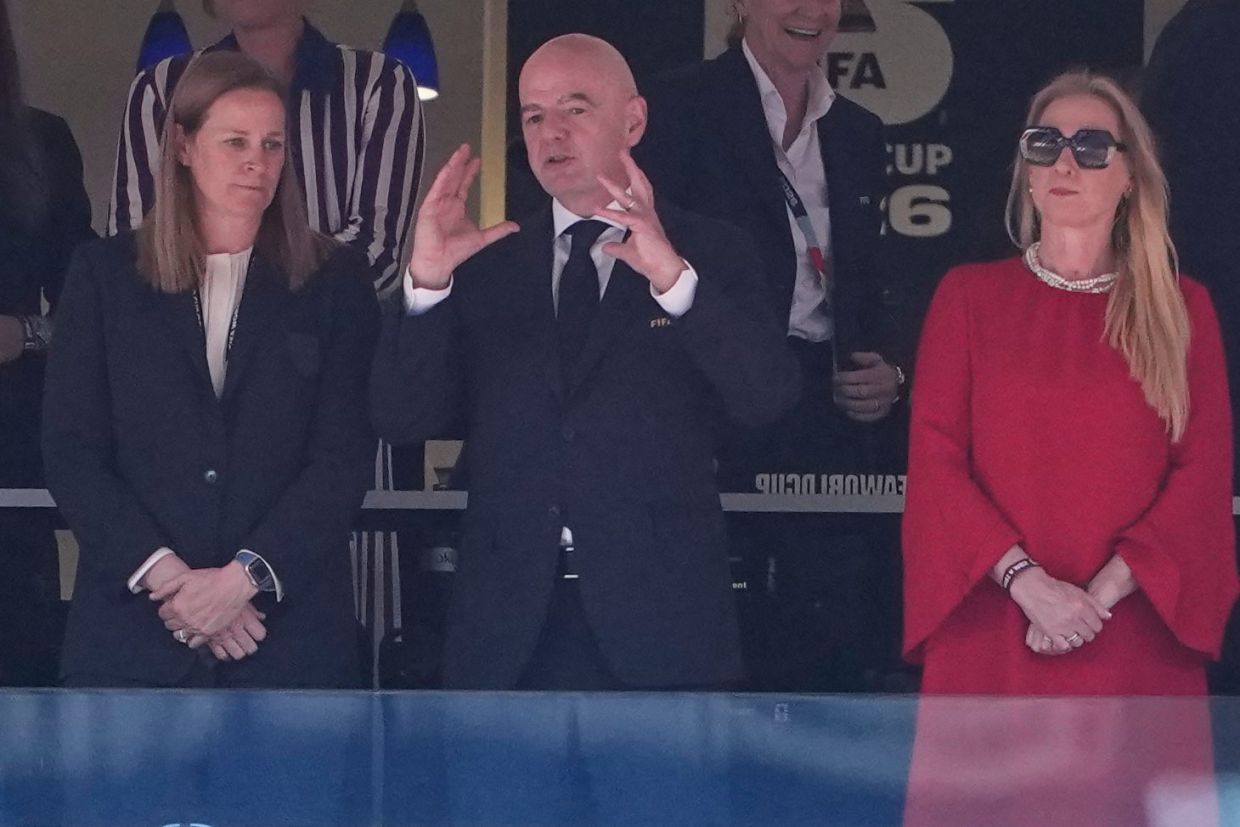
FIFA has capitalized on the 2026 World Cup to generate unprecedented revenues despite a mounting list of scandals that have tested the governing body's credibility. Chief administrator Gianni Infantino appears to have weathered a storm of criticism ranging from exorbitant ticket costs to international outcry over the reinstatement of a suspended American player following intervention by President Donald Trump. Rather than denting FIFA's power, these controversies have faded into the background as the tournament progresses, leaving Infantino's authority over world football seemingly unshaken and his financial legacy considerably strengthened.
The expansion of the World Cup from 32 to 48 teams has transformed the competition into a cash-generating machine of remarkable proportions. FIFA expects to pocket approximately $9 billion in direct revenue from this edition, a substantial $2 billion increase over the 2022 Qatar tournament. This expansion reflects Infantino's strategic pivot towards enlarging FIFA's commercial footprint since his appointment as the organization's reformist figurehead in the aftermath of the 2015 corruption scandal that engulfed his predecessor Sepp Blatter. The wider tournament means more matches, more broadcast rights to sell, and more opportunities for sponsorship and merchandising across a larger playing field.
The financial windfall extends beyond FIFA's own coffers to create a ripple effect of enrichment throughout the tournament ecosystem. Stadium concessionaires have reported extraordinary spending patterns, with fans spending up to $100 per person on food and beverages during matches—nearly double the average outlay at American football games. Advertisers have also benefited from innovations such as mandated hydration breaks that effectively restructure the traditional two-half format into an American-style four-quarter format, creating additional commercial opportunities. These changes illustrate how Infantino's vision has transformed the World Cup into a thoroughly monetized sporting spectacle that generates value for multiple stakeholders.
Host cities have already begun experiencing the economic stimulus promised by the competition. According to Bank of America transaction data covering mid-June, credit and debit card spending in World Cup host cities rose 6.3 percent compared to the same period the previous year, with non-resident spending jumping 16.7 percent. These figures suggest that despite widespread complaints from civic authorities about infrastructure costs before the tournament commenced, the event is delivering tangible economic returns that validate their participation. The tourism influx and local spending patterns demonstrate FIFA's ability to mobilize global consumer interest in ways that few other sporting entities can achieve.
The prize distribution structure represents another mechanism through which Infantino has expanded FIFA's reach and locked in political support from member federations worldwide. The total prize pool has doubled to a record $871 million, with every participating nation guaranteed a minimum payment of $12.5 million simply for qualifying and attending. For smaller footballing nations, this represents transformative funding. Cape Verde, whose historic tournament run has generated over $21 million, received a windfall equivalent to approximately 0.75 percent of the entire nation's GDP. Such payouts create powerful incentives for federation leaders across Africa, Asia, and South America to support Infantino's continued leadership, regardless of governance controversies.
Sports lawyer Nick De Marco has articulated the central tension underlying FIFA's current position: the organization risks undermining the integrity of world football by allowing political pressure to override established rules and regulations. The controversy surrounding the reinstatement of American player Folarin Balogun after Trump's alleged intervention exemplified this concern. Politicians including Jürgen Klopp and officials from the United Kingdom and Belgium condemned what they saw as a capitulation to external pressure that fundamentally compromised FIFA's authority as football's global regulator. Yet this criticism has proven ephemeral, dissipating rapidly as tournament momentum carried the competition forward and attention shifted to on-field performances.
Infantino's upcoming re-election at the 77th FIFA Congress in Rabat, Morocco in early 2027 appears virtually assured despite the controversies. He faces no opposition, and football federations from the three largest continental confederations—Asia, South America, and Africa—have already pledged their support. With 211 member associations each casting one vote, Infantino commands a coalition of nations that benefit substantially from his tenure. The decision to hold the congress in Morocco, a host nation for the next World Cup cycle, symbolizes the alignment of interests between Infantino's leadership and the federation membership that wields ultimate power over FIFA governance. His third term appears a foregone conclusion.
The tournament has delivered genuine sporting value alongside its commercial successes, providing Infantino with legitimate grounds to claim overall success. The expanded 48-team format has increased global representation, allowing nine African nations to advance to the knockout stages—a higher proportion than previous competitions. Major stadiums have maintained full attendance despite expensive ticket prices, while the world's greatest footballing talents have performed at elite levels. The quality of hospitality provided by host nations has impressed supporters, creating positive memories that overshadow logistical complaints about earlier World Cups in Russia and Qatar. These factors allow FIFA to characterize the tournament as a genuine sporting achievement rather than merely a financial exercise.
The enduring support from federation leadership demonstrates how effectively FIFA's financial model has aligned incentives across the global football community. Sheikh Salman, president of the Asian Football Confederation, has declared that FIFA occupies its strongest position ever. The Royal Moroccan Football Federation has praised Infantino's stewardship of African and world football development. Even nations geographically distant from FIFA's traditional power centers, from Kuwait to South Africa, have maintained steadfast backing for the organization's leadership. This coalition of support insulates Infantino from the criticism emanating from wealthy football nations and established media commentators who question his governance approach.
The trajectory of FIFA under Infantino reveals a governing body that has learned to manage rather than eliminate scandal. Following the corruption crisis of 2015, Infantino introduced modest transparency improvements and declared commitment to reform, but simultaneously expanded FIFA's commercial operations and centralized his control over the organization's strategic direction. His administration has successfully navigated numerous controversies by coupling reform rhetoric with financial incentives that bind member federations to his continued leadership. The willingness of football's global governance structure to tolerate integrity concerns in exchange for financial returns represents a fundamental choice about the sport's values and priorities.
For Southeast Asian and regional football communities, FIFA's trajectory carries significant implications. The expansion of World Cup formats, increased prize funds, and broader tournament participation create opportunities for nations like Malaysia, Thailand, and Vietnam to access greater levels of international competition and associated financial rewards. However, the concentration of power around Infantino and the prioritization of revenue generation over governance standards establishes precedents for how FIFA operates that extend beyond individual tournaments. The lesson appears clear: organizational legitimacy within modern football's power structures derives primarily from financial performance and the ability to distribute rewards, rather than from unwavering adherence to competitive fairness and regulatory integrity. This calculus will shape how FIFA approaches future controversies and competitive decisions for years to come.

