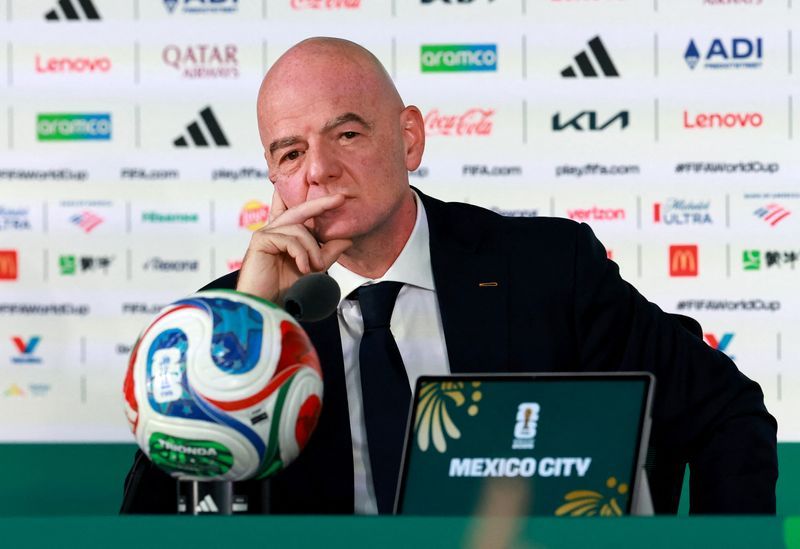
FIFA's leadership has publicly rallied behind president Gianni Infantino following a gathering in Rabat, but the gesture of unity masks a deeper institutional crisis that will continue to shape the sport's governance landscape long after the immediate political fallout subsides. The controversial proposal to monetise future World Cup commercial rights—which was hastily withdrawn after fierce opposition from national federations—has triggered the most serious internal challenge of Infantino's presidency, yet the damage to FIFA's decision-making credibility extends far beyond this single failed initiative.
The governing body has issued a formal apology to its 211 member associations, acknowledging that the commercial rights proposal "should have been handled differently" and admitting that the FIFA Council and national associations felt excluded from the process. This contrasts sharply with FIFA's initial defensive posture, where officials insisted that all actions had complied with existing regulations. The shift in tone suggests that the organization recognizes the distinction between technical compliance and legitimate stakeholder engagement—a distinction that many members believe FIFA has consistently blurred.
What makes this moment particularly significant for Malaysian and Southeast Asian football is the broader pattern of unilateral decision-making that the crisis has exposed. The European Leagues association, which represents more than 1,300 clubs across the continent, has pointed to FIFA's handling of a separate proposal to expand the 2030 World Cup from 48 to 64 teams as evidence of systemic problems. The organization was given just four weeks to assess a proposal with profound implications for tournament structure, player welfare, and commercial arrangements. This approach—presenting decisions to stakeholders rather than consulting them beforehand—has become the default operating procedure at FIFA, much to the frustration of confederations and national associations worldwide.
The apology and promised governance review represent a temporary ceasefire rather than a genuine resolution of underlying tensions. FIFA has committed to conducting a thorough examination of the processes that led to the commercial rights controversy, with findings to be presented at the next FIFA Council meeting. However, the organization has simultaneously attempted to draw a line under the affair by warning critics that it will "no longer tolerate any attacks on its integrity, good governance and due process." This defensive posturing suggests that FIFA's leadership views the crisis primarily as a communication problem rather than a fundamental failure of institutional design.
For Infantino personally, the immediate objective of containing political damage appears to have been achieved. The FIFA management board and Secretary General Mattias Grafstrom publicly endorsed the president at Wednesday's meeting, while internal tensions—evident in Grafstrom's earlier memo lamenting the "sad and reproachable series of events"—have been carefully papered over with public displays of unity. A photograph of Infantino and Grafstrom smiling and giving a thumbs-up at a women's Africa Cup of Nations match in Rabat served as a symbolic declaration that normalcy has been restored. With the Moroccan presidential election scheduled for March 2027, where Infantino intends to seek a fourth term, the timing of this political reconciliation is hardly coincidental.
Yet the underlying governance challenges remain unresolved, and they will inevitably resurface when FIFA pursues its next major strategic initiative. Several influential stakeholders have publicly questioned Infantino's leadership approach, including UEFA, the Asian Football Confederation, and CONCACAF, which governs the sport across North and Central America and the Caribbean. These organizations represent crucial constituencies within global football, and their concerns about decision-making transparency and consultation cannot be simply dismissed or managed through public relations exercises. The credibility gap between FIFA's stated commitment to inclusive governance and its demonstrated practices continues to widen.
Infantino's political survival appears secure in the near term, primarily because no viable challenger has emerged ahead of the 2027 election and because he maintains strong support among smaller national associations, particularly in Africa and Asia. These federations have benefited substantially from FIFA development funding, which remains central to their national football programmes. This support base provides Infantino with sufficient political capital to weather the current crisis and win re-election without significant opposition. However, this coalition of support is built on pragmatic self-interest rather than principled agreement about governance standards.
The consequences of FIFA's governance failures extend beyond internal politics to affect how the organization develops football across the world. For Southeast Asian nations that rely on FIFA's technical assistance, development grants, and tournament hosting opportunities, the inconsistency between FIFA's stated values and its actual practices creates uncertainty about the criteria and processes governing major decisions. The commercial rights proposal, for instance, was being negotiated at the highest levels without meaningful input from confederations representing developing football nations who would be most affected by changes to the World Cup's commercial structure.
Looking ahead to the 2027 presidential election and beyond, any major FIFA proposal involving tournament expansion, commercial strategy, or governance reforms will inevitably face heightened scrutiny and demands for transparency. National associations and confederations have learned from this crisis that silence in response to FIFA's proposals invites exclusion, and that organized opposition remains the most effective mechanism for securing meaningful consultation. This represents a subtle but significant shift in FIFA's internal power dynamics, even if Infantino retains his position as president.
The governance debate that has been triggered by the commercial rights debacle addresses fundamental questions about how FIFA should balance the interests of its diverse membership—from wealthy European federations to developing nations, from professional leagues to grassroots associations. These questions will persist long after the current political crisis has been resolved and Infantino's position has been secured. FIFA can apologize for mistakes in process and promise reforms, but the underlying institutional structures that enabled these mistakes remain largely unchanged. Until FIFA implements genuine democratic reforms to its decision-making procedures, similar controversies will inevitably emerge, regardless of who occupies the presidency.

