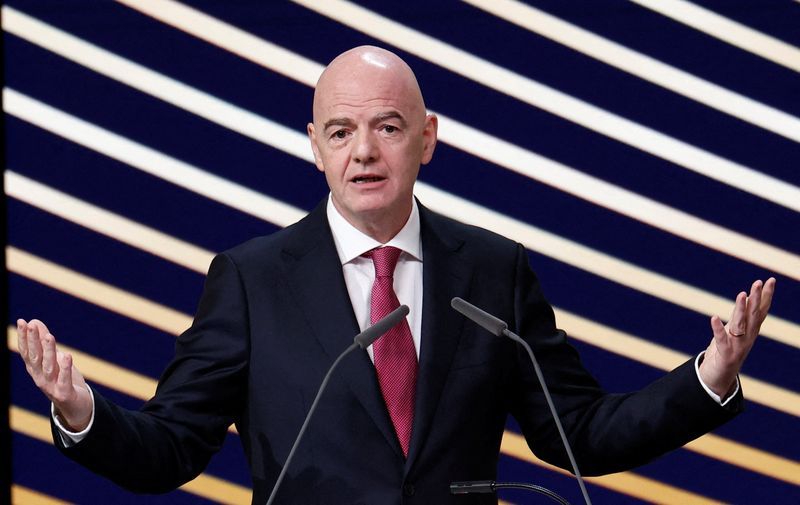
FIFA President Gianni Infantino's grip on power is slipping as he grapples with mounting opposition to his controversial plans to privatise elements of the World Cup. The Swiss administrator's bid to secure another term appears increasingly precarious following the withdrawal of backing from the football associations of Serbia, Sweden and Wales—a significant blow that signals deepening rifts within world football's governing body. The decisive vote will take place in Morocco on March 18, offering the global football community an opportunity to chart a new course. As the political landscape shifts, several heavyweight figures have begun positioning themselves as potential alternatives, each bringing distinct visions for FIFA's future direction.
The failed privatisation scheme represents far more than a simple policy disagreement. Infantino's proposal to sell a substantial stake in the World Cup to private investors exposed fundamental tensions within FIFA's leadership structure and raised serious questions about the decision-making processes that govern the sport globally. The plan triggered unusually coordinated pushback from multiple continental confederations, each concerned about the implications for football's independence and the tournament's integrity. This unprecedented rebellion suggests that discontent with Infantino extends beyond isolated critics to encompass entire regional football bodies, indicating a potential loss of institutional legitimacy.
Victor Montagliani, the Canadian businessman who leads CONCACAF, the North American and Caribbean football confederation, represents one plausible successor. Though CONCACAF rejected Infantino's investment scheme, the body stopped short of the complete boycott embraced by European counterparts, suggesting room for negotiation or compromise. Montagliani's position as head of the confederation overseeing the 2026 World Cup—the first World Cup hosted on CONCACAF soil in three decades—gives him significant visibility and credibility. His North American base and business background position him as someone who might bridge the interests of emerging markets and traditional football powers, though his relative inexperience in international football politics compared to other contenders remains a potential liability.
European football's leadership has emerged as a particularly potent force in challenging Infantino. Slovenian Aleksander Ceferin, UEFA president, made a dramatic statement by boycotting the World Cup final in protest against his disputes with FIFA leadership. The European confederation represents football's wealthiest and most influential region, and its willingness to directly confront Infantino signals that the continental power base is prepared to mobilise alternative candidates. Ceferin's antagonism towards the FIFA president stems from deeper disagreements over governance and decision-making authority, suggesting that a European challenger could count on substantial institutional backing and financial resources.
From Asia's perspective, the candidacy of Bahraini Sheikh Salman bin Ibrahim Al Khalifa merits serious consideration. As a senior FIFA Council vice president, he brings institutional experience and continental credibility. The AFC president has previously opposed Infantino's World Cup expansion plans and criticised the consultation processes surrounding the private equity proposal, positioning himself as a reformer concerned with strengthening FIFA's governance structures. For Southeast Asian football nations, his candidacy might offer opportunities to strengthen the Asian confederation's voice within FIFA's upper echelons, particularly on matters affecting tournament distribution and competition schedules.
Qatari sports executive Nasser Al-Khelaifi presents a distinctly different profile. His leadership of Paris Saint-Germain and his deep connections to European football's commercial ecosystem have reportedly gained favour among UEFA officials seeking an alternative to Infantino. Al-Khelaifi represents the modern football executive, combining business acumen with genuine influence across multiple football markets. However, his Qatari background could prove contentious given lingering sensitivities surrounding the 2022 World Cup in Qatar, despite the tournament's successful execution.
Norwegian Football Federation President Lise Klaveness represents another potential trajectory. As one of international football's most prominent female voices, she emerged as a particularly forceful opponent of Infantino's privatisation scheme. Klaveness previously initiated ethics complaints regarding FIFA decisions, demonstrating willingness to challenge the incumbent leadership on principle. Her candidacy would signal a commitment to governance reform and greater women's representation in football's highest offices—issues that resonate particularly strongly among progressive football federations in Europe and beyond.
The timing of this leadership contest carries significant implications for Southeast Asian football. The March 2025 vote occurs just months before the 2026 World Cup, meaning FIFA will enter that tournament under new or reaffirmed leadership. A change in FIFA presidency could reshape priorities regarding tournament scheduling, qualification processes, and the AFC's role in global football governance. Malaysian football stakeholders should monitor developments carefully, as the next FIFA president will significantly influence investment in Asian football development and participation opportunities for the region's national teams in expanded competitions.
Infantino's difficulties extend beyond policy disputes to encompass questions about presidential authority and accountability. His involvement in the Folarin Balogun case—where a World Cup ban was suspended following pressure from the United States President—exemplified concerns about external political interference in FIFA operations. Multiple candidates have implicitly or explicitly critiqued the current decision-making opacity, suggesting that the next president will face mandates for enhanced transparency and more inclusive consultation processes. This governance reform agenda could have practical consequences for how FIFA manages competitions and allocates broadcasting rights and tournament hosting privileges.
The emergence of multiple serious contenders indicates that the FIFA presidency has become genuinely contested terrain. Unlike previous elections where incumbents secured relatively comfortable victories, Infantino confronts a fragmented international football community increasingly willing to mobilise alternative options. The candidates themselves represent different visions: Montagliani embodies North American commercial football; Ceferin represents European institutional power; Al-Khalifa champions Asian football's development agenda; Al-Khelaifi symbolises modern sports business; and Klaveness signals demand for governance reform and inclusive representation.
For Malaysian and Southeast Asian football observers, the outcome of this contest matters considerably. The FIFA president elected for the 2027-2031 term will shape the continental confederation's influence, determine participation opportunities for regional teams, and establish precedents for governance that could extend FIFA's authority over domestic football matters. Whether the global football community selects a continuity candidate or embraces transformational change will reverberate through Asian football for years to come. The Morocco vote in March will determine not merely who leads FIFA, but what governance principles and priorities will guide the world's most popular sport through the remainder of the decade.

