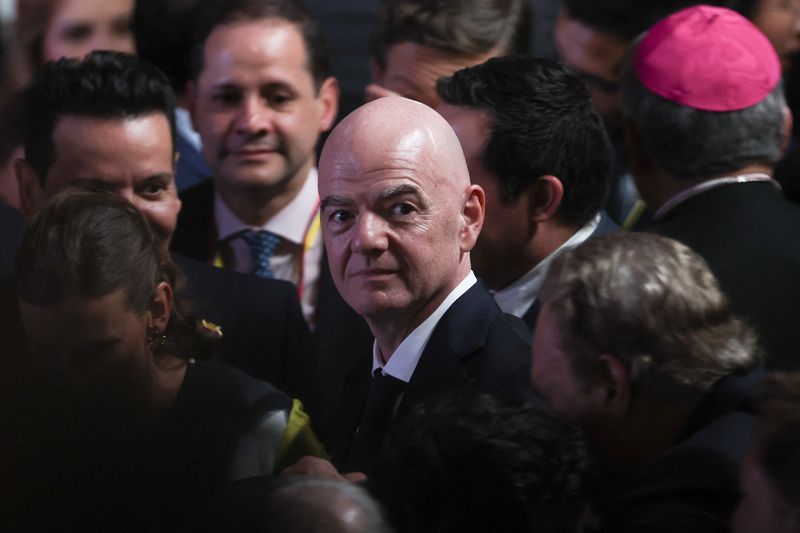
An extraordinary political crisis is unfolding within world football's governing body, with UEFA, the Asian Football Confederation and CONCACAF—representing Europe, Asia, and North and Central America respectively—actively contemplating a no-confidence vote against FIFA President Gianni Infantino. According to sources familiar with confidential discussions, the three confederations view such a motion as potentially their most potent weapon to force the sitting president from office, marking what would be an unprecedented action in FIFA's 122-year institutional history. The move represents a dramatic escalation of tensions that have simmered since Infantino's failed initiative to sell a minority stake in FIFA's commercial operations to private equity investors, a proposal that would have granted external parties significant control over World Cup broadcasting and sponsorship rights.
The proposed vote of no confidence carries immense symbolic weight precisely because FIFA's statutes contain no historical precedent for such an action. While the FIFA Council retains the authority to convene an Extraordinary Congress at any moment, or when at least one-fifth of FIFA's 211 member associations formally request one, the institutional framework governing a presidential no-confidence motion remains ambiguous. This legal uncertainty cuts both ways: it suggests the confederations would be treading novel constitutional ground, yet simultaneously indicates that FIFA's founding documents may not explicitly prohibit the manoeuvre. Those orchestrating the potential challenge face a critical strategic calculation, as insiders acknowledge the risks of mounting an unsuccessful campaign that could paradoxically strengthen Infantino's hand by demonstrating his residual electoral support ahead of the scheduled March 2027 presidential election.
Infantino's troubles intensified dramatically following the recent resignation of FIFA Chief Operating Officer Kevin Lamour, who had publicly criticised the investment proposal and alleged that staff members had been systematically misled about the project's true origins and scope. Lamour's departure sent shockwaves through the organisation, prompting FIFA Vice President Sandor Csanyi to withdraw his support for the president, describing the COO's exit as the decisive moment that broke his confidence in Infantino's leadership. These high-level defections underscore fractures within FIFA's own executive machinery, revealing that institutional dysfunction extends beyond the confederation disputes into the heart of the organisation's administrative apparatus. Yet despite these setbacks, Infantino has maintained that he intends to contest the March 2027 election and retains considerable backing from significant portions of FIFA's membership, particularly from the African confederation CAF, whose president Patrice Motsepe reiterated continental support for the incumbent.
The original proposal that triggered this institutional convulsion would have generated substantial financial incentives for member associations and smaller football nations. Under the abandoned scheme, each association could have accessed up to $20 million in one-off capital disbursements designated for infrastructure development, coaching programmes, national team operations, grassroots initiatives and women's football expansion. For developing football nations, such funding represents transformative resources that could substantially enhance domestic football ecosystems. Observers have noted that this financial dimension complicates the political calculus for smaller associations, many of which remain undecided about supporting a no-confidence challenge to Infantino. The Football Association of Malawi's President Fleetwood Haiya articulated this tension publicly, questioning why associations should abandon a president offering tangible benefits without knowing what alternative candidates might deliver in terms of resource allocation and developmental support.
The three confederations opposing Infantino—UEFA, AFC and CONCACAF—have framed their concerns in governance and procedural terms, criticising the president's alleged failures in transparency, stakeholder consultation and institutional accountability. Their joint statement accused FIFA leadership of committing a fundamental breach of trust, suggesting that the dispute transcends the specific investment proposal to encompass broader questions about how the sport's governing body conducts strategic decision-making and communicates with its constituent organisations. This governance-centred critique carries particular resonance in European football circles, where institutional accountability and democratic participation command substantial weight within confederation cultures. However, this positioning also creates vulnerability, as it raises questions about whether confederations can convincingly mobilise the broader membership around abstract institutional principles when concrete financial incentives are simultaneously being withdrawn.
Since the proposal's collapse, FIFA has issued an apology to member associations for mishandling the investment initiative, yet this gesture has proven insufficient to restore institutional trust. The organisation's financial position remains exceptionally robust, with revenues for the 2023-2026 cycle projected to exceed $15 billion, with the forthcoming 2026 World Cup year anticipated to generate the bulk of that income. This financial abundance paradoxically may undermine Infantino's position, as it suggests FIFA possesses sufficient resources to fund confederations and associations without surrendering commercial control to external investors. The decision to pursue private equity investment despite the organisation's substantial cash position has struck many observers as unnecessarily risky and institutionally destabilising, raising questions about whether Infantino's governance judgment warrants continued leadership.
Infantino's political position contains both significant vulnerabilities and unexpected reserves of strength. The absence of any publicly declared challenger ahead of the November 18 nomination deadline presents an immediate obstacle to confederation efforts to remove him, as even a successful no-confidence vote would require an alternative candidate prepared to campaign for the presidency. Moreover, Infantino's continued support from African confederation and certain regional football bodies provides him with a coalition of votes that should not be underestimated in any electoral contest. Some analysts have speculated that the threatened no-confidence vote might itself catalyse the emergence of challenger candidates, transforming the political landscape ahead of the scheduled election. However, the current vacuum of declared opposition suggests that no consensus alternative to Infantino has yet crystallised within the international football community.
Pressure on FIFA extends beyond the formal confederation structures into the commercial ecosystem surrounding professional club football. The European Football Clubs organisation, representing more than 800 clubs and chaired by Paris Saint-Germain president Nasser Al-Khelaifi, has aligned itself with UEFA and others seeking governance reform at FIFA. More significantly, the EFC has issued explicit warnings that member clubs could boycott future men's and women's Club World Cup competitions unless FIFA addresses their governance concerns and recalibrates its relationship with professional clubs. This threat of commercial non-participation wields substantial leverage, as the Club World Cup represents increasingly significant revenue streams for both FIFA and participating clubs. The potential for club-level defection introduces a new dimension of institutional vulnerability that transcends traditional confederation politics.
FIFA's sponsorship relationships have thus far remained publicly stable, with no major commercial partners openly criticising Infantino or the failed investment proposal. Yet industry observers note that sponsors privately express bewilderment at FIFA's apparent self-inflicted institutional wounds, particularly given that the 2026 World Cup achieved remarkable commercial success despite the political turmoil. Michael Payne, the former International Olympic Committee marketing chief, has observed that even an electoral victory for Infantino secured through votes from smaller member nations would fail to resolve the fundamental divisions that now characterise FIFA's internal politics. An Infantino presidency consolidated through narrow majorities despite opposition from world football's traditional superpowers would face ongoing governance challenges, institutional legitimacy questions and potential non-cooperation from influential confederations and commercial stakeholders.
The confederation discussions occur against a backdrop of accelerating institutional change in global sports governance. The International Olympic Committee, world athletics and other international sports bodies have in recent years undertaken substantial governance reforms in response to transparency demands and institutional accountability pressure. FIFA's governance crisis can be understood partly as a consequence of the sport's international governing body lagging behind contemporary institutional expectations regarding transparency, consultation and democratic participation. Whether the confederation challenge succeeds or fails, the underlying pressure toward governance modernisation appears unlikely to dissipate, suggesting that FIFA's institutional future will be shaped by these conflicting imperatives regardless of Infantino's electoral outcome.
For Malaysian and Southeast Asian football observers, this institutional drama carries particular significance given the AFC's active participation in the confederation challenge. The AFC represents some of world football's most dynamic emerging markets, including China, India and Vietnam, alongside established football nations such as Japan and South Korea. How the AFC navigates this political contest will influence the confederation's capacity to advance Southeast Asian and broader Asian football interests within FIFA's structure. The outcome of the no-confidence discussions will substantially determine whether Asian football confederations maintain leverage over FIFA's strategic direction or whether Infantino consolidates sufficient support to marginalise confederation opposition through the scheduled 2027 election.

