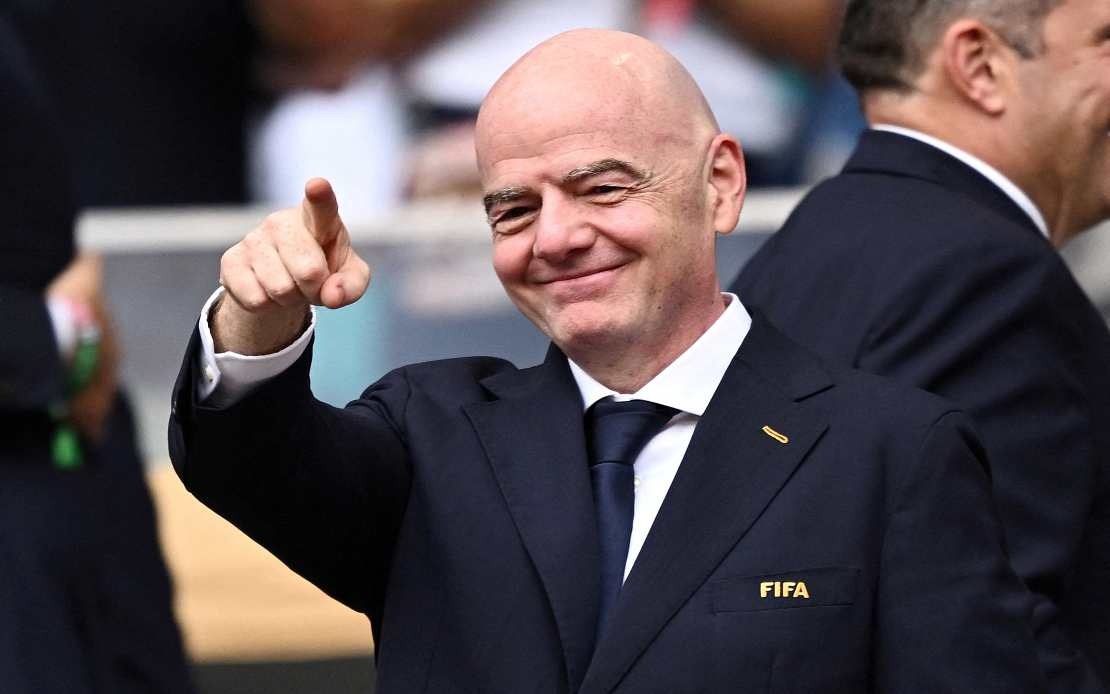
FIFA President Gianni Infantino's ambitious scheme to inject private capital into the governance of world football's flagship competitions has effectively collapsed, after the Asian Football Confederation joined UEFA and CONCACAF in formal rejection on July 31. The coordinated opposition from three continental confederations representing 137 voting members—out of FIFA's total 211 member associations—has made the proposal mathematically unviable, since it requires majority approval. The swift and decisive pushback from Asia's football leadership signals deepening institutional crisis at FIFA, with questions now extending beyond the specific investment proposal to the fundamental legitimacy of Infantino's leadership.
The rejected initiative would have established FIFA Forward Enterprise, a new corporate vehicle designed to manage the World Cup and other FIFA competitions. Under the scheme, FIFA intended to cede a 20 per cent equity stake to external investors, with Joshua Kushner's investment firm Thrive Eternal positioned as the lead financial backer. Kushner, whose family connections to United States President Donald Trump through his brother Jared have drawn international attention, represented a high-profile face to what FIFA marketed as a commercialization drive intended to generate fresh revenue streams for global football development.
The AFC's formal statement, delivered in London, transcended tactical opposition to the FFE proposal itself. The confederation's 47 member nations, stretching from the Middle East through South Asia and Southeast Asia to East Asia and Oceania, emphasized what it characterized as systemic governance failures within FIFA's decision-making architecture. The AFC pointedly noted that continental associations learned of the privatization plans through media reports on Tuesday rather than through proper consultation channels, underscoring what it called "fundamental weaknesses in FIFA's consultation and decision-making processes." This procedural critique carries particular weight in Asian football politics, where questions of transparency and stakeholder inclusion have animated debates over regional tournament scheduling and commercial arrangements.
The convergence of opposition from Europe, North and Central America, and Asia represents an unprecedented alignment among FIFA's major power blocs. UEFA's earlier declaration that it would boycott FIFA competitions if the FFE plan proceeded set a confrontational tone that galvanized broader coalition-building. CONCACAF, representing 41 nations from North America, Central America, and the Caribbean, subsequently aligned with the European position. The arithmetic of opposition now stands decisively against Infantino: the AFC's 47 members, combined with CONCACAF's 41 FIFA-affiliated members and UEFA's 55, constitute a blocking coalition of 137 votes—well above the simple majority required to defeat the proposal.
For Malaysian observers, the AFC's stance carries particular significance given Malaysia's role as a regional football stakeholder and the country's engagement with broader AFC strategic decisions. The confederation's emphasis on institutional transparency and meaningful consultation resonates with concerns that smaller and mid-sized football nations have periodically raised about FIFA's top-down governance patterns. The public nature of the AFC's rebuke—framed not merely as disagreement over investment mechanics but as fundamental critique of FIFA's decision-making process—suggests that Infantino's authority within the confederation has substantially eroded.
Infantino's personal position has become increasingly precarious in light of the AFC's intervention. While the Swiss administrator previously survived various controversies through strategic maneuvering and cultivation of support among smaller federations, the present constellation of opposition cuts across traditional FIFA factional lines. The AFC's statement contained a pointed observation that the prospect of World Cup boycotts should disturb "everyone who cares about the future of our game," a rhetorical flourish suggesting that Infantino's leadership choices have pushed football toward an institutional brink. The question of whether he can navigate continued opposition or whether the confluence of crises will trigger demands for his replacement remains the paramount political question facing world football.
The substance of the AFC's critique extends beyond formal governance objections. By emphasizing that the issue "extends far beyond a single proposal," the confederation's leadership signaled that the FFE episode has crystallized longer-standing grievances about FIFA's operational patterns under Infantino's stewardship. These include concerns about centralized decision-making that marginalizes confederations, inadequate consultation mechanisms for major initiatives, and perceived prioritization of commercial interests over the sport's institutional integrity. For regional confederations like the AFC, which collectively represent hundreds of millions of football fans and players, such structural imbalances carry profound implications for how world football develops.
The political dynamics surrounding the FFE proposal also illuminate fault lines between FIFA's commercial ambitions and traditional conceptions of football governance. Private equity investment in sports governance remains contentious globally, with European football clubs having experienced mixed outcomes from such arrangements. The AFC's resistance suggests that Asian football leadership—cognizant of UEFA's skepticism—views the privatization experiment as incompatible with the sport's custodial obligations. This philosophical positioning has strengthened the AFC's negotiating hand within FIFA's broader institutional architecture.
Moving forward, Infantino confronts a deteriorating position within FIFA's confederate structure. The AFC's decision to stand alongside UEFA and CONCACAF represents a watershed moment in FIFA politics, as it demonstrates that opposition to his governance approach now transcends regional particularisms. The confluence of institutional critique, procedural objections, and political opposition makes the FFE proposal unviable, but more significantly, it raises acute questions about Infantino's capacity to retain the confederate support necessary for continued presidential authority. As FIFA approaches critical decisions on future World Cup scheduling, revenue distribution mechanisms, and governance reforms, the organization's internal cohesion—or lack thereof—will shape global football's institutional trajectory for years ahead.

