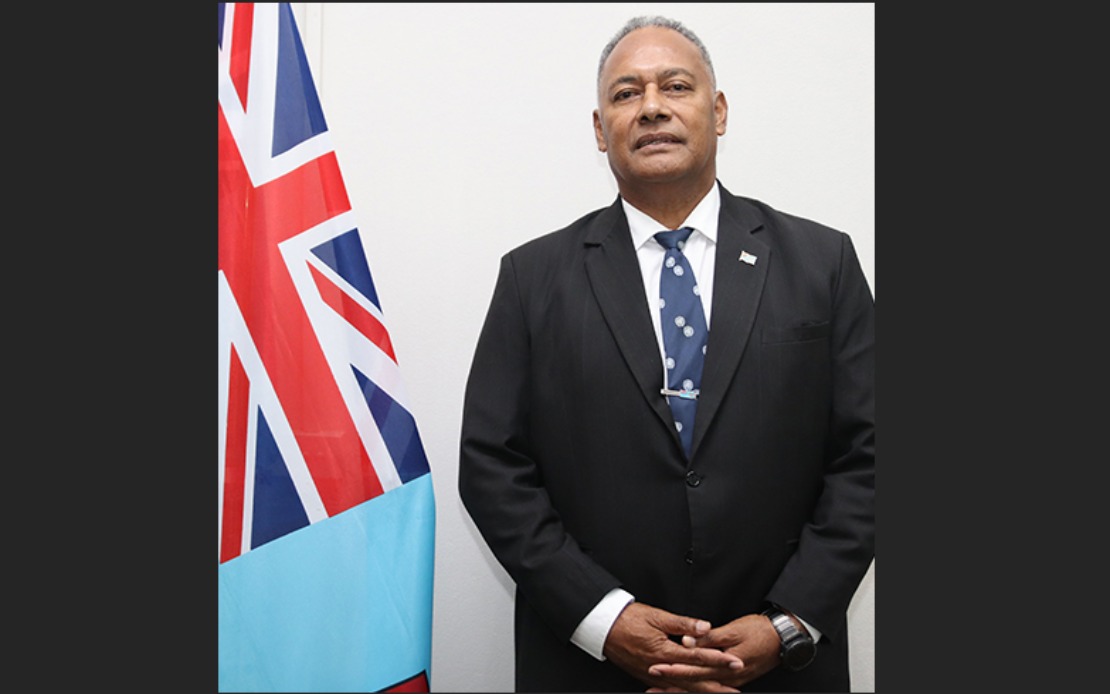
Sakiasi Raisevu Ditoka, Fiji's Foreign and External Trade Minister, has arrived in Malaysia for a four-day working visit aimed at elevating the relationship between the two countries across multiple sectors. The engagement, running from Sunday through Wednesday, comes at a time when both nations are seeking to expand their economic footprint in the Indo-Pacific region and strengthen partnerships beyond traditional trading arrangements.
The visit centres on substantive discussions between Ditoka and Malaysia's Foreign Minister Datuk Seri Mohamad Hasan, whose agenda will encompass trade expansion, investment facilitation, and collaborative development in emerging sectors. Both ministers plan to examine opportunities in capacity building initiatives, forestry operations, renewable energy infrastructure, and cultural exchange programmes—areas where complementary expertise could yield mutual benefits. The discussions also extend beyond bilateral concerns, with both sides intending to share perspectives on pressing regional and international matters affecting their respective economies and geopolitical positioning.
A parallel engagement with Malaysia's Investment, Trade, and Industry Minister Datuk Seri Johari Abdul Ghani will focus explicitly on uncovering new economic cooperation avenues. This ministerial-level attention reflects Malaysia's strategic interest in diversifying its Pacific partnerships at a moment when competition for influence in that region is intensifying among major powers. For Fiji, the visit represents an opportunity to strengthen ties with a significant Asian economy that has demonstrated sustained interest in Pacific affairs.
Two institutional developments will underscore the visit's significance. The Republic of Fiji's High Commission in Kuala Lumpur will formally reopen following a period of inactivity, restoring direct diplomatic representation and signalling renewed commitment from both sides to deepen engagement. Simultaneously, the establishment of the Malaysia-Fiji Business Council creates a dedicated platform for private sector actors from both nations to identify and execute joint ventures. Such business councils typically serve as crucial bridges between government frameworks and commercial entities, accelerating investment flows and facilitating knowledge transfer across sectors.
The trade relationship, though modest in absolute terms, reveals important patterns about the bilateral dynamic. In 2025, total bilateral commerce reached RM880.01 million, equivalent to US$206.2 million. Malaysia's export position dominates substantially, with outbound shipments valued at RM867.92 million (US$203.41 million), while Fijian exports to Malaysia stood at merely RM12.09 million (US$2.80 million). This pronounced imbalance suggests significant untapped potential for expanding Fijian exports and rebalancing the trade relationship—a likely focal point for ministerial discussions.
For Malaysian policymakers, Fiji represents a gateway to broader Pacific engagement. The island nation sits at a geopolitical crossroads where traditional Western influence intersects with rising Chinese economic presence. By strengthening ties with Fiji, Malaysia positions itself as a reliable alternative partner offering development assistance and trade opportunities without the geopolitical strings that often accompany investment from major powers. This approach aligns with Malaysia's broader Indo-Pacific strategy, which emphasises ASEAN centrality and inclusive regional frameworks.
The timing of this visit carries particular significance given regional dynamics in the Pacific. Island nations increasingly recognise that diversifying their international partnerships enhances their negotiating leverage on climate change, trade access, and development financing. Fiji, as a developing Pacific economy vulnerable to climate impacts and dependent on tourism and agriculture, stands to benefit from Malaysian expertise in renewable energy deployment and sustainable forestry practices. Conversely, Malaysia gains access to Fiji's strategic location and potential influence within Pacific Island Forums and other regional organisations.
The reopening of Fiji's diplomatic mission in Kuala Lumpur addresses a practical gap that likely hindered bilateral engagement for some time. Physical presence of diplomatic staff facilitates informal relationship-building, accelerates decision-making on trade matters, and enables better coordination on international issues. The high commission will serve as an administrative hub managing visa applications, cultural programmes, and consular services while also functioning as an intelligence-gathering and policy-advocacy centre.
The Malaysia-Fiji Business Council's establishment introduces institutional scaffolding that historically proves valuable for nurturing commercial ties. Such councils typically facilitate networking events, conduct market research, support trade missions, and provide advocacy platforms for business communities. Given the current trade imbalance, the council might prioritise identifying Fijian products—particularly agricultural goods, seafood, or craft items—that could find Malaysian markets, or alternatively, exploring opportunities for Malaysian service providers in Fiji's tourism and infrastructure sectors.
Sector-specific cooperation outlined in official statements indicates forward-looking ambitions. Renewable energy collaboration responds to global decarbonisation imperatives and Fiji's vulnerability to climate change impacts, potentially positioning Malaysia as a technology and financing partner for solar and hydroelectric projects. Forestry cooperation could encompass sustainable management practices, particularly relevant given Malaysia's experience managing tropical forest resources. Cultural initiatives may include education exchanges, artistic collaborations, and tourism promotion—soft power mechanisms that build public-to-public connections underlying official diplomacy.
For Southeast Asian observers, this visit underscores the region's growing engagement with the Pacific, reflecting awareness that influence in these distant island economies matters for regional stability and for counter-balancing major power competition. Malaysia's approach—emphasising trade, development support, and voluntary partnership—contrasts with more assertive strategies and may prove attractive to Pacific nations seeking to navigate geopolitical complexities. The visit thus represents not merely bilateral administration but a modest assertion of regional relevance in an increasingly contested Indo-Pacific strategic space.

