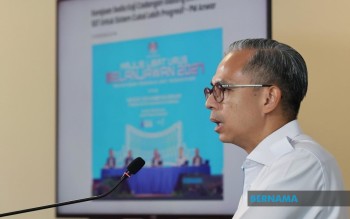
The Malaysian government is taking a measured approach to exploring a potential overhaul of the national taxation system, with Finance Minister II Datuk Seri Amir Hamzah Azizan now tasked with conducting an in-depth analysis of how the Goods and Services Tax (GST) and Sales and Services Tax (SST) frameworks could be combined. Government spokesperson and Communications Minister Datuk Seri Fahmi Fadzil indicated at a post-Cabinet press conference in Putrajaya on August 19 that no rigid deadline has been imposed for the study's completion, allowing the Finance Ministry to conduct thorough due diligence on what would represent a significant shift in Malaysia's indirect taxation architecture.
Prime Minister Datuk Seri Anwar Ibrahim has directed the Finance Ministry to investigate the possibility of integrating selected GST mechanisms into the existing SST structure, with the stated aim of creating a more progressive and equitable national tax regime. The instruction comes at a time when Malaysia's tax system faces ongoing scrutiny regarding its fairness and revenue collection efficiency. Rather than rushing into implementation, the Cabinet has approved a deliberate study phase that will examine lessons derived from Malaysia's previous GST experience, as well as current difficulties encountered under the SST regime. This cautious approach reflects the government's awareness that any major taxation restructuring requires careful evaluation to avoid the missteps that accompanied past reforms.
The proposed hybrid system represents an intriguing middle ground in the long-running debate over Malaysia's optimal indirect tax structure. When GST was implemented under the previous administration, it generated significant public controversy and political opposition, particularly regarding perceived regressive impacts on lower-income households and small businesses. The subsequent shift to SST under the current government was partly motivated by these grievances, yet the SST framework has itself encountered implementation challenges and limitations in revenue generation. By considering a strategic merger of elements from both systems, policymakers may be attempting to capture the revenue efficiency benefits associated with GST while maintaining the political palatability of SST branding and avoiding perceived inequities that plagued the original GST rollout.
Fahmi's remarks indicate that the government remains committed to SST as the primary taxation vehicle while selectively adopting GST principles where deemed appropriate and beneficial. This framing suggests that Malaysia will not abandon its current tax regime wholesale but rather pursue targeted enhancements to its architecture. The specific GST elements under consideration have not been publicly detailed, though taxation experts typically point to GST's broader tax base and simpler rate structure as potential advantages. However, the government's emphasis on ensuring any changes align with progressive taxation principles indicates that revenue distribution and fairness considerations will weigh heavily in the decision-making process.
The timing of this exploration is noteworthy given Malaysia's persistent budget deficits and the need to broaden the tax base amid demographic and economic transitions. The nation's reliance on petroleum revenues has diminished over recent decades, making enhanced indirect tax efficiency increasingly important for fiscal sustainability. A more comprehensive taxation system could theoretically improve compliance and reduce collection costs, though such benefits depend entirely on implementation quality and taxpayer cooperation. The government's willingness to study hybrid approaches demonstrates acknowledgment that neither the pure GST nor pure SST model has proven entirely satisfactory in the Malaysian context.
From a business perspective, the proposal carries significant implications for corporate tax planning and compliance obligations. Companies operating across multiple sectors would need to understand how revised tax rules apply to their operations. The financial services, property, and retail sectors would likely experience material changes depending on how GST elements are integrated. Small and medium enterprises particularly require clarity on how any new system would affect their administrative burden and cost structures. The extended study period provides opportunity for the Finance Ministry to consult with industry stakeholders and assess practical implementation challenges before Cabinet consideration.
International experience offers relevant lessons for Malaysian policymakers. Several regional neighbors, including Singapore and Thailand, operate sophisticated GST-based systems that generate substantial revenue while maintaining relatively low headline rates. Conversely, Indonesia's recent VAT rate increases demonstrate how consumption tax systems can face political resistance if perceived as excessively burdensome. The Malaysian context differs from these comparisons, requiring domestic customization rather than simple adoption of external models. The Finance Ministry's commitment to examining lessons from Malaysia's own GST experience suggests learning from both successes and failures during 2015-2018 implementation will inform the current study.
Public communication about the study remains limited, with Fahmi declining to specify whether findings will be presented during the upcoming budget announcement. This uncertainty reflects the early-stage nature of the investigation and the government's desire to avoid premature public discussion that could generate political controversy. Given the sensitivity surrounding taxation matters in Malaysia, the Cabinet likely wants substantive policy options and detailed impact assessments before exposing proposals to public debate. The timeline for Cabinet discussion and decision therefore remains flexible, dependent on the complexity of issues the Finance Ministry uncovers during its review.
The economic and social implications of any tax system overhaul warrant careful consideration. A progressive hybrid system, if properly designed, could theoretically improve both revenue collection and fairness by targeting consumption patterns across income groups differently. Conversely, poorly executed integration of GST and SST elements could create complexity, compliance confusion, and unintended economic distortions. The Finance Ministry's extended preparation period reflects these weighty considerations. Stakeholders across business, labor, and civil society will likely await the eventual Cabinet discussion with significant interest, as taxation reforms ultimately affect competitiveness, consumer prices, and government service delivery capacity across Malaysian society.

