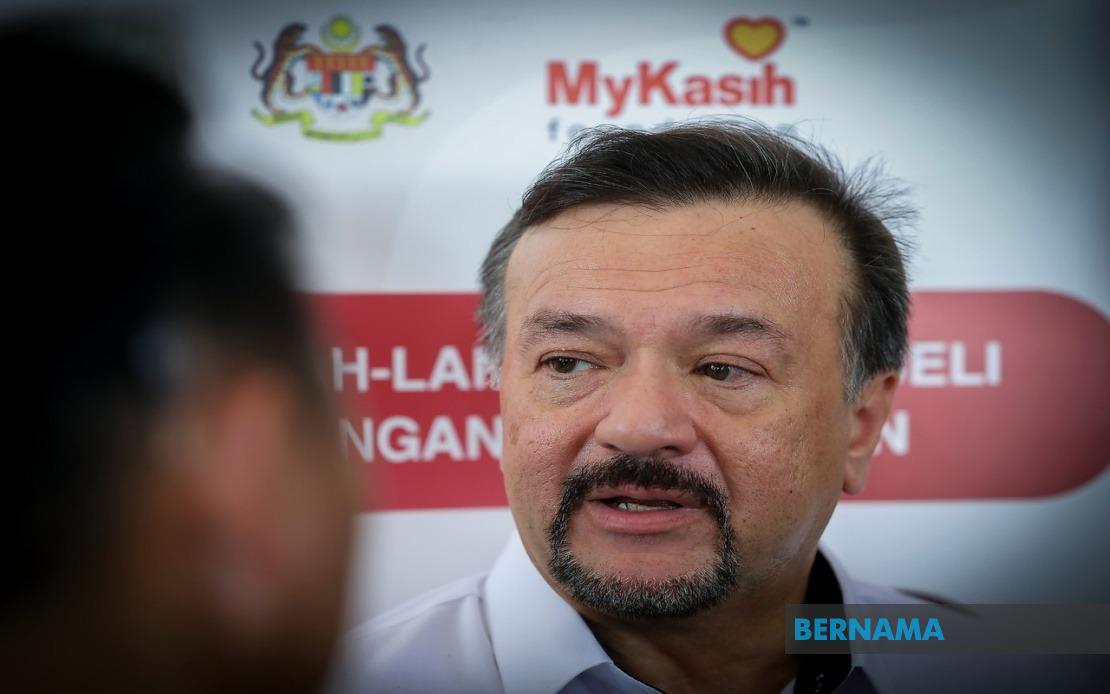
The Ministry of Finance has indicated flexibility in managing the BUDI MADANI Diesel subsidy programme, signalling its readiness to entertain proposals aimed at enhancing the scheme's operational effectiveness. Finance Minister II Datuk Seri Amir Hamzah Azizan outlined this adaptive approach during a media conference in Kuching, emphasising that any adjustments to the programme would be grounded in empirical evidence rather than speculation or preliminary assumptions about user needs.
The government's measured stance reflects a deliberate strategy of allowing sufficient time for comprehensive data gathering before implementing significant policy changes. Amir Hamzah noted that critics initially expressed concern about quota limitations when the RON95 subsidy initiative commenced, yet evidence accumulated over the initial months of 2024 demonstrated that only 0.76 per cent of users exceeded the 200-litre threshold. This relatively modest uptake of the maximum allowance suggests the current quota structure may be functioning as intended, though further monitoring will clarify whether adjustments become necessary as usage patterns stabilise.
The minister's comments underscore a broader philosophy within the Finance Ministry regarding subsidy reform. Rather than implementing sweeping changes based on anecdotal feedback or worst-case projections, the government prefers establishing baseline metrics through genuine operational experience. This data-driven methodology reduces the risk of over-allocating resources or creating distortions within the subsidy system that could compromise its long-term sustainability and fairness among beneficiaries.
Previous experience with targeted subsidy initiatives, particularly in the e-hailing sector, has informed the current approach to diesel subsidies. When the government launched the e-hailing subsidy programme, drivers reported that initial fuel quotas were insufficient for their operational requirements. Rather than dismissing these concerns, the ministry conducted a systematic review of actual consumption records compiled by transport companies, identifying legitimate cases where fuel consumption patterns justified higher allocations. This pragmatic assessment resulted in the establishment of differentiated quota levels of 600 and 800 litres, calibrated to match genuine usage variations among drivers.
The ability to segment beneficiaries according to their actual fuel consumption represents a significant refinement in subsidy design. By recognising that one-size-fits-all allocations are inherently inefficient, the government has created mechanisms to direct resources more precisely toward those with demonstrable need. This layered approach reduces waste while ensuring that drivers operating intensive routes or managing multiple vehicles receive adequate support without over-subsidising those with lower fuel requirements.
Applying lessons from the e-hailing programme to diesel subsidies suggests the government will adopt a similarly iterative methodology. The diesel initiative will likely benefit from an initial observation period during which administrators collect comprehensive usage data before contemplating structural modifications. Any proposals for quota increases, programme expansion, or other substantive changes will be evaluated against this empirical foundation, making it difficult for stakeholders to advocate for adjustments lacking quantifiable justification.
Works Minister Datuk Seri Alexander Nanta Linggi's presence at the Kuching briefing highlighted the cross-ministerial coordination underlying the diesel subsidy programme. The inclusion of the Works Ministry suggests the initiative extends beyond simple fuel price support to encompass considerations about construction sector competitiveness, logistics efficiency, and broader economic development. This institutional involvement indicates the programme forms part of a coordinated approach to managing costs across multiple economic sectors dependent on diesel consumption.
The government's willingness to revisit policy decisions based on accumulated evidence represents a departure from more rigid subsidy frameworks that remain unchanged despite shifting circumstances. This flexibility does not imply weak commitment to fiscal discipline but rather reflects sophisticated understanding that effective policy requires continuous calibration as real-world conditions emerge. For Malaysian policymakers, balancing the fiscal burden of subsidies against genuine economic hardship requires precisely this kind of evidence-based responsiveness.
Looking forward, stakeholders seeking modifications to the BUDI Diesel programme would be wise to compile detailed usage statistics and concrete operational data supporting their positions. The ministry's demonstrated preference for empirical evidence over assertions creates both opportunity and obligation for those advocating change. Drivers, logistics companies, and other users capable of documenting their fuel consumption patterns and explaining why current quotas prove inadequate possess the most persuasive toolkit for securing adjustments.
The minister's comments also acknowledge that subsidy policy exists within constraints. The fundamental question underlying any expansion remains whether additional fiscal outlay can be justified within the government's broader budgetary framework. Enhanced subsidies necessarily compete with spending on infrastructure, healthcare, education, and social programmes. The emphasis on data-driven decision-making thus serves partially to ensure that any costs incurred through programme modifications deliver genuine economic benefits rather than simply representing politically convenient expenditure.
For Malaysian businesses reliant on diesel fuel, the finance ministry's transparent communication about the adjustment process offers some reassurance. Rather than facing arbitrary quota caps or unexpected programme termination, operators can anticipate that rational feedback supported by consumption records will receive serious consideration. This predictability, whilst not guaranteeing quota increases, enables more confident business planning than uncertainty would permit.
The BUDI MADANI Diesel programme exemplifies how targeted subsidies can function as policy tools when coupled with appropriate monitoring and adjustment mechanisms. Unlike universal price supports that often impose significant fiscal burdens whilst assisting wealthy consumers unnecessarily, targeted approaches concentrate benefits among those demonstrating genuine consumption needs. The government's openness to refinement based on usage patterns suggests this programme may evolve into an increasingly efficient mechanism for managing diesel costs whilst maintaining fiscal sustainability across Malaysia's economy.