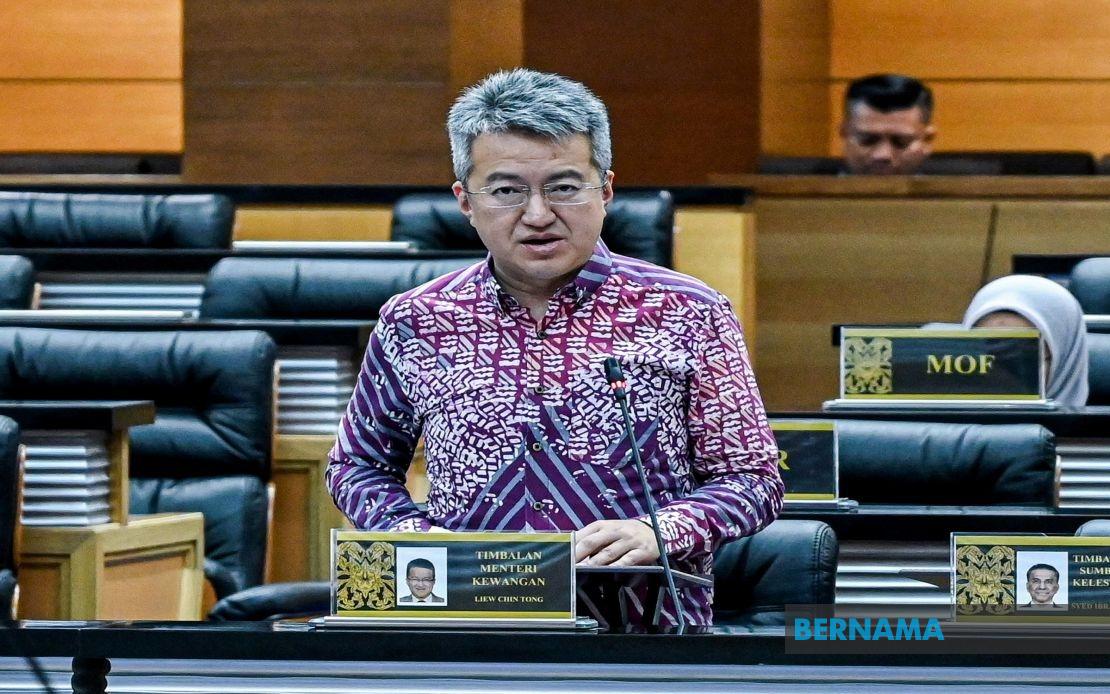
The Ministry of Finance, working alongside the Ministry of Women, Family and Community Development, has launched an in-depth examination of a proposal to remove the Sales and Service Tax burden from registered elderly care facilities across Malaysia. Deputy Finance Minister Liew Chin Tong revealed the initiative during parliamentary proceedings on July 16, signalling renewed government attention to the financial pressures facing families with ageing relatives in professional care settings.
The investigation encompasses a detailed categorisation of existing service tax structures to distinguish between facilities offering fundamental care services and those providing premium or specialised options. This analytical framework aims to ensure that any tax policy applied to the elderly care sector does not inadvertently penalise lower-income households or create unintended economic hardship. The distinction between service tiers is critical because it determines which facilities might eventually qualify for relief under any revised tax arrangement.
The policy review emerged from parliamentary concerns raised by Lee Chuan How, representing the Ipoh Timor constituency under the Pakatan Harapan coalition. Lee highlighted the tangible burden imposed on Malaysian families, noting that care centre fees typically range around RM2,500 monthly—a substantial commitment for most middle and working-class households. The eight per cent service tax applied to such monthly payments translates into hundreds of additional ringgit annually per family, compounding existing financial strain during a period of elevated living costs across the nation.
Liew underscored the government's awareness that vulnerable populations deserve policy consideration, particularly when broader economic conditions are already challenging household budgets. His commitment to thorough examination reflects acknowledgement that tax policy cannot be implemented in isolation from social welfare objectives. The Finance Ministry's willingness to engage in detailed cost-of-living analysis demonstrates responsiveness to parliamentary backbench input, even when proposals require complex interagency coordination.
Beyond desk-bound analysis, Liew committed the Finance Ministry to conducting field visits to elderly care centres alongside representatives from the women's ministry. These site inspections represent a hands-on approach to understanding operational realities that data alone cannot capture. By directly engaging with care centre operators, ministry officials aim to grasp the financial constraints, service delivery models, and staffing challenges that shape the sector's economics. Such engagement sessions also create opportunities for operators to articulate their specific concerns regarding tax compliance costs and administrative burdens.
The integration of the Ministry of Women, Family and Community Development into this review reflects broader recognition that elderly care policy intersects with family structure, social support systems, and gender dynamics. Women disproportionately shoulder informal caregiving responsibilities within Malaysian families, making formal care centre access particularly significant for female workforce participation. By partnering with this ministry, the Finance Ministry signals understanding that elderly care tax policy has gendered implications beyond simple cost calculations.
The proposal specifically targets facilities registered with the Social Welfare Department, establishing a clear delineation between regulated professional care and unregistered arrangements. This regulatory focus ensures any tax relief reaches legitimate operators meeting established standards rather than informal providers outside the formal system. Registration serves as a quality assurance mechanism, though it also means unregistered care arrangements—potentially serving lower-income households—would remain outside any exemption framework.
Malaysian policymakers face a broader question about tax design for essential services serving vulnerable populations. Other Southeast Asian nations have implemented various approaches to taxing aged care, ranging from complete exemptions to tiered systems reflecting service complexity. Malaysia's deliberative approach, involving multiple stakeholder consultations, reflects democratic processes but also highlights the genuinely complex trade-offs involved. Revenue considerations must balance against equity concerns, particularly as Malaysia's ageing population expands and care sector demand grows.
The parliamentary session itself demonstrated procedural engagement with policy questions, with 63 distinct motions tabled under Standing Order 17 across the 16-day sitting. This volume suggests systematic parliamentary attention to constituent concerns, though also raises questions about implementation capacity and policy follow-through. Ramli Mohd Nor's observation that both government and opposition members chaired proceedings reflects bicameral engagement norms, though substantive outcomes from such motions require subsequent ministerial action and budget allocation.
Looking forward, the Finance Ministry's timeline for completing its study remains undefined, leaving families and care operators in a period of uncertainty. The outcome will likely depend on several factors: comparative revenue impact across different exemption scenarios, feedback from the proposed centre visits, political priority relative to other fiscal pressures, and whether alternative revenue sources can offset any lost collections. Given Malaysia's varied approach to other social services, resolution may involve partial measures—perhaps exempting certain care categories while maintaining tax on premium services—rather than blanket relief.
The elderly care sector's growth trajectory adds urgency to this policy deliberation. Malaysia's demographic profile increasingly features ageing populations, particularly in urban centres, driving demand for professional care facilities. As more families turn to institutional care rather than multigenerational household arrangements, the cumulative tax impact across the care sector becomes more economically significant. Early policy decisions now establish precedents that will shape sector development and family financial planning for decades.
Beyond immediate fiscal considerations, the government's engagement with this issue reflects evolving social policy priorities. Framing elderly care as worthy of tax consideration—comparable to health services or education—acknowledges demographic transitions and shifts family structures. The proposal thus represents not merely technical tax adjustment but implicit policy recognition that demographic change requires proactive governmental response rather than leaving care arrangements entirely to market forces.

