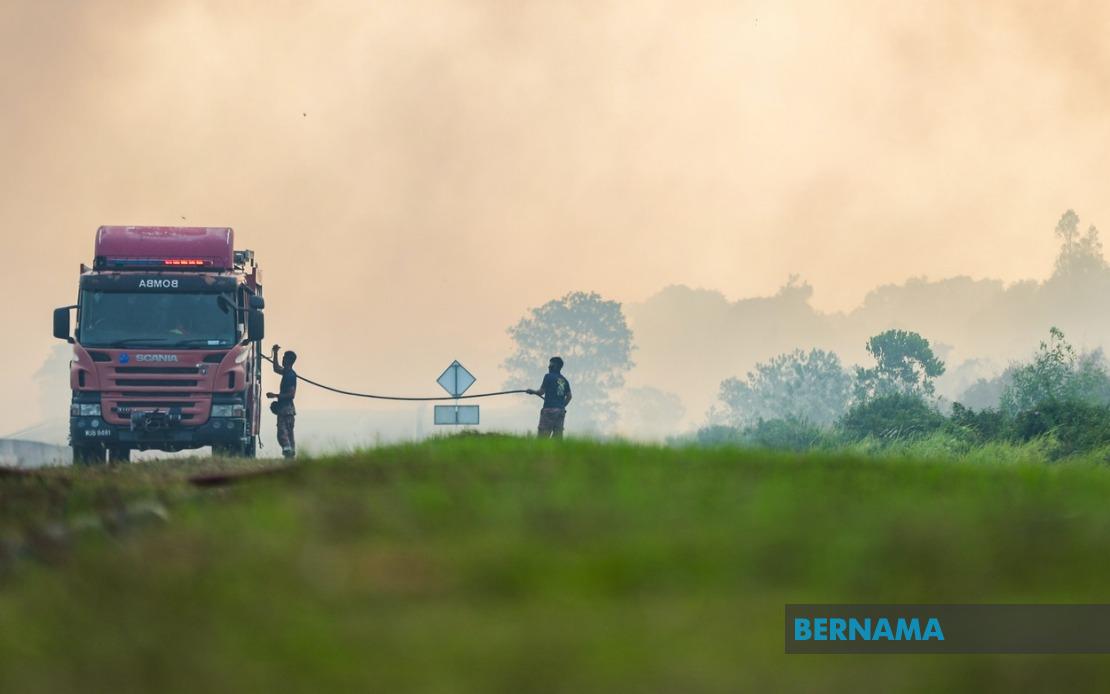
Firefighting operations at a peatland fire in Pengerang, near Kota Tinggi in Johor, have made significant progress, with more than 29 of the 51.4 hectares affected area brought under control by Monday afternoon. The blaze, which erupted along Jalan Bypass Punggai-Sebana Cove, has mobilised a substantial emergency response involving multiple agencies working in coordinated two-sector operations since the fire's outbreak earlier in the week.
According to Fire Superintendent II Baharuddin Idris, commander of operations at Sungai Rengit Fire and Rescue Station, the firefighting teams have maintained round-the-clock efforts to suppress the flames, contain their spread, and establish protective firebreaks around threatened areas. The dual-sector approach reflects the scale and complexity of battling peat fires, which burn beneath the surface and require sustained suppression efforts even after visible flames are extinguished.
Sector A presented the more challenging phase of the operation, with approximately 21 hectares still requiring active firefighting and firebreak establishment work. In contrast, Sector B had reached near-complete extinguishment by the reporting period, suggesting that tactical adjustments and concentrated resource allocation were yielding tangible results in containing the broader incident.
The response demonstrated substantial inter-agency coordination typical of major environmental emergencies in Malaysia. By Monday, the operation had enlisted 36 firefighters from the primary rescue service, alongside nine personnel from the Malaysian Civil Defence Force providing support and logistics. Additionally, 14 specialist workers from Ranhill SAJ—the water services concession holder for the region—contributed technical expertise, while environmental monitoring was ensured through the Department of Environment's two-person team and ground coordination by three municipal officials from Pengerang.
A significant escalation occurred when an aircraft was mobilised to augment ground-based firefighting capacity. The aircraft, approved by the Air Operations Control Centre, deployed at 2:30 pm to conduct aerial water-dropping operations, a critical tool for suppressing peat fires that conventional ground crews alone cannot fully address. Such aerial intervention became necessary given the fire's persistence and the substantial acreage still requiring active suppression.
Peat fires carry particular significance for Malaysia's environmental and public health agenda. Unlike fires in conventional vegetation, peatland blazes burn slowly through organic soil layers, consuming accumulated carbon and releasing substantial greenhouse gas emissions into the atmosphere. The Punggai-Sebana incident, affecting over 50 hectares, underscores the ongoing vulnerability of Johor's peatland ecosystems to uncontrolled combustion, whether sparked by human activity, lightning, or spontaneous ignition during drought conditions.
The Pengerang region, located within the administrative boundaries of Kota Tinggi district, has experienced previous environmental challenges related to land use and industrial development. The presence of operational facilities and infrastructure in proximity to natural areas creates inherent fire risks, particularly during periods of dry weather when soil moisture content drops and ignition sources become more consequential. The involvement of Ranhill SAJ in the response underscores the operational linkage between water services infrastructure and emergency resource deployment.
Peat fires also present respiratory and air quality hazards extending beyond their immediate vicinity. The smoke and particulate matter generated by burning peat can affect air quality across broader regions, particularly in downwind areas, raising potential concerns for populations in neighbouring districts and even trans-boundary impacts if winds carry emissions toward neighbouring states or countries. Public health monitoring typically accompanies such incidents, though specific air quality data was not included in the operational reports.
The success in extinguishing more than half the affected area by Monday afternoon reflected intensified effort and favourable tactical conditions, though the persistence of significant acreage in Sector A indicated that the operation remained in critical phases. Continued 24-hour operations were necessary to prevent re-ignition of already-burned areas, a common complication in peat fire management where dormant subsurface combustion can reignite if monitoring lapses.
From a broader emergency management perspective, the Punggai-Sebana fire exemplified the multi-disciplinary response capacity mobilised within Johor's disaster management framework. Coordination between fire services, civil defence, utility operators, environmental authorities, and local administration demonstrated institutional preparedness for environmental emergencies. Such inter-agency protocols have become increasingly important as climate variability and land use pressures create recurring fire risks in peat-rich regions across Southeast Asia.
The incident also highlighted the resource intensity of peat fire suppression compared to conventional forest fires, with specialist equipment, trained personnel, and sustained financial commitment required to achieve containment and eventual extinguishment. For Malaysian authorities managing multiple peatland areas across the Peninsula and Borneo, such incidents inform resource allocation decisions and fire prevention strategies, including controlled burning protocols and land-use planning considerations that balance economic development with environmental fire risk minimisation.
As operations proceeded into subsequent days, the trajectory of the Punggai-Sebana fire would continue to influence policy discussions regarding peatland protection, industrial facility siting, and climate adaptation measures within Johor's broader environmental governance framework.

