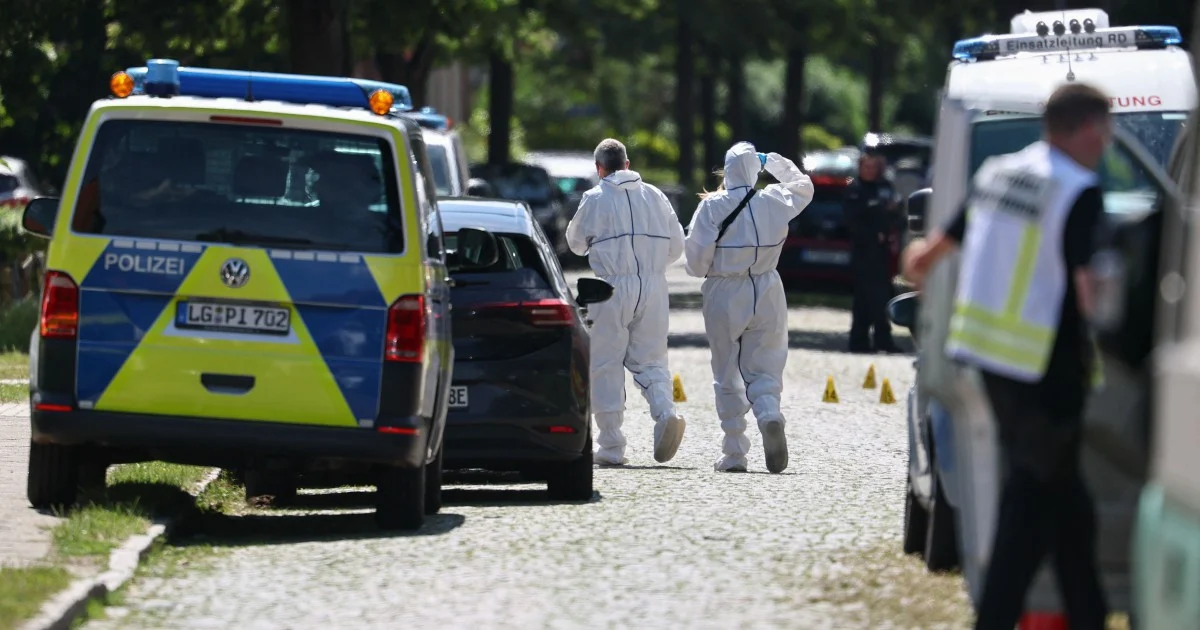
A shooting at a youth welfare centre in Stade, Germany on Monday left five people dead and marks one of the most serious incidents of gun violence the country has experienced in recent years, according to police who have since apprehended the suspected gunman.
Mass shootings remain comparatively rare in Germany, where gun ownership is tightly regulated through a licensing system that ranks among Europe's most stringent. The country has experienced only a handful of deadly mass shooting incidents in the past two decades, making this incident particularly significant in the German context. The regulations governing firearm acquisition, which require background checks, safety training, and demonstrated legitimate need, have long been credited with keeping rates of gun violence substantially lower than in jurisdictions with more permissive policies.
The incident unfolded at a facility dedicated to youth welfare services, an institutional setting where young people and social workers typically gather for support, counselling, or programme activities. The specific circumstances surrounding the shooting—including the motive, the sequence of events, and the relationship between the suspect and the victims—remain subjects of ongoing police investigation. Authorities have not yet disclosed detailed information about the identities of those killed or injured, nor have they provided comprehensive details about the suspect's background or any apparent grievances.
The arrest of the suspected gunman represents a critical development in the immediate aftermath of the tragedy. Law enforcement's swift apprehension of the suspect has likely prevented further loss of life and enabled the investigation to proceed with the individual in custody. Police investigations into mass shooting incidents typically focus on establishing the shooter's motive, access to weapons, and any warning signs that may have preceded the attack.
For Malaysia and other Southeast Asian nations monitoring international crime trends, this incident underscores the importance of robust firearm regulation frameworks. While Germany's strict gun laws have not prevented mass shootings entirely, they have kept such incidents rare compared to countries with less restrictive policies. Malaysia's own stringent firearms licensing regime similarly reflects recognition that controlling access to weapons can reduce the frequency and severity of gun violence, even as other factors—including mental health services, community policing, and threat assessment protocols—also contribute to public safety.
The psychological and social impact of mass shootings extends beyond immediate casualties. Communities affected by such violence experience collective trauma, and the broader population often grapples with questions about security, safety, and the adequacy of preventive measures. In Germany, particularly given the nation's historical sensitivity to mass violence, incidents of this nature trigger widespread public concern and often prompt official reviews of security protocols and threat assessment systems.
The German authorities' response to the incident will likely include a comprehensive investigation that examines not only what occurred but also whether institutional safeguards and early warning systems functioned as intended. Youth welfare centres, by their nature, work with vulnerable populations and staff trained in identifying at-risk individuals. Whether the suspect had any prior contact with such services or law enforcement will be a key line of inquiry.
For policymakers across Europe and beyond, mass shooting incidents provoke renewed examination of the balance between public safety and individual rights. Germany's approach to firearms regulation reflects a societal consensus that the benefits of restricting gun ownership outweigh the limitations on those who might lawfully wish to own weapons. This model contrasts sharply with jurisdictions where gun ownership is framed primarily as a constitutional right with minimal state interference.
The international dimensions of this tragedy are worth noting as well. Mass shootings, regardless of where they occur, generate global media coverage and comparisons across countries. For Malaysian observers and policymakers, German mass shootings provide data points in broader discussions about the effectiveness of gun control policies and the relationship between regulatory frameworks and violent crime rates. Southeast Asian nations, which generally maintain strict firearms regulations akin to Germany's, can point to such international evidence when justifying their own stringent gun laws to their populations.
Police investigations into mass shooting motives often reveal complex personal, psychological, or ideological factors. The coming weeks and months will likely see investigators piecing together the suspect's history, examining social media activity, interviewing associates, and determining whether the attack was motivated by specific grievances, mental health crises, or ideological convictions. Such investigations typically inform not only criminal prosecutions but also broader public discussions about threat prevention and community safety networks.
The incident at the Stade youth welfare centre serves as a stark reminder that violence, even in societies with well-developed social safety nets and restrictive gun laws, can occur. However, it also demonstrates that rapid law enforcement response and the presence of a suspect in custody creates the foundation for thorough investigation and accountability. As details emerge, this case will likely contribute to ongoing international discussions about preventing mass violence and supporting communities affected by such tragedies.

