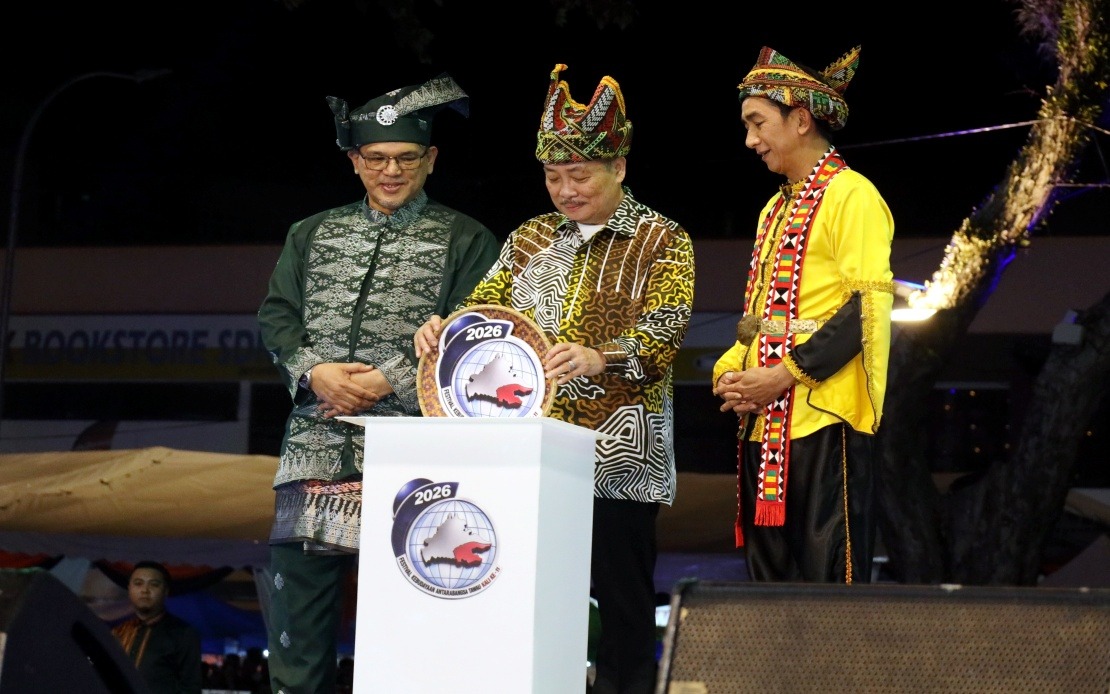
The 11th International Tawau Cultural Festival (FKAT) has begun its mission to transform the southeastern Sabah town into a thriving cultural tourism hotspot, drawing visitors from across Malaysia and internationally. At the festival's opening ceremony, Sabah Chief Minister Datuk Seri Hajiji Noor underscored the event's growing significance as a platform for showcasing the region's rich multicultural heritage and its capacity to drive meaningful economic development in the locality.
Hajiji characterised FKAT as possessing a distinctive identity that extends beyond mere celebration, framing it instead as a vehicle for preserving and promoting the cultural assets of Sabah's diverse communities. His remarks positioned cultural preservation not as a backward-looking exercise but as a forward-thinking investment strategy—one where heritage becomes an engine for prosperity when properly managed and presented to global audiences. This perspective reflects a broader understanding that cultural authenticity and economic development need not be mutually exclusive, particularly in tourism-dependent economies.
The chief minister emphasised that FKAT serves as a unifying force across Sabah's ethnic landscape, transcending communal boundaries while celebrating individual identities. This balance between particularism and universalism represents a delicate political and social achievement in Malaysia's context, where cultural festivals frequently navigate questions of representation and inclusion. By positioning the festival as a symbol of interethnic solidarity, Hajiji articulated a vision where tourism infrastructure becomes a vehicle for social cohesion rather than potential cultural tension.
The international dimensions of FKAT reflect Tawau's strategic geographic position. Participants from Kazakhstan, Uzbekistan, Cambodia, and Indonesia have been drawn to the festival, indicating the event's reach beyond Southeast Asia into Central Asian markets. This cross-continental participation speaks to Tawau's potential as a cultural bridge in regional networks, leveraging its border location to facilitate diplomatic and commercial exchanges that might otherwise bypass smaller towns. For Sabah, such international engagement presents opportunities to strengthen bilateral relationships through grassroots cultural interaction rather than formal state channels alone.
Beyond symbolic and diplomatic dimensions, FKAT generates tangible economic momentum within the community. Local entrepreneurs, homestay operators, artisans, and small-scale traders capitalise on the influx of visitors and heightened commercial activity surrounding the festival period. These spillover benefits represent a form of inclusive economic development that distributes tourism revenue across multiple stakeholder groups rather than concentrating it in large hotel chains or international corporations. For a border town like Tawau, such distributed benefits help ensure that cultural tourism initiatives translate into meaningful livelihood improvements for residents.
The state government's commitment to supporting ethnic organisations in managing their cultural heritage signals an institutional framework designed to sustain FKAT's growth trajectory. Rather than treating the festival as a one-off event, the government positions itself as a facilitator enabling communities to take ownership of their own cultural narratives and economic opportunities. This approach respects local agency while providing structural support—a model that differs from top-down cultural programming where bureaucracies dictate festival themes and outcomes.
Hajiji's references to Visit Malaysia Year 2026 and Visit Sabah Year 2027 contextualise FKAT within broader national and state-level tourism strategies. These coordinated marketing initiatives suggest a deliberate effort to build cumulative momentum in visitor arrivals across multiple years. For Tawau specifically, the alignment between local festivals and overarching promotional campaigns amplifies visibility and resource allocation, potentially attracting higher-calibre tourism infrastructure investments and international media coverage.
The government's intensified tourism promotion campaigns, encompassing both community-based initiatives and coordinated marketing, address a fundamental challenge for peripheral regions: achieving visibility in crowded global tourism markets. Tawau's distance from major Southeast Asian tourism hubs means it must distinguish itself through authentic cultural offerings and strategic positioning. FKAT provides precisely such differentiation—a festival rooted in genuine community practices rather than manufactured attractions designed primarily for external consumption.
For Malaysian and Southeast Asian observers, FKAT's evolution carries broader implications. The festival demonstrates how cultural diversity can be managed as an asset rather than treated as a political liability. In an era where ethno-nationalism threatens social cohesion across multiple Asian nations, models like Tawau's multicultural festival offer instructive examples of institutionalised pluralism that generates shared economic benefits. When different communities recognise tangible advantages accruing from joint cultural celebration, tolerance and cooperation become pragmatic choices rather than moral imperatives alone.
The economic resilience of border towns often depends on maintaining multiple revenue streams. Tawau's agricultural sector faces global price volatility, and traditional resource industries show declining returns. Cultural tourism offers diversification potential, particularly when coupled with infrastructure development and brand positioning. Hajiji's emphasis on FKAT reflects recognition that 21st-century border town prosperity requires economic transition—from reliance on primary commodities toward service sectors centred on experience, identity, and cultural exchange.
Looking forward, FKAT's trajectory will depend partly on consistent government support and partly on organic community enthusiasm. The 11th iteration suggests sustainable demand, yet maintaining momentum requires avoiding festival fatigue among both local participants and distant tourists. Success will hinge on continually refreshing festival programming while respecting core cultural authenticity—a tension that many established festivals navigate imperfectly. Tawau's advantage lies in its genuine multicultural composition; as long as festival organisation remains rooted in community practice, the festival retains credibility that manufactured cultural events cannot replicate.

