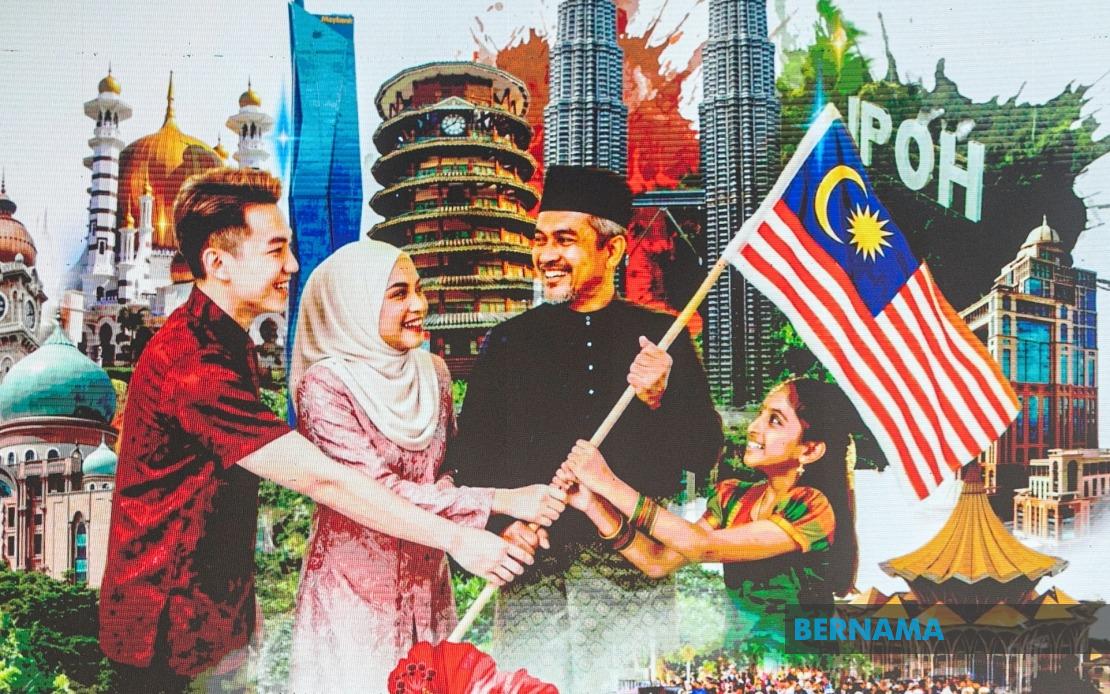
Communications Minister Datuk Seri Fahmi Fadzil has issued a pointed reminder to content creators and the public that artificial intelligence tools require careful oversight when generating imagery of the Jalur Gemilang, warning that the rapid adoption of AI technology risks introducing visual errors into patriotic campaigns during the critical National Month period. Speaking at the launch of the 2026 National Month and Fly the Jalur Gemilang campaign in Ipoh on July 19, Fahmi underscored the necessity of vigilance when deploying automated design systems, particularly given the technical specifications that define Malaysia's national symbol.
The concern centres on one of the Jalur Gemilang's most recognizable and legally significant features: the precisely positioned 14 horizontal stripes that form the flag's design. Fahmi pointed out that artificial intelligence systems, despite their sophistication, can inadvertently omit or misrepresent these stripes when generating flag imagery without human verification. The risk is not merely aesthetic; errors in flag representation carry cultural and symbolic weight in a nation where respect for national emblems holds constitutional importance. As AI-generated content proliferates across social media and digital platforms, the gap between automated output and accurate national symbolism has become a tangible governance concern.
The minister emphasized that content creators bear responsibility for ensuring accuracy before publication, framing this as part of a broader national obligation during patriotic periods. Rather than positioning this as a technical limitation of AI itself, Fahmi's message reframes the issue as one of human diligence and cultural stewardship. Malaysians engaging with the Fly the Jalur Gemilang campaign should educate themselves about proper flag etiquette and the specific visual elements that define the national symbol, he urged, positioning public knowledge as the first line of defence against errors. This educational component reflects a recognition that widespread AI adoption among ordinary citizens means the onus of accuracy cannot fall solely on professional designers.
The ministry has structured its enforcement approach around persuasion rather than immediate legal sanctions. When errors in AI-generated Jalur Gemilang content are discovered, the initial response will be advisory—officials will contact the creators and request corrections rather than invoking specific legislation governing misrepresentation of national symbols. This graduated approach suggests the government recognizes that many errors stem from negligence rather than deliberate disrespect, and that building compliance through dialogue may prove more effective than legal threats, particularly in an emerging AI landscape where creators are still adapting to new technology.
However, the minister made clear that laws addressing improper flag display remain available if voluntary correction fails. The implicit warning signals that persistent violations or refusals to rectify mistakes could trigger formal enforcement action, even if such action remains a secondary rather than primary option. This calibrated stance reflects broader tensions in digital governance across Southeast Asia, where regulators must balance respect for national symbols with the practical realities of rapid technological change and mass participation in digital content creation.
To strengthen compliance and maintain standards throughout the media ecosystem, Fahmi announced that the Ministry will collaborate with the Malaysian Press Institute and Malaysian Media Council to engage media organizations directly. This coordinated approach aims to establish baseline standards for flag representation across professional and semi-professional content producers during the heightened patriotic period spanning National Month. By working through established media institutions, the government seeks to multiply its reach and influence without establishing new regulatory bodies, leveraging existing industry structures to cascade best practices downward.
The campaign itself, officially designated MPBKKJG 2026, runs from the announcement through September 16, Malaysia Day, with citizens encouraged to display the Jalur Gemilang prominently in homes, neighborhoods, and government buildings. This year's celebrations have been organized across two major venues: Putrajaya will host the National Day commemoration on August 31, while Sarawak will stage Malaysia Day festivities, with specific location details still under finalization. The geographic distribution reflects the nation's federal structure and acknowledges Sarawak's distinct status within the federation.
For Malaysian content creators and digital marketers, the directive carries practical implications. Those utilizing AI image generation tools such as DALL-E, Midjourney, or similar platforms to produce flag-themed content for marketing or social media campaigns during National Month should implement human review protocols and cross-reference outputs against official flag specifications. The 14-stripe configuration is not decorative but fundamental; any AI-generated image departing from this standard should be rejected before publication. This creates an additional workflow step that may slow content production but addresses a specific vulnerability in automated design systems.
The warning also reflects broader questions about AI accountability in Malaysia and Southeast Asia more widely. As artificial intelligence becomes embedded in creative workflows, questions of responsibility become murkier—are errors the fault of the programmer, the user, or the tool itself? By placing primary responsibility on users and content creators rather than tool developers, Fahmi's approach sidesteps complex questions about AI liability while mobilizing existing stakeholder networks to maintain standards. Whether this framework proves sustainable as AI capabilities advance and adoption accelerates remains uncertain.
Fahmi's intervention arrives at a moment of heightened patriotic sentiment, with National Month traditionally serving as a focal point for flag displays and nationalist expression across Malaysian society. The official sanction for displaying the Jalur Gemilang from the campaign launch through mid-September aligns with both August 31 and September 16 commemorations, creating an extended period of prominent flag visibility. Against this backdrop, ensuring that AI-generated content meets accuracy standards becomes a matter of protecting the integrity of national symbols during the season when such symbols receive maximum public attention and circulation.
The collaborative framework involving media institutions represents an attempt to establish soft governance mechanisms that shape behavior without resorting to punitive measures. By positioning this as a professional responsibility and educational matter rather than a legal enforcement campaign, the Ministry frames compliance as a shared commitment to national dignity. Whether content creators, particularly ordinary citizens generating social media content through AI tools, will internalize these standards remains to be seen. The effectiveness of Fahmi's approach will ultimately depend on how widely the advisory guidance circulates and how firmly content creators embed accuracy checks into their AI workflows during the National Month period.

