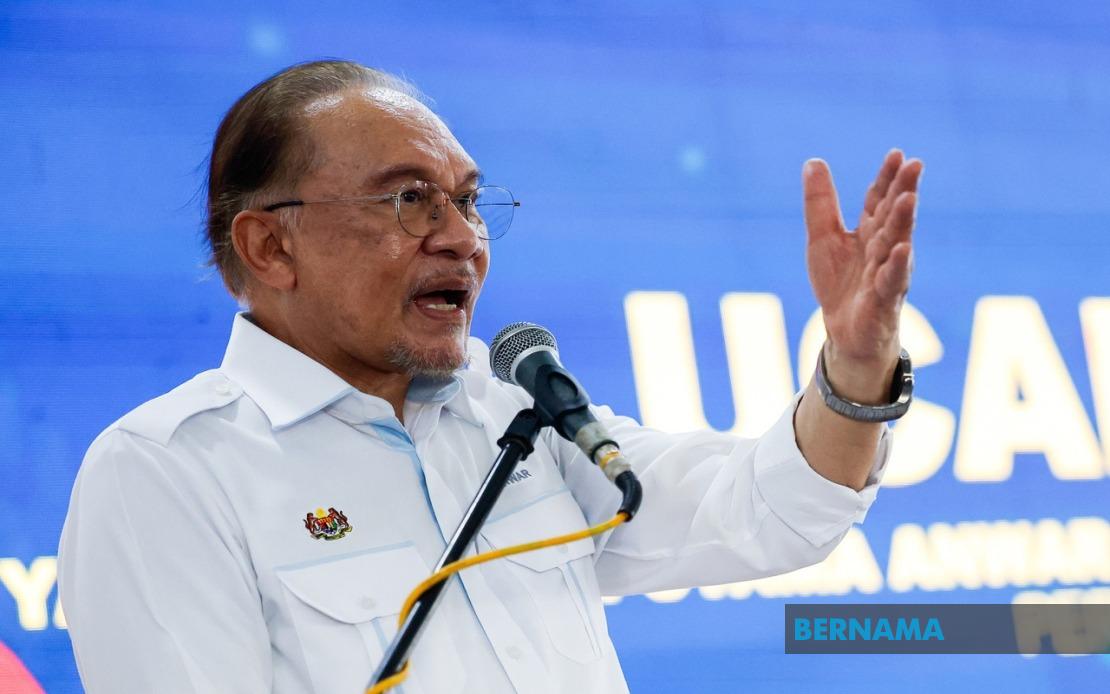
Prime Minister Datuk Seri Anwar Ibrahim has urged Pakatan Harapan's campaign machinery to concentrate its remaining efforts on active campaigning rather than becoming distracted by the mounting number of election outcome surveys that paint contradictory pictures of the Negeri Sembilan state election outcome. Speaking in Port Dickson after attending a youth engagement programme, the PH chairman emphasised that ongoing fieldwork should take precedence over analysing the various predictions circulating ahead of tomorrow's polls.
The timing of Anwar's remarks underscores a familiar tension in Malaysian electoral politics, where opinion research has become increasingly sophisticated and widely publicised in recent years. With multiple research institutions conducting independent surveys on the state election, the results have diverged significantly, creating potential confusion among both party operatives and the voting public. Anwar's pragmatic message—that six different surveys are producing six different findings—serves as a pointed reminder that no single prediction should be treated as definitive.
One prominent survey from the Ilham Centre had projected that the combined opposition forces of Barisan Nasional and Perikatan Nasional could together capture 22 of the 36 State Legislative Assembly seats available, while Pakatan Harapan was estimated to secure a minimum of nine seats. This particular forecast drew considerable attention given the explicit mention of BN and PN cooperation, a scenario that carries significant implications for how power might be exercised in the state should such an outcome materialise. However, Anwar's dismissal of predictive exercises suggests the government views such analysis as less relevant than the immediate challenge of mobilising supporters.
The disparity between surveys reflects a broader reality about electoral forecasting in Malaysia's complex political environment. Multiple factors complicate prediction accuracy, including the residual effects of party-switching in recent years, evolving voter sentiment in different constituencies, and the difficulty of measuring support for coalitions that have undergone organisational changes. Rural constituencies in particular prove challenging to poll accurately given communication constraints and varying levels of voter registration. The existence of contradictory predictions, therefore, is not necessarily indicative of methodological failure but rather genuine uncertainty in the political landscape.
From a strategic standpoint, Anwar's exhortation carries additional weight given that Pakatan Harapan currently holds the federal government and has invested considerable political capital in the Negeri Sembilan contest. A disappointing result would complicate the coalition's narrative about its performance in office and could embolden opposition forces ahead of other forthcoming electoral contests. The emphasis on continued campaigning through the final hours reflects the standard leadership approach of maintaining momentum and demonstrating confidence despite uncertain conditions.
The Negeri Sembilan election itself holds particular significance for understanding trajectories in Malaysian state-level politics. The state has historically served as a bellwether for broader political shifts, and its composition affects the delicate balance within the federation's collaborative governance structures. Unlike federal elections, state contests often reveal more localised sentiment and can be influenced heavily by state-specific issues that national surveys may not adequately capture. This dimension of state politics partly explains why national surveys might diverge substantially from actual results.
Anwar's position as PH chairman adds another layer of significance to his public statements on the campaign. In this dual capacity, he functions both as the nation's chief executive responsible for national governance and as the political leader of a coalition seeking to secure or maintain state-level representation. His comments therefore reflect broader coalition strategy rather than merely expressing personal views. The message conveyed to PH's organisational structure is unmistakable: internal resources and leadership attention should remain focused on mobilisation rather than meta-analysis of electoral prospects.
The prevalence of multiple competing surveys also highlights the growing sophistication of Malaysia's political research ecosystem. Universities, think tanks, and independent research institutions now regularly conduct electoral surveys that gain media coverage and influence public discourse. While this represents a maturation of democratic institutions in some respects, it also creates information abundance that can sometimes obscure rather than clarify political realities. Anwar's pragmatic counsel to his party machinery implicitly acknowledges that excessive focus on predictive data can become counterproductive to the actual work of winning elections.
Looking forward, the result of tomorrow's election will provide a concrete data point against which the various survey predictions can be measured and analysed. Such post-election assessment proves valuable for refining methodologies and understanding the specific factors that influenced voter behaviour in this particular context. For now, however, Anwar's message to PH operatives is clear: the time for prediction and analysis will come later; the present moment demands focused effort on persuading voters through direct engagement and reinforcing party messages through intensive ground campaigning.
The broader implication of Anwar's remarks extends beyond Negeri Sembilan itself. In an era where political outcomes increasingly feel uncertain and electoral coalitions remain fluid, the fundamental work of campaigning—personal interaction, issue advocacy, and organisational activation—retains paramount importance. While surveys offer insights into broader trends and sentiment, they cannot substitute for the granular work of contacting voters, addressing local concerns, and building the personal connections that ultimately determine electoral outcomes. Anwar's intervention suggests that PH intends to leave nothing to chance in these final hours before polling begins.

