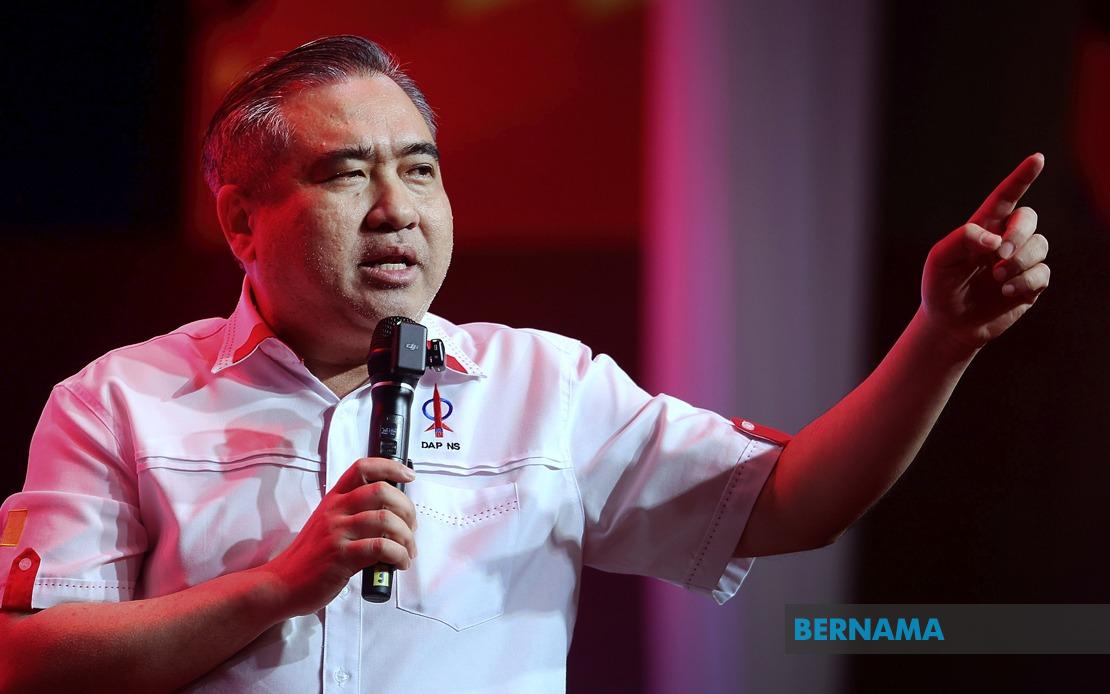
Transport Minister Anthony Loke has drawn a line under negative campaigning in Negeri Sembilan's upcoming state election, declaring that rival politicians should be judged on their policy platforms rather than character attacks. Speaking at a Pakatan Harapan gathering in Seremban on July 19, the DAP secretary-general outlined his principled approach to the 16th state election campaign, signalling a departure from the personal recriminations that have occasionally coloured Malaysian electoral contests.
Loke's stance reflects a broader directive from Prime Minister Datuk Seri Anwar Ibrahim, who has instructed government officials engaged in campaigning to maintain professional discipline and refrain from launching broadsides against the Federal Government. This guidance underscores an attempt by the Unity Government coalition to project stability and cohesion, even as its component parties compete at the state level. For Loke, who straddles the Cabinet as Transport Minister while fighting for his Chennah seat, the directive carries particular weight given his proximity to senior figures across the government.
The Transport Minister's personal commitment extends beyond rhetorical flourish. He has deliberately chosen not to campaign in the Rantau state constituency, despite it being contested by Foreign Minister Datuk Seri Mohamad Hasan, a senior Barisan Nasional figure and deputy chairman. This calculated restraint speaks to an underlying recognition that the Unity Government, however coalition-based, depends on preserving working relationships across party lines. Members of Cabinet meet weekly to execute shared responsibilities; maintaining those relationships while competing electorally requires tactical discipline.
Loke's reasoning illuminates the delicate balancing act that coalition governance demands. Cabinet colleagues, regardless of party affiliation, bear joint responsibility for steering the nation's policies and programmes. Allowing campaign rhetoric to corrode those working relationships carries institutional costs that extend well beyond any electoral advantage gained through personal attack. The Transport Minister's approach suggests a maturity about the operational reality of consensus-based government, where today's opponent might be tomorrow's policy partner on critical national issues.
Instead of broader attacks, Loke has concentrated his campaign energy on two fronts: his own Chennah contest and support for DAP candidates across the state. He is also backing Menteri Besar Datuk Seri Aminuddin Harun's campaign for the Linggi seat, channelling his ministerial profile toward buttressing party allies rather than undermining opponents. This targeted deployment of his resources and visibility suggests a campaign strategy rooted in positional building rather than destructive tactics.
A persistent challenge for senior government figures who contest elections is the perception that ministerial duties have supplanted local constituency work. Loke has moved to dispel such concerns regarding Chennah, arguing that his Cabinet position actually amplifies his ability to deliver tangible benefits to residents. Access to federal allocations and ministerial networks, he contends, represents an asset rather than a liability for a constituency. His administration of Kampung MADANI project funding serves as concrete evidence of this theory translated into practice.
Beyond infrastructure and development allocations, Loke has institutionalised his constituency engagement through a full-time dedicated team that operates independently of his ministerial schedule. This delegation model addresses a genuine logistical reality: no individual can simultaneously manage a ministry portfolio and provide hands-on constituency care without establishing robust intermediary structures. The existence of a professional local operation demonstrates serious commitment to constituent service, even when the Member of Parliament's primary calendar is dominated by Cabinet responsibilities.
The broader significance of Loke's campaign posture extends to questions about Malaysia's electoral maturity. A nation progressing toward more sophisticated democracy tends to elevate policy differentiation over personal antagonism. Voters increasingly demand clarity about specific government proposals: infrastructure plans, economic strategies, social provision, and fiscal discipline. When campaigns devolve into character assassination, they obscure these substantive distinctions, leaving electorates less informed about genuine policy alternatives.
For Negeri Sembilan specifically, this policy-focused approach creates space for genuine debate about state-level governance priorities. The August 1 polling date offers voters an opportunity to assess competing visions for development, resource allocation, and institutional management without the distraction of personal feuds. Early voting commences on July 28, providing a window for voters to engage seriously with policy documentation and candidate platforms rather than media narratives centred on scandal or interpersonal conflict.
The Loke model also carries implications for how Malaysia's political coalitions manage internal competition. Unity Government partners—Pakatan Harapan and Barisan Nasional—operate within a framework of simultaneous cooperation and electoral rivalry. State elections provide natural laboratories for testing whether parties can compete robustly while maintaining institutional cohesion at federal level. Loke's refusal to weaponise personal attacks suggests confidence that Pakatan Harapan can advance its case through substantive policy propositions rather than opponent destruction.
Yet the Transport Minister's approach requires reciprocal restraint from opponents. If BN or other contestants engage in personal assaults while Pakatan maintains discipline, the moral authority of the policy-focused strategy diminishes. Electoral campaigns remain fundamentally competitive; they generate tensions between cooperation and rivalry that do not resolve easily. Loke's principled stance invites scrutiny of how other major players conduct themselves, establishing an implicit benchmark for campaign conduct across the state.
Moving forward, Malaysian political observers will track whether the Negeri Sembilan campaign substantively reflects Loke's commitment to policy-based competition or whether personal attacks emerge regardless of his personal restraint. The seven weeks separating the July 19 gathering from polling day will test whether principled electoral conduct can gain traction in a system historically prone to harder-edged politics. Success would signal genuine institutional learning; failure would suggest that exhortations toward maturity, however well-intentioned, remain vulnerable to competitive pressures that advantage immediate tactical advantage over long-term democratic health.

