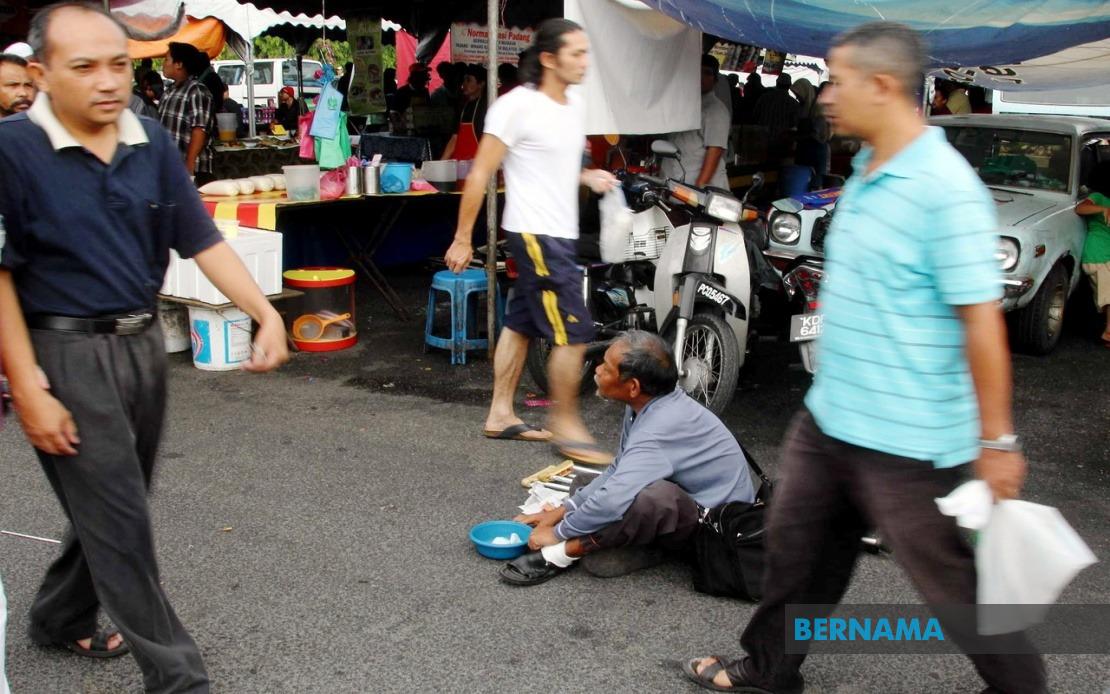
The Malaysian Home Ministry has raised serious concerns about the involvement of organised syndicates in coordinating begging activities among foreign nationals, particularly minors, across major urban centres and tourism precincts. In a parliamentary response, the ministry highlighted that such operations extend beyond simple street solicitation, instead forming part of structured criminal networks that exploit vulnerable individuals while damaging Malaysia's international standing and tourism reputation.
Enforcement data released by the ministry underscores the scale of the problem. Between January 2025 and the end of May, the Immigration Department executed 836 separate operations concentrated in Kuala Lumpur and its surrounding districts. These sweeps resulted in the inspection of 10,609 individuals, of whom 5,411 foreign nationals were apprehended for immigration-related violations. Among those detained, 42 individuals were specifically identified as being engaged in begging activities. These figures suggest that while begging represents a minority component of broader immigration enforcement, the systematic nature of these operations indicates a coordinated departmental focus on the issue.
The ministry's investigation extends beyond detaining the foreign nationals directly involved in street begging. Authorities are actively pursuing local Malaysian citizens suspected of playing key roles within these syndicates, including individuals functioning as protectors, organisers, or financial beneficiaries. This element of the investigation reveals the hierarchical structure underlying these operations, with evidence suggesting that foreign beggars—particularly children—function at the bottom of criminal networks controlled and profiting from domestic actors. The focus on local accomplices signals recognition that eliminating street-level begging requires dismantling the infrastructure that enables and enriches it.
The ministry's stance reflects broader government determination to maintain Malaysia's international image amid tourism recovery. The response emphasised zero tolerance for any breach of law or exploitation affecting the nation's reputation—language that underscores the perceived damage these visible street operations cause to Malaysia's positioning as a destination for family tourism and business investment. Cities such as Kuala Lumpur, Penang, and Johor Bahru have invested heavily in urban renewal and tourism marketing, making the concentration of begging in high-visibility areas like Bukit Bintang, Jalan Alor, and Changkat Bukit Bintang particularly problematic from a destination management perspective.
To sharpen its response, the Immigration Department has substantially deepened its operational partnerships with the Royal Malaysia Police and Kuala Lumpur City Hall. These integrated operations now feature enhanced intelligence sharing and analytical capacity directed specifically at mapping syndicate networks, understanding their operational methods, and identifying begging hotspots before they consolidate. The coordination model reflects lessons learned internationally about combating street-level organised crime: enforcement proves most effective when multiple agencies contribute distinct expertise and enforcement authority toward a unified target.
A particularly noteworthy institutional development has been the Immigration Department's active participation in the Federal Territory Security Working Committee and the KL Strike Force initiative. This special task force brings together the Immigration Department, police, city authorities, the Department of Social Welfare, and other enforcement bodies into a dedicated structure focused on vagrancy and begging operations. Through this mechanism, agencies identify and monitor hotspots, conduct both scheduled and surprise integrated operations, expedite the processing of public complaints, and maintain sustained monitoring to prevent resurgence of operations in cleared areas.
The ministry framed this integrated approach as foundational to achieving comprehensive suppression of foreign beggar syndicates. Rather than viewing begging as primarily a law enforcement or welfare challenge to be addressed in isolation, the inclusion of the Department of Social Welfare signals recognition that successful intervention requires understanding the vulnerabilities and exploitation vectors affecting foreign nationals themselves. This multi-agency framework also distributes enforcement responsibility across institutions with distinct legal authorities and logistical capabilities, reducing the likelihood that syndicates can exploit gaps between agency mandates or evade detection through relocation between jurisdictions.
The parliamentary inquiry that prompted this response originated from Fong Kui Lun of the Bukit Bintang constituency, reflecting constituent concerns about the visibility and apparent persistence of begging operations in high-traffic tourist and commercial precincts. The specific mention of Bukit Bintang, Jalan Alor, and Changkat Bukit Bintang indicates concentration in Kuala Lumpur's premium retail and hospitality zones, where the presence of visibly vulnerable foreign beggars creates negative impressions among tourists and affects local commercial activity. The parliamentary focus suggests this has become a visible public concern rather than a purely administrative matter.
Beyond the begging enforcement issue, the ministry also addressed applications for foreign worker quotas during a special submission period from January 19 to March 31, 2025. The government approved 314 employers out of 1,919 applications received during this extended window, offering businesses unable to meet an earlier December 31, 2024 deadline an opportunity to secure foreign worker authorisations. These approved employers now await final deliberation by the Department of Labour Peninsular Malaysia under Section 60(K) of the Employment Act 1955 before receiving formal authorisation to recruit foreign workers under Malaysia's 2025 quota ceiling. This parallel policy initiative reflects the ministry's dual focus on preventing illegal foreign migration through syndicates while facilitating orderly, regulated foreign worker recruitment for legitimate employers.
The distinction between regulated foreign worker programmes and unauthorised begging syndicates illustrates a core challenge in Malaysia's immigration governance. While legitimate foreign workers contribute to economic growth and fill labour shortages, uncontrolled migration and exploitative arrangements generate welfare costs, law enforcement burdens, and reputational damage. The two-track approach—simultaneously expanding legal pathways for regulated labour migration while intensifying enforcement against exploitative syndicates—reflects policy recognition that managing migration flows requires both opening legitimate channels and closing illegal ones.
For regional observers, Malaysia's response to foreign begging syndicates provides a case study in how middle-income countries balance humanitarian concerns with law enforcement imperatives. The identification of organised crime networks behind street begging suggests that solutions require moving beyond moral arguments for charity toward systemic disruption of criminal profit channels. The multi-agency KL Strike Force model and intelligence-sharing protocols may offer templates for other Southeast Asian cities facing similar challenges, particularly in tourism-dependent urban economies where street-level operations generate concentrated negative externalities.

