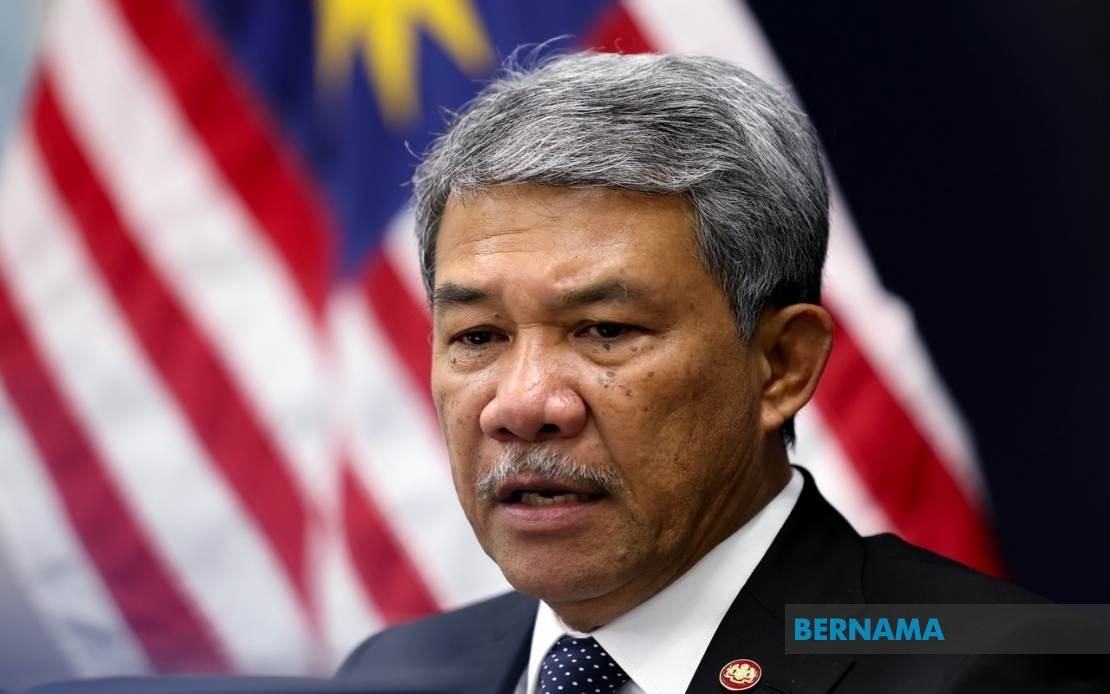
Malaysia's Foreign Minister Datuk Seri Mohamad Hasan has arrived in the Philippines capital to steer his nation's involvement in a series of high-level diplomatic gatherings anchored by the 59th ASEAN Foreign Ministers' Meeting. The minister touched down at Ninoy Aquino International Airport on Sunday at 4.15 pm local time, setting the stage for multilateral discussions expected to shape regional policy over the coming days. His visit underscores Malaysia's continued commitment to collective decision-making within the ten-nation bloc, as well as the broader security architecture that underpins Southeast Asia's strategic interests.
The Philippine Department of Foreign Affairs extended formal courtesies to the incoming Malaysian delegation, with Assistant Secretary and Chief of Protocol Ariel Rodelas Peñaranda presiding over welcoming formalities. Malaysian Ambassador to the Philippines Datuk Abdul Malik Melvin Castelino Anthony joined the reception, emphasising the bilateral dimension of Malaysia's engagement in Manila. These ceremonial gestures reflect the diplomatic importance attached to the meetings and the established protocols governing state-to-state relations within ASEAN.
Moderate the core agenda, the ongoing turmoil engulfing West Asia is poised to dominate deliberations at the 59th meeting. The deteriorating humanitarian and security situation in that region carries profound implications for Southeast Asia, touching upon freedom of navigation, energy security, and the potential for regional destabilisation. ASEAN nations, as middle powers with significant trade and investment ties to the Middle East, have vested interests in preventing escalation and finding diplomatic off-ramps to current tensions.
Particularly significant is the scheduled extended informal consultation on implementation of the Five-Point Consensus regarding Myanmar. This mechanism, developed by ASEAN to address the political crisis and civil conflict that has ravaged the country since 2021, represents the bloc's attempt to chart a middle path between intervention and non-interference. Foreign ministers are expected to deliberate on recommendations emerging from the previous ASEAN Leaders' Review, seeking to assess progress on ending hostilities and ameliorating the humanitarian toll. For Malaysia, these discussions carry weight given historical involvement in regional mediation efforts and concerns about potential refugee outflows from Myanmar's instability.
Beyond the core AMM, Mohamad's itinerary spans an expansive range of multilateral platforms. Participation in the ASEAN-AICHR interface meeting reflects growing emphasis within the bloc on human rights considerations, a delicate balance given member states' varying governance philosophies. Engagement with the Southeast Asia Nuclear Weapon-Free Zone Commission reinforces regional commitment to preventing nuclear proliferation and maintaining the zone's integrity, an issue of strategic importance as great powers extend their influence into the region.
The 27th ASEAN Plus Three Foreign Ministers' Meeting extends dialogue to Northeast Asian counterparts—China, Japan, and South Korea—reflecting recognition that regional stability and prosperity are inextricably linked to broader Asian dynamics. The 33rd ASEAN Regional Forum and 16th East Asia Summit Foreign Ministers' Meeting serve as platforms for dialogue with major powers including the United States, European Union, India, Russia, Australia, Canada, New Zealand, and the United Kingdom. These concentric circles of engagement underscore ASEAN's strategy of maintaining equidistant relationships with competing powers while preserving the bloc's primacy in shaping regional architecture.
Mohamad's participation in the Conference on Cooperation among East Asian Countries for Palestinian Development carries particular significance given Malaysia's historical advocacy for Palestinian rights and its constituency concerns over Middle Eastern affairs. This initiative, now in its fifth iteration, reflects sustained engagement by East Asian nations on this geopolitical flashpoint, though the practical impact of such conferences remains circumscribed by broader international power dynamics.
Crucially, Malaysia assumes the chair of ASEAN-China Dialogue Relations for the 2024-2027 period, placing Mohamad in partnership with Chinese Foreign Minister Wang Yi to co-chair the ASEAN Post Ministerial Conference with China on Wednesday. This responsibility carries considerable diplomatic weight, requiring Malaysia to navigate Beijing's strategic ambitions while maintaining solidarity with ASEAN consensus and protecting smaller members' interests. The relationship between ASEAN and China touches upon contentious South China Sea disputes, economic interdependence, and competing visions for regional order.
The broader PMC schedule encompasses engagements with all eleven ASEAN Dialogue Partners, a comprehensive catalogue reflecting the region's integration into multiple overlapping security and economic frameworks. Each bilateral relationship carries distinct histories and contemporary tensions, from United States-ASEAN ties around technological competition and military cooperation, to European Union engagement emphasising trade and climate action, to Indian aspirations for enhanced regional influence through the Indo-Pacific strategy.
Bilateral meetings scheduled on the sidelines of the formal proceedings offer opportunities for Malaysia to address specific bilateral grievances and opportunities with key counterparts, whether discussing maritime security with Canberra, cybersecurity cooperation with Washington, or South China Sea navigation with Beijing. These quieter diplomatic engagements often prove as consequential as plenary sessions in shaping actual outcomes and commitments.
The meetings unfold under the Philippines' ASEAN Chairmanship for 2026, with the thematic framework "Navigating Our Future, Together" deliberately encompassing contemporary regional and global challenges. This framing acknowledges ASEAN's vulnerability to externally-driven shocks—from geopolitical competition between major powers to transnational threats ranging from climate change to pandemics—while emphasising the bloc's agency in charting its collective course. For Malaysia and its fellow members, the gathering represents both an opportunity to reinforce ASEAN's institutional centrality and a reminder of the considerable pressures threatening its unity and relevance in an increasingly fractious geopolitical landscape.

