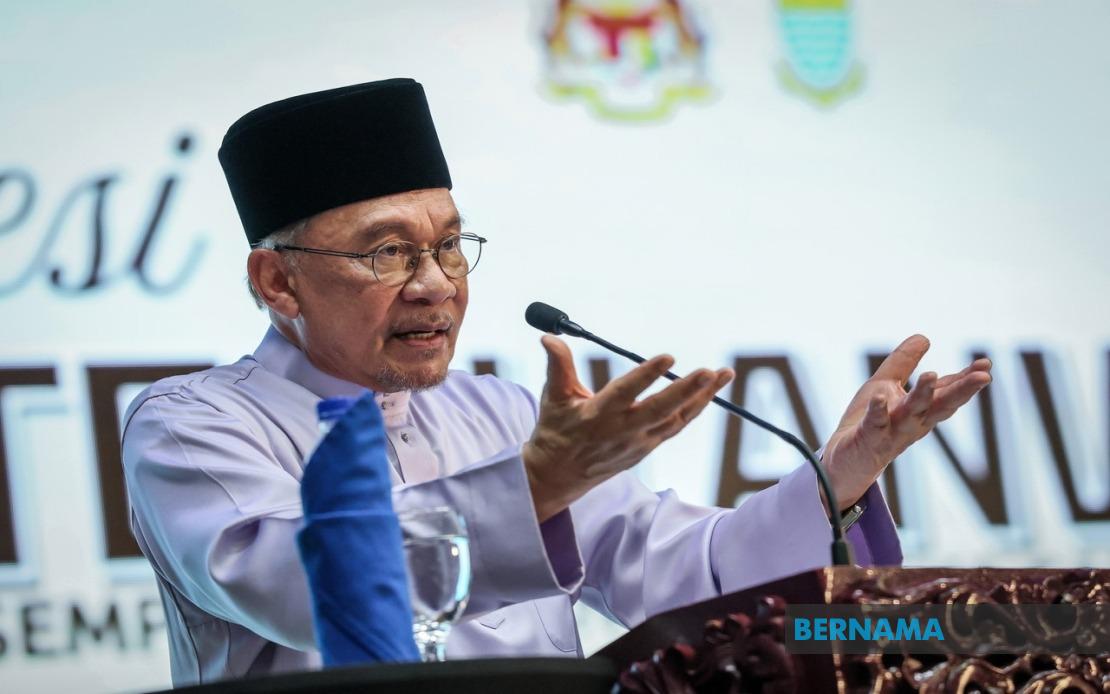
Prime Minister Datuk Seri Anwar Ibrahim has committed to establishing a financial assistance programme for Form Six students, marking a significant expansion of Malaysia's education support system. Speaking at the Tuanku Bainun Teacher Education Institute in Bukit Mertajam today, Anwar, who also holds the Finance portfolio, announced that the government will allocate funds for the new allowance scheme when Parliament receives the 2027 federal budget in October. The declaration came during a dialogue session hosted by the Ambang Merdeka Sahabat MADANI initiative, with Education Minister Datuk Seri Fadhlina Sidek present to underscore the government's commitment to the initiative.
The decision to introduce Form Six allowances reflects a deliberate policy shift to address what the government identifies as an inequitable gap in student support structures. Currently, Malaysia's education assistance architecture extends across two distinct segments: students from primary through Form Five receive various government allowances and subsidies, while university-level students benefit from multiple scholarship and grant schemes. However, pre-university students pursuing Form Six studies occupy an ambiguous position within this framework, receiving no comparable financial support despite facing similar economic pressures as their counterparts in other educational stages. This structural oversight has persisted despite growing awareness among policymakers about the financial strain experienced by households supporting advanced-level secondary students.
Anwar framed the announcement as responsive to direct feedback gathered from engagement with pre-university student communities. He highlighted the logical inconsistency within the current assistance matrix, noting the absence of Form Six support relative to comprehensive aid available at both lower and higher educational levels. The Prime Minister's personal intervention on this matter signals broader government attention to equity issues within the education system, particularly regarding how financial barriers might impede capable students from completing their secondary qualifications or progressing toward tertiary education. This approach aligns with the administration's stated MADANI philosophy, which emphasises equitable development and reduced economic disparities.
The Education Ministry has been instrumental in championing this reform. Fadhlina disclosed that the proposed Form Six allowance emerged from the MADANI Pre-University Congress convened in Klang earlier today, where student representatives submitted 12 resolutions addressing various education sector concerns. The ministry has formally accepted all resolutions tabled by student delegates and committed to comprehensive evaluation of their feasibility and implementation pathways. By incorporating student voices directly into policy deliberation, the government demonstrates responsiveness to grassroots perspectives on educational needs, a practice increasingly recognised as valuable for designing effective support mechanisms.
While the government's intention to fund the allowance scheme is now confirmed, considerable administrative groundwork remains pending. Anwar deliberately refrained from announcing the specific quantum of support that Form Six students will receive, explaining that the final allocation would depend on Malaysia's fiscal position when the budget is finalised in October. This cautious approach reflects the government's need to balance multiple budgetary demands while maintaining macroeconomic stability. The decision to defer specifics is pragmatic but also creates uncertainty for beneficiaries and education stakeholders awaiting clarity on programme parameters such as eligibility criteria, payment schedules, and whether assistance levels will differentiate between students from varying socioeconomic backgrounds.
The timing of this announcement carries significance for Malaysia's broader education policy trajectory. Form Six represents a critical juncture in the student journey, with completion or dropout rates influencing university entry prospects and employment readiness. Economic research consistently demonstrates that financial strain during this stage correlates with educational abandonment, particularly among students from lower-income households. By intervening at this transition point, the government potentially prevents talent loss and increases the pool of qualified candidates for higher education and skilled employment sectors. This preventive approach offers better economic returns than attempting to remediate educational deficits at later stages.
The announcement also reflects evolving political priorities regarding education funding. Over recent years, Malaysian education policy has experienced multiple shifts in emphasis and resource allocation, sometimes creating programme discontinuities or funding gaps. The Form Six allowance scheme represents a deliberate effort to strengthen rather than merely maintain the education support infrastructure. Its introduction may necessitate comprehensive review of the broader student assistance ecosystem to ensure coherence across different education levels and to prevent unintended consequences such as means-testing complications or administrative redundancies.
From a regional perspective, Malaysia's expansion of pre-university education support positions the nation competitively within Southeast Asia's education landscape. Several neighbouring countries have implemented similar schemes recognising that removing financial barriers to advanced secondary education strengthens workforce development and social mobility. By adopting this approach, Malaysia signals commitment to human capital investment at a stage when returns on educational expenditure remain substantial. The initiative may also attract international attention regarding inclusive education financing models, particularly from development organisations monitoring Southeast Asian progress toward universal quality education targets.
Implementation challenges will likely emerge as the scheme develops between now and its anticipated launch following budget approval. The government must establish clear operational frameworks encompassing eligibility determination, fund disbursement mechanisms, coordination between federal and state authorities, and integration with existing assistance programmes to avoid duplication or gaps. Education Ministry officials will need to develop implementation guidelines addressing practical questions such as whether allowances apply uniformly across all Form Six students regardless of academic performance, whether parental income thresholds apply, and how the scheme accommodates students in different educational pathways including residential institutions and private institutions.
Looking forward, the Form Six allowance initiative may catalyse broader discussion about education financing philosophy within Malaysia's policy apparatus. If successful, its introduction could prompt examination of other educational support gaps or enable expansion to adjacent student populations. Conversely, implementation difficulties could inform how the government approaches future targeted assistance programmes. The scheme's design and performance will provide valuable data regarding the effectiveness of direct allowance transfers in improving education outcomes, informing evidence-based policymaking in subsequent budget cycles.
Education stakeholders including student organisations, parent associations, and institution administrators will monitor the budget tabling process closely. The October announcement will need to specify not only total allocation but also per-student quantum, implementation timeline, administrative responsibility allocation, and any complementary measures intended to maximise the allowance scheme's impact. Given that educational outcomes depend on multiple factors beyond financial assistance, the government may need to coordinate the allowance initiative with parallel interventions addressing quality, accessibility, and relevance of Form Six curricula. This comprehensive approach would strengthen the likelihood of translating financial support into improved education outcomes and student wellbeing.

