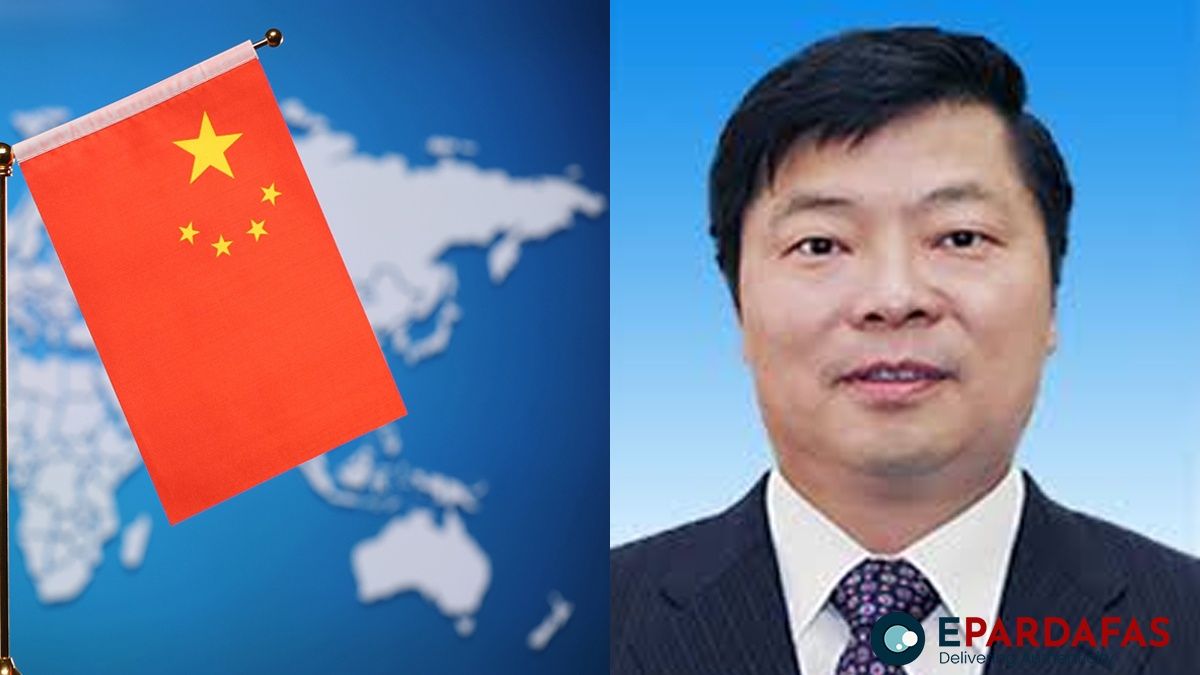
Beijing's top anti-corruption authority has launched an investigation into Ouyang Weimin, the former president of the China Development Bank, on suspicion of serious violations of party discipline and law. The Central Commission for Discipline Inspection and the National Commission of Supervision announced the probe on Sunday, though the watchdog provided minimal detail in its terse statement, a common practice when high-ranking officials fall under scrutiny in China's opaque disciplinary system.
Ouyang's career trajectory reflects the typical pathway for elite cadres in China's state apparatus. He joined the Chinese Communist Party in 1986 and spent formative years working within the People's Bank of China, the country's central banking institution. This banking sector experience positioned him for advancement into state-owned enterprises and provincial governance roles. Such internal mobility within China's financial and political establishment is crucial for understanding how power consolidates within the ruling party's upper echelons.
Prior to his appointment at the development bank, Ouyang served as vice-governor of Guangdong province, one of China's most economically significant regions and a manufacturing hub neighbour to Hong Kong. His governance experience in Guangdong, a province that has long served as a testing ground for China's economic reforms, would have given him substantial exposure to the complexities of managing major financial and development projects. The province's strategic importance and economic sophistication made it a natural launching pad for his elevation to national-level positions.
In 2019, Ouyang was appointed president and deputy party secretary of the China Development Bank, roles that placed him among China's most influential financial officials. The development bank itself wields considerable power over China's economic direction. Founded in 1994, it functions as a state-owned institution directly answerable to the State Council, effectively placing it under the highest levels of government authority. This positioning gives its leadership access to vast resources and decision-making authority over funding for major infrastructure, industrial, and development projects.
During his tenure, the institution's mandate centred on channelling state funds toward strategic industries and economically lagging regions—areas the Communist Party identified as priorities for national development. This responsibility made Ouyang a gatekeeper for enormous sums of public capital. He stepped down from the presidency in 2023, though the circumstances surrounding his departure and any connection to the current investigation remain unclear from official sources.
The timing and nature of Ouyang's investigation must be understood within the broader context of Xi Jinping's anti-corruption campaign, which has fundamentally reshaped China's political landscape since 2012. Officially framed as a crackdown on graft and misconduct, the initiative has ensnared thousands of officials, military personnel, and business executives. The campaign has yielded high-profile cases against senior Communist Party figures and military generals, sending powerful signals about the costs of deviation from party discipline.
Critics and observers outside China argue that the anti-corruption drive, while likely capturing genuine instances of malfeasance, has simultaneously functioned as a political tool. By selectively targeting figures associated with previous party factions and potential rivals to Xi's authority, the campaign has consolidated power within the leadership's inner circle. The vagueness of charges—such as "serious violations of party discipline"—allows maximum flexibility in interpretation and prosecution, often without transparent evidence presented publicly.
For Malaysian and Southeast Asian readers, Ouyang's case carries particular relevance given the China Development Bank's substantial involvement in regional development finance. The institution has been a major funder of Belt and Road Initiative projects across Asia, including in Malaysia, where it has financed everything from port construction to railway development. The investigation into senior leadership may raise questions about governance, oversight, and accountability within institutions dispensing billions of dollars in development funding across the region.
The opacity surrounding Ouyang's investigation illustrates a fundamental challenge in assessing China's anti-corruption effectiveness. Without transparent judicial proceedings, public evidence disclosure, or independent oversight, it remains impossible for external observers to determine whether investigations target genuine corruption or serve political consolidation. This ambiguity has implications for foreign governments and companies engaging with Chinese state institutions, as the stability and predictability of leadership within these entities directly affects long-term partnerships and project continuity.
The investigation also underscores the vulnerability of even senior officials within China's system. Regardless of past achievements or position held, party discipline can be invoked swiftly and with minimal advance warning. For individuals operating within China's state apparatus, this creates an environment where political loyalty and alignment with current leadership priorities supersede institutional position as a guarantee of security.
Looking forward, the outcome of Ouyang's case may influence how the China Development Bank and similar state-owned enterprises operate, particularly regarding decision-making transparency and financial oversight mechanisms. Any resulting reforms—or conversely, any consolidation of control by Xi-aligned factions—could reshape how Chinese development finance functions regionally and internationally.

