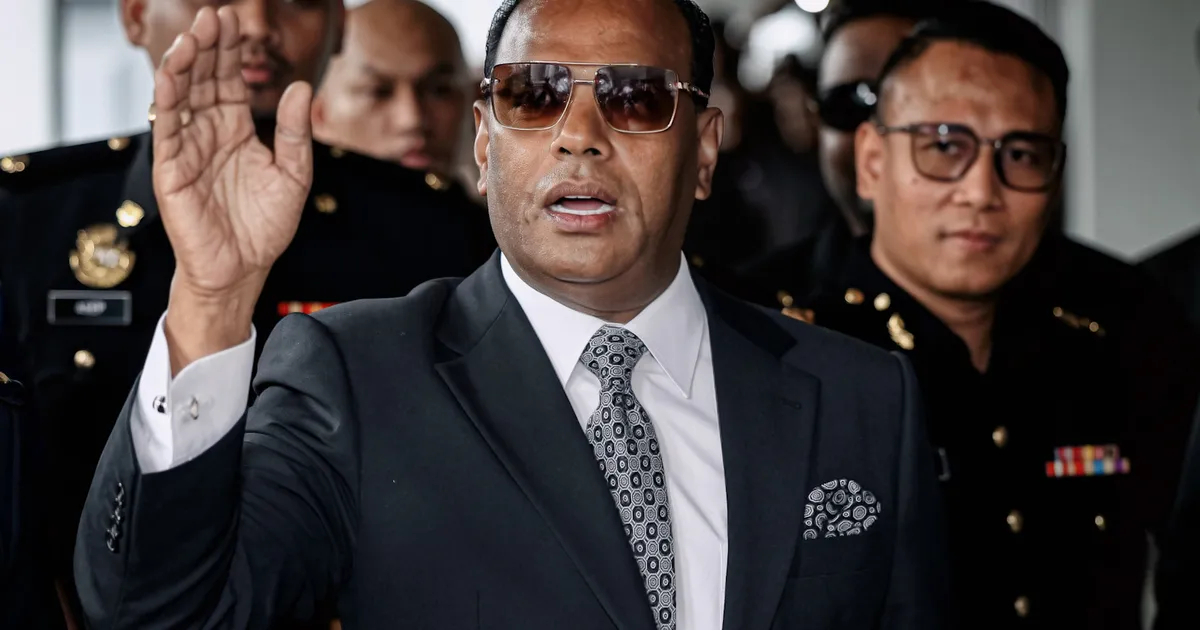
Former Human Resources Minister Saravanan has moved to counter mounting speculation surrounding his communications with Prime Minister Anwar Ibrahim, flatly denying that his written appeal constituted an attempt to orchestrate a cover-up of corruption allegations against him. Instead, Saravanan maintains that his letter to the Prime Minister specifically requested a thorough and independent evaluation of his case, framed within a call for procedural fairness rather than case dismissal or suppression.
The clarification comes as attention intensifies on the nature and timing of Saravanan's approach to the highest political office, with observers scrutinising whether senior government officials have sought preferential treatment through direct appeals to the Prime Minister's office. Saravanan's statement seeks to reposition the correspondence as a legitimate request for administrative review rather than an improper attempt to leverage his former ministerial position for evidentiary advantage or immunity.
In articulating his defence, Saravanan emphasises that his contentions regarding the credibility of the graft charges against him form the substantive basis of his appeal. He argues that the allegations lack evidentiary foundation and that a comprehensive, impartial examination would exonerate him of wrongdoing. This framing transforms the letter from an alleged suppression request into what his camp characterises as a proper plea for justice through systematic review—a distinction that carries considerable implications for how such cases are perceived within Malaysia's anti-corruption framework.
The incident illuminates recurring tensions within Malaysia's governance structure regarding the separation between executive clemency, ministerial accountability, and the independence of prosecutorial processes. When former government ministers facing criminal charges communicate directly with the Prime Minister, questions inevitably arise about potential conflicts of interest, the appearance of political interference, and whether ordinary citizens enjoy equivalent access to such high-level advocacy channels. These structural concerns resonate particularly for Southeast Asian observers tracking Malaysia's institutional development.
Saravanan's former portfolio in human resources gave him substantial influence over employment policy, labour standards, and workforce development across Malaysia's public and private sectors. The credibility questions surrounding his case thus extend beyond personal vindication to encompass broader public confidence in the integrity of state institutions and the impartiality of enforcement mechanisms. How such matters are resolved carries messaging implications for public servants contemplating ethical boundaries.
The Prime Minister's office has maintained measured silence on the substance of any correspondence with Saravanan, neither confirming nor denying receipt of such communications or detailing any response. This institutional circumspection reflects standard practice in high office, yet it simultaneously creates an information vacuum that invites speculation and competing narratives about what transpired between the two figures. Transparency advocates argue that greater disclosure regarding executive interactions with individuals under investigation would strengthen public accountability.
Malaysia's anti-corruption machinery has undergone substantial reform over recent years, with institutional independence and investigative rigour increasingly prioritised as hallmarks of renewed commitment to governance standards. The Malaysian Anti-Corruption Commission operates with statutory independence, yet perceptions of political interference—whether real or imagined—can undermine public confidence in prosecutorial outcomes. Cases involving former ministers therefore carry disproportionate significance for broader institutional credibility.
Saravanan's categorical denial carries calculated strategic value within the court of public opinion and potentially within any legal proceedings that may ensue. By emphasising his request for thorough review rather than case suppression, he positions himself as seeking due process rather than preferential treatment. This rhetorical strategy appeals to fundamental notions of fairness that resonate across diverse Malaysian constituencies and aligns his position with principles of transparent governance.
The episode underscores enduring challenges facing post-1MDB Malaysia as it attempts to consolidate anti-corruption gains while navigating the political complexities inherent in holding former ministers accountable. Senior officials retain networks, institutional knowledge, and access privileges that ordinary citizens simply do not possess, creating inherent asymmetries in how the justice system functions for different social strata. Addressing these asymmetries remains central to building public trust in anti-corruption institutions.
For Malaysian policymakers and anti-corruption advocates, Saravanan's case exemplifies broader questions about executive protocols during investigations involving former government figures. Establishing clear guidelines about appropriate communications between the office of the Prime Minister and individuals facing criminal charges would reduce ambiguity and strengthen institutional credibility. Such protocols could specify whether and under what circumstances such communications are appropriate, thereby protecting both the integrity of investigations and the fairness of individual cases.
The resolution of Saravanan's legal situation will likely influence how subsequent cases involving former senior officials are handled, signalling either that Malaysia's anti-corruption resolve withstands political relationships or that institutional independence remains vulnerable to pressure from highly-positioned individuals. Regional observers will watch closely to assess whether Malaysia's governance trajectory continues strengthening institutional safeguards or retreats toward patterns where proximity to power influences prosecutorial outcomes.
As the matter progresses through appropriate legal channels, Saravanan's insistence on the legitimacy of his appeal and the insufficiency of charges against him establishes the foundation for his defence strategy. Whether investigative authorities and courts ultimately agree with his assessment of the charges' credibility will determine not only his personal fate but also send consequential signals about Malaysia's commitment to maintaining standards of accountability for former government ministers across the region.

