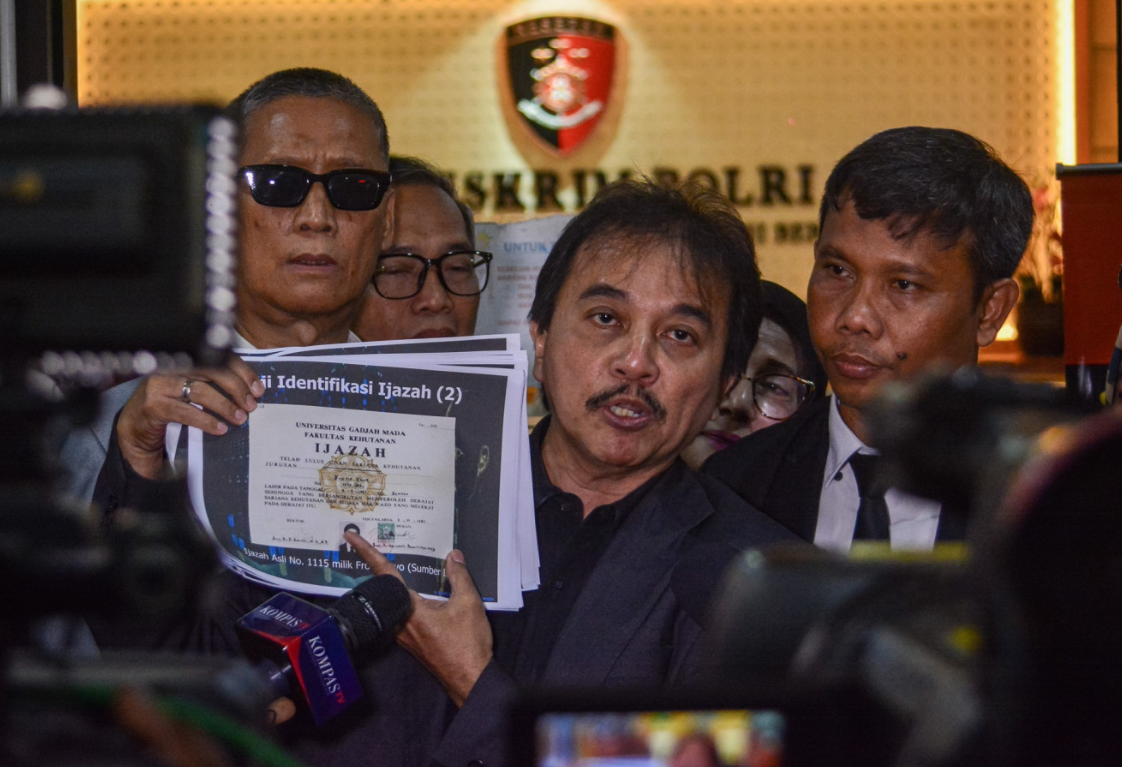
The arrest of former youth and sports minister Roy Suryo and health activist Tifauzia Tyassuma by Jakarta police on Friday morning signals a dramatic turning point in Indonesia's protracted diploma authentication dispute, bringing the long-simmering controversy over former president Joko Widodo's educational credentials into the criminal justice system. Both individuals, who have publicly questioned the legitimacy of Jokowi's university degree, were taken into custody at their homes as part of what police describe as standard procedure ahead of case escalation to the Jakarta Prosecutor's Office, according to Roy's legal representative Ahmad Khozinudin.
The detention represents the most severe phase yet in a controversy that has haunted Indonesian politics since 2019, when social media claims first emerged questioning whether Jokowi's diploma was authentic. Over the intervening years, the dispute has evolved from online allegations into multiple formal legal actions, including a civil lawsuit filed in 2022 and various official investigations and court proceedings throughout 2025. The persistence and intensity of these challenges have kept the issue firmly in the public consciousness, despite official attempts to resolve it through institutional channels.
According to Sr Comr Iman Imanuddin, head of the Jakarta Police's General Crimes Directorate, the decision to detain Roy and Tifa follows the completion of preliminary investigations and represents a necessary procedural step in transferring the case to prosecutors. The police characterised the detention as preventing administrative delays while allowing completion of mandatory procedures including medical examinations and evidence verification. This framing suggests authorities view the detention as a bureaucratic formality rather than a substantive escalation, though critics contest this characterisation.
Beyond the defamation allegations, Roy and Tifa face accusations of document manipulation—specifically, they are suspected of altering electronic records to substantiate their claims regarding the diploma's authenticity. These charges fall under Indonesia's controversial Electronic Information and Transactions Law, which permits sentences of up to six years imprisonment. The application of this legislation to political speech and academic criticism has drawn international attention, particularly given concerns about press freedom and the scope of defamation laws in Southeast Asia.
The trajectory of official investigation into the diploma's validity has proven contentious. In May 2025, the National Police formally declared Jokowi's diploma authentic and closed an earlier investigation into forgery allegations, seemingly providing definitive closure. However, when the case underwent review in July 2025, critics including Roy Suryo renewed their objections to the police findings, preventing the matter from fading from public discourse. This resumption of challenges demonstrated that institutional declarations, however authoritative, could not suppress ongoing scepticism among certain political actors and segments of the public.
Roy's legal team, headed by Refly Harun, has vigorously protested the detention decision, characterising it as unnecessary and excessive given that case transfer to prosecutors would not occur until Monday. The lawyers argue their clients have consistently complied with all police summonses and reporting obligations, satisfying procedural requirements without requiring custodial measures. This argument touches on fundamental questions about the proportionality of detention in Indonesian criminal procedure and the distinction between precautionary measures and punitive action.
The defamation investigation has involved a broader net of suspects. Police previously identified six individuals as suspects under the ITE Law framework, though investigators subsequently dropped charges against three of them—Eggi Sudjana, Damai Hari Lubis, and Rismon Sianipar—following mediation processes. This selective prosecution pattern raises questions about consistency in enforcement and the potential role of political considerations in determining which critics face formal charges.
For Malaysian observers and regional analysts, the Jokowi diploma case illuminates broader Southeast Asian tensions between institutional authority and public scepticism, particularly regarding transparency in high-level appointments and educational credentials. The willingness of Indonesian authorities to deploy defamation and electronic crimes legislation against political critics reflects patterns evident across the region, where governments increasingly use legal mechanisms to constrain speech on sensitive matters. The case demonstrates how academic questions can metamorphose into political controversies with criminal consequences.
The detention of Roy, a minister during the Susilo Bambang Yudhoyono administration, adds partisan dimensions to the dispute. With Jokowi having left office and his political influence waning, some observers question whether the timing and vigour of prosecution reflect substantive legal concerns or factional political manoeuvring. This ambiguity undermines public confidence in the neutrality of law enforcement, a recurring challenge in Indonesian governance that resonates across Southeast Asia.
Moving forward, the case will proceed toward prosecution based on police dossiers deemed complete by investigators. The prosecutor's office will determine whether charges proceed to trial, establishing precedent for how Indonesia's legal system addresses coordinated criticism of governmental officials and their official records. The outcome will carry significance beyond Indonesia's borders, influencing how other Southeast Asian nations approach similar allegations and the permissible boundaries of political dissent on institutional matters.