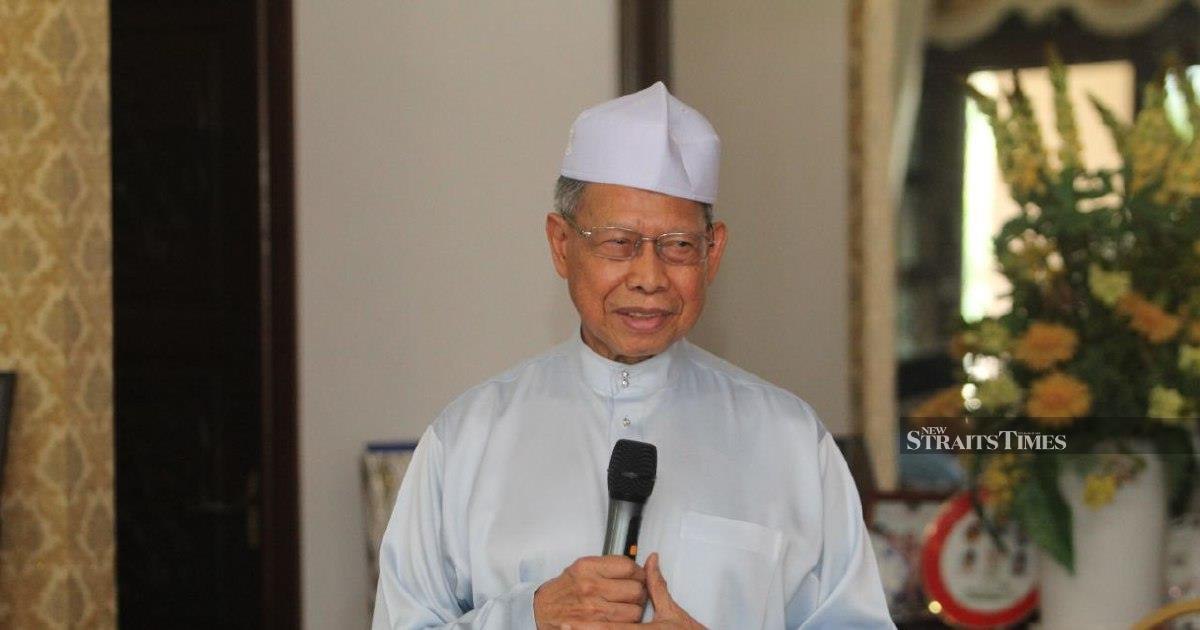
Former Jeli member of parliament Datuk Seri Mustapa Mohamed has definitively ruled out contesting in Malaysia's next general election, citing health constraints that have impaired his physical capacity. Speaking in Pasir Mas, the veteran politician, who recently returned to Umno, acknowledged that his current condition makes the demands of electoral campaigning untenable. The candid admission marks a significant moment in the career of one of Malaysia's longest-serving parliamentarians, whose presence in the political arena has spanned multiple decades and various political realignments.
Mustapa Mohamed's decision carries particular weight given his seniority within Umno and his recent reconciliation with the party after a period of separation. His choice not to seek re-election represents a natural transition point for a politician who has navigated the complexities of Malaysian politics through numerous administrations and electoral cycles. The announcement is likely to reshape political dynamics within Kelantan, where the former MP held considerable influence and maintained deep roots in his constituency.
The health challenges cited by Mustapa Mohamed reflect a broader reality facing Malaysia's political establishment, where several senior figures have grappled with age-related limitations. His transparency regarding these personal difficulties stands in contrast to the often oblique language many politicians employ when withdrawing from electoral contests. By explicitly referencing his inability to move with stability, he has acknowledged a threshold beyond which he believes effective campaigning cannot occur, a standard not universally observed among veteran politicians in the region.
Mustapa Mohamed's trajectory embodies significant shifts in Malaysian politics over recent years. His recent rejoining of Umno represented a reconciliation with the party after his departure, signalling the continuing fluidity within Malaysia's political landscape where party-hopping and realignments remain commonplace. His decision to step away from electoral politics while rejoining Umno suggests he may anticipate a different role within the party structure, potentially advisory or ceremonial in nature, rather than one requiring direct electoral validation.
The timing of this announcement carries implications for Kelantan's political positioning ahead of the next general election. The state has been a stronghold of Umno and its political allies, though recent years have demonstrated the volatility of voter sentiment across the peninsula. Mustapa Mohamed's withdrawal eliminates one potential candidate in a parliamentary seat that has acquired strategic significance within broader national political calculations concerning the stability of the current administration.
For the Democratic Action Party and other opposition coalitions operating in the region, Mustapa Mohamed's departure removes a established political figure from the contest, potentially altering their strategic calculus regarding resource allocation and candidate selection in this particular constituency. The competitive landscape in Jeli will be redrawn without his participation, creating opportunities for both new Umno candidates and opposition challengers to stake their claims on representation.
Mustapa Mohamed's public acknowledgement of health limitations serves as a reminder that while Malaysian politics can be forgiving of extended careers, there remain practical constraints on political participation that transcend partisan considerations. His recognition of these boundaries reflects a maturity in political judgment that emphasises the integrity of electoral participation over personal ambition to maintain parliamentary office. This perspective contrasts with instances elsewhere in Malaysian politics where candidates have continued contesting despite apparent physical or cognitive diminishment.
The former Jeli MP's decision also underscores how Malaysian political parties must increasingly plan succession strategies as senior leadership cohorts age. Umno, in particular, faces questions about the intergenerational transfer of influence and the cultivation of new leaders capable of commanding the grassroots loyalty that figures like Mustapa Mohamed have cultivated over decades. His withdrawal, though driven by personal circumstances, nonetheless highlights the challenge of maintaining institutional continuity as veteran politicians gradually depart from active electoral politics.
Mustapa Mohamed's recent Umno reunion had generated considerable attention given the shifting dynamics within the party during the post-Mahathir era. His decision to step back from electoral competition while maintaining his party affiliation suggests he retains confidence in Umno's future trajectory and potentially harbours expectations of influence beyond parliamentary representation. Senior figures who rejoin parties often assume advisory roles or elder statesman positions that allow continued political involvement without the rigours of campaigning and constituency duties.
The announcement arrives within a broader context of Malaysian electoral preparation, as political parties across the spectrum begin assessing their candidates and strategic positioning for general election sixteen. Kelantan, as a state with considerable symbolic and practical significance for Umno-led coalitions, will receive particular attention during candidate selection processes. Mustapa Mohamed's withdrawal creates an opening that multiple aspirants within the party will likely pursue with considerable energy, as control of established parliamentary constituencies remains a primary source of political power and patronage within Malaysian politics.
For observers tracking Malaysian politics, Mustapa Mohamed's decision exemplifies how personal circumstances ultimately circumscribe even the most ambitious political careers. His transparency regarding health limitations provides a framework for understanding the transition of political power within the country, demonstrating that electoral withdrawal need not entail a complete disappearance from political influence or party structures. Whether his contribution to Umno evolves into mentorship roles, advisory functions, or party institutional responsibilities remains to be determined, but his active parliamentary career has demonstrably reached its conclusion.

