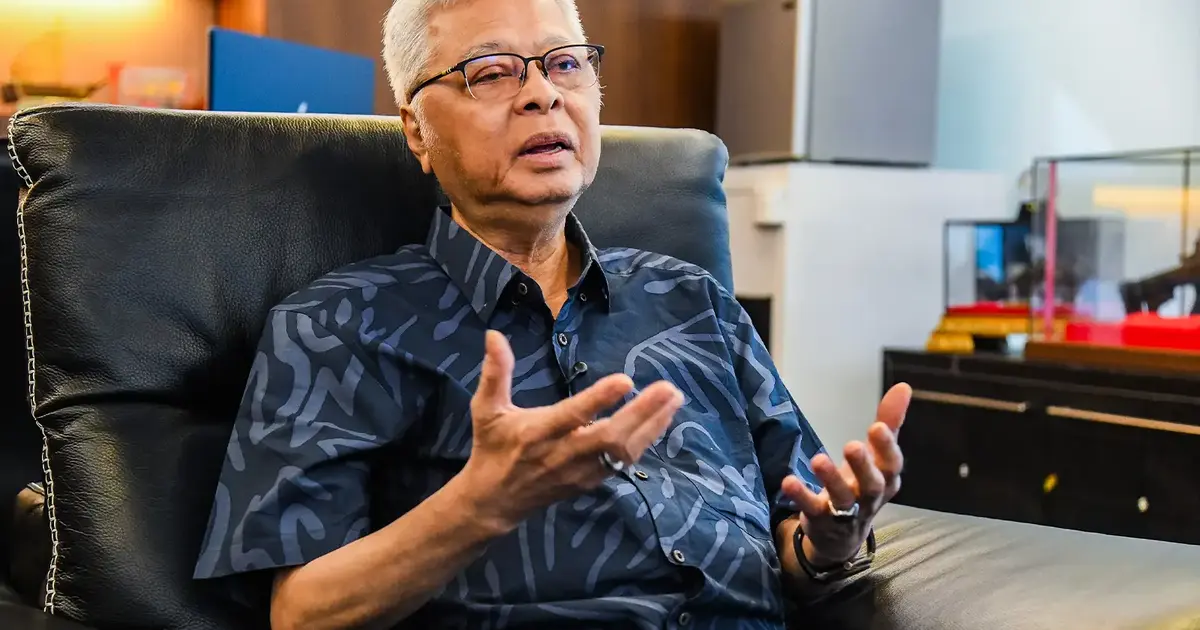
Former Prime Minister Ismail Sabri Yaakob is set to make a court appearance tomorrow to be formally charged with graft offences, a development that represents another chapter in the country's reckoning with high-level corruption allegations involving senior political figures. The 65-year-old ex-Umno vice-president will stand before Sessions Court judge Suzana Hussin at 9am to face the charges, according to court schedules.
The impending legal action reflects Malaysia's ongoing efforts to address corruption through its judicial system, a process that has intensified over recent years as investigators from the Malaysian Anti-Corruption Commission and law enforcement agencies have pursued cases against prominent officials. Ismail Sabri's appearance follows a pattern of accountability measures targeting members of the country's political elite, though the specifics of the allegations against him have not been publicly detailed in advance of the hearing.
Ismail Sabri served as Prime Minister from August 2021 to August 2022, a relatively short tenure that ended following internal political divisions within the ruling coalition. His leadership during that period was marked by navigating economic challenges and managing factional tensions within Umno, Malaysia's largest Malay-Muslim political party. Before ascending to the premiership, he had held various ministerial positions and served in provincial government roles, building a career within Umno's traditional power structures.
His position as Umno vice-president until recently underscored his significance within the party hierarchy, though his influence has diminished following his departure from the office of Prime Minister. The transition back to backbench politics has coincided with intensified scrutiny of his conduct during both his ministerial years and his time in the top office.
The Sessions Court proceeding will be watched closely by political observers and the Malaysian public, as it adds to a growing list of cases involving former senior government officials. The Malaysian judiciary has demonstrated its willingness to process cases against high-ranking figures, though critics have raised concerns about selective prosecution and the pace of legal proceedings in some instances.
For Umno, the development presents a complex situation. The party has been attempting to rehabilitate its image following the historic 2018 electoral defeat that resulted from widespread revulsion over corruption scandals involving its previous leadership. The current leadership has sought to position Umno as reformed, yet cases involving former senior members continue to surface, complicating that narrative.
The charges against Ismail Sabri arrive at a moment when Malaysia's political landscape remains fluid, with coalition alignments constantly shifting and internal party dynamics continuing to evolve. His legal troubles may further weaken Umno's cohesion, particularly if other senior party members face similar scrutiny, potentially destabilising political calculations within the government.
Court appearances of this nature typically involve procedural matters such as formal reading of charges, bail considerations, and scheduling of future hearings. Tomorrow's session is unlikely to involve substantive trial proceedings, but rather the establishment of legal parameters for the case's progression through the system. The judge's decisions regarding bail and trial dates will be significant for determining the trajectory of the legal process.
From a broader Southeast Asian perspective, Malaysia's handling of high-level corruption cases has regional implications. The country seeks to maintain its standing as a functioning democracy with operational institutions, and the prosecution of former prime ministers demonstrates institutional independence, though questions persist about consistency and impartiality in application of the law.
The general public in Malaysia has shown significant interest in accountability for corruption, with polling and sentiment analysis consistently showing strong support for prosecution of officials regardless of political affiliation. However, polarised political views mean that interpretations of these cases often diverge along partisan lines, with supporters of different coalitions viewing the proceedings through different lenses.
For observers tracking Malaysia's anti-corruption efforts, Ismail Sabri's case represents a test of the justice system's capacity to handle cases involving individuals of the highest political rank. The outcome will likely influence public confidence in institutional fairness and effectiveness, particularly given the high profile of the accused and his former position as national leader.

