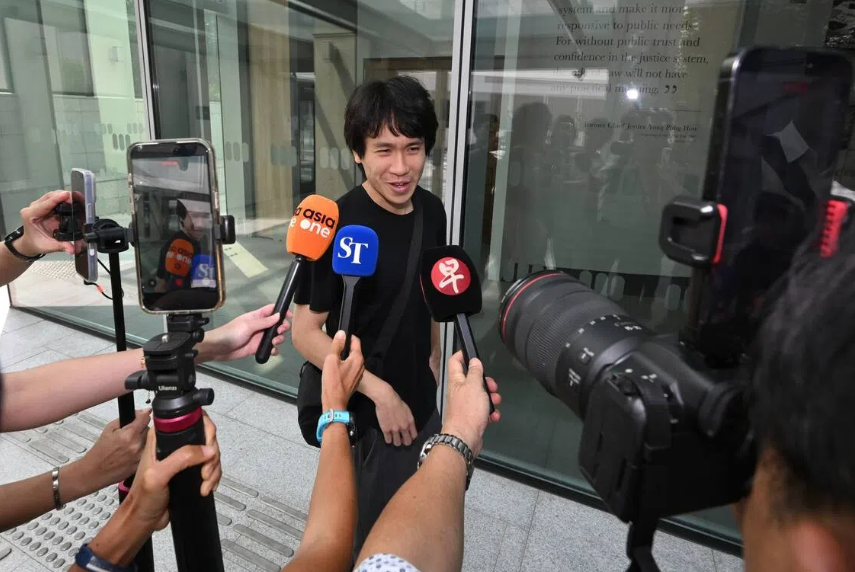
Amos Yee, a 27-year-old former child actor from Singapore, was presented with four additional criminal charges when he appeared before the District Court on August 26, escalating his legal troubles to a total of seven counts across multiple serious offences. The expanding charges encompass allegations ranging from inflammatory posts designed to stoke racial tensions to deeply disturbing content that effectively advocates for child sexual abuse and the abandonment of protections for minors.
The single charge relating to racial harmony stems from blog postings dated April 7 and April 11, in which Yee allegedly sought to deliberately divide Singapore's multiracial society by making false claims that the Malay and Indian communities face systematic discrimination from the Chinese majority population. Beyond merely voicing these inflammatory assertions, the charge alleges that Yee actively encouraged members of these communities to organise protests against the Singapore Government, thereby attempting to weaponise communal grievances for what prosecutors view as divisive purposes. Such conduct strikes at the heart of Singapore's carefully maintained interethnic stability, a cornerstone of the island nation's political architecture since independence.
A second charge relates to video content uploaded on May 27 in which Yee purportedly reiterated allegations that the Malay and Muslim community suffers heavy-handed discrimination perpetrated by the Chinese population in Singapore. The specificity of targeting the Muslim community in these accusations adds another dimension to the allegations, as it potentially inflames religious sensitivities alongside ethnic ones during an era when such content circulates instantaneously across digital platforms and can radiate far beyond the original audience.
The remaining two charges fall under Singapore's Protection from Harassment Act and represent perhaps the most troubling aspect of the case. Yee stands accused of producing three videos in 2021 in which he allegedly advocated for decriminalising sexual content involving children and made deeply disturbing claims that infants and children possess the capacity to consent to sexual intercourse with adults. These charges go beyond passive expression of controversial views into active advocacy for the normalisation of child sexual abuse. The allegations further assert that Yee called for the elimination of criminal statutes prohibiting the creation and distribution of child sexual abuse material.
In June, Yee allegedly published additional online content repeating these pernicious arguments in favour of relaxing child protection laws. For Singaporean readers and those throughout Southeast Asia, such advocacy represents a direct assault on fundamental child protection principles that transcend national borders and reflect basic humanitarian values. The nature of these charges underscores how digital platforms have enabled individuals to broadcast harmful ideologies on a scale previously unimaginable in the pre-internet era.
When Yee appeared in court on August 26, he was granted bail in the amount of S$15,000, but the bail conditions imposed reveal the gravity with which authorities treat his alleged conduct. The court explicitly forbade him from publishing anything online that expresses his views regarding paedophilia, recognising that further such content could facilitate additional harm or encourage others to adopt similar positions. Additionally, bail conditions prohibit him from posting material designed to incite ill-feeling between racial or religious groups, effectively placing significant restrictions on his online presence during the legal proceedings.
The Singapore Police Force documented receiving multiple complaints about Yee's provocative material during the four-month period spanning April through July. The police statement underscores how coordinated reporting from concerned citizens eventually triggered official investigation into content that had circulated widely on social media platforms. The X platform subsequently disabled Yee's video content following police action under Singapore's Online Criminal Harms Act on August 18, demonstrating the readiness of technology companies to comply with Singapore's regulatory framework. Additionally, authorities have directed Yee to remove his blog posts entirely, continuing the enforcement action beyond social media platforms.
Conviction on the single charge of knowingly attempting to promote racial disharmony carries severe penalties, potentially resulting in imprisonment for up to three years, substantial fines, or both. Each charge under the Protection from Harassment Act carries potential fines reaching S$5,000 upon conviction, penalties designed to deter harassment through digital channels. The sentencing exposure reflects Singapore's unambiguous policy stance that racial and religious harmony constitutes a non-negotiable national interest warranting serious criminal penalties.
Beyond these charges, Yee faces an additional three counts under Singapore's Enlistment Act, reflecting a separate set of violations concerning national service obligations that are compulsory for all Singaporean male citizens. These charges allege that Yee failed to attend mandatory pre-enlistment medical screening and departed Singapore multiple times without obtaining the required exit permits. The police record indicates that Yee allegedly remained outside Singapore without authorisation during two separate periods: from December 13, 2015, to April 19, 2016, and from December 15, 2016, through to March 19, 2026. Additionally, authorities contend that Yee failed to report for national service medical screening from April 26, 2016, continuing through March 19, 2026, a multi-year pattern of non-compliance.
For context, mandatory national service represents one of the foundations of Singapore's security architecture, and failure to comply with NS obligations constitutes a serious matter regardless of the political views involved. Violations of enlistment regulations can result in fines of up to S$10,000, imprisonment for up to three years, or combinations thereof. The accumulation of NS charges alongside the content-related charges suggests a broader pattern of non-compliance with legal obligations rather than isolated incidents.
Yee will return to the District Court for a pre-trial conference scheduled for September 18, at which point the case will advance toward trial. For Malaysian observers, the Yee case illustrates the contrasting approaches that neighbouring jurisdictions adopt in regulating online speech and content, particularly speech touching on sensitive matters of race and religion. While Malaysia's own regulatory frameworks address similar concerns through mechanisms such as the Communications and Multimedia Act and provisions within the Penal Code addressing sedition and online harm, the specifics of Singapore's enforcement actions in this case provide insights into how city-states with smaller populations and tightly integrated digital ecosystems respond to provocative online conduct.
The case also highlights the persistent challenge facing Southeast Asian governments in calibrating responses to harmful online speech while navigating legitimate concerns about free expression. Yee's alleged statements regarding child sexual abuse occupy territory distinct from ordinary political or social commentary, representing content that advocates for positions universally condemned across international human rights frameworks. Conversely, his allegations regarding ethnic discrimination, while contentious and disputed, touch upon questions of social equity that generate genuine debate across the region. How courts and societies navigate the legal and moral distinctions between these categories of expression will continue shaping digital rights conversations throughout Southeast Asia for years ahead.

