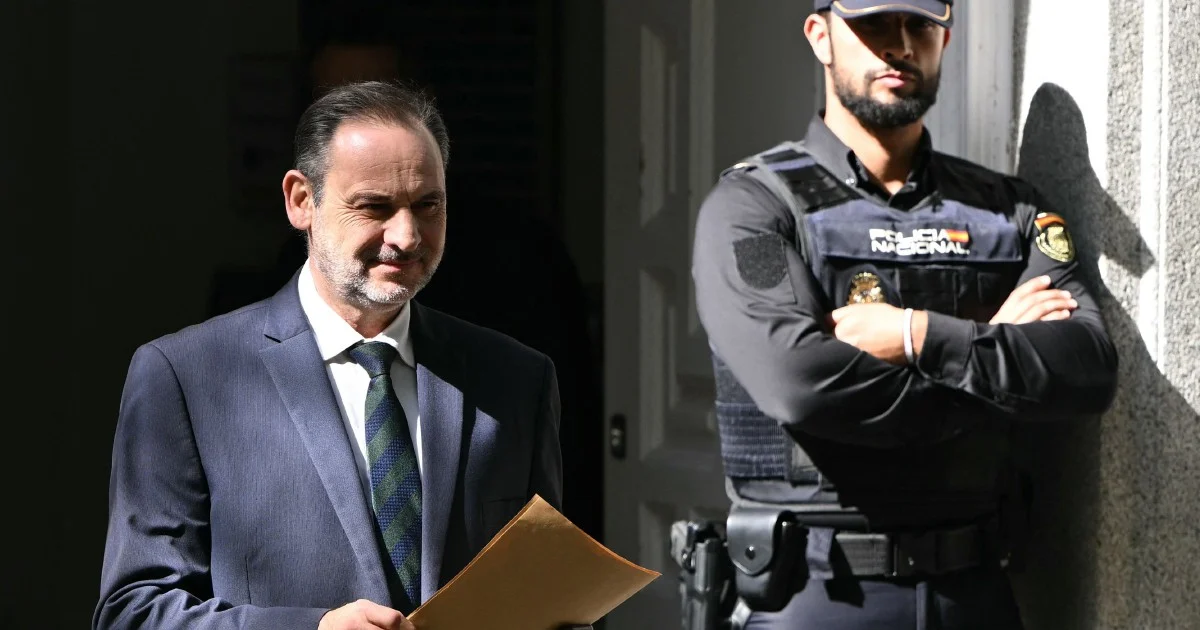
A Spanish court has delivered a substantial prison sentence to José Luis Abalos, who served as transport minister and held significant influence as a key advisor to Prime Minister Pedro Sánchez, finding him guilty of graft-related offences. The 24-year sentence handed down by a Madrid court on Monday represents one of the more serious judicial outcomes faced by a high-ranking official within Sánchez's administration, underscoring the ongoing challenges Spain's Socialist government continues to encounter with corruption allegations affecting its inner circle.
Abalos occupied a particularly prominent position within the Spanish government, wielding considerable power over transport policy and serving as a trusted lieutenant to Sánchez during a critical period in Spanish politics. His influence extended beyond his formal ministerial role, as he was widely regarded as one of the prime minister's closest political allies. The conviction therefore carries significant political implications, as it validates concerns raised by opposition parties regarding governance standards within the administration and raises questions about the vetting processes surrounding appointments to high office.
The corruption charges against Abalos encompass multiple allegations that courts have now determined to be substantive enough to warrant a substantial custodial sentence. While specific details of the charges remain important for understanding the judicial reasoning, the severity of the sentence indicates that the court found evidence of serious wrongdoing rather than minor administrative lapses. The 24-year term reflects the courts' assessment that the offences warranted a significant punishment, suggesting multiple or particularly egregious instances of corrupt conduct.
This development arrives at a sensitive moment for Spain's political landscape. The Socialist Party, which Sánchez leads, has already faced scrutiny over other corruption-related matters affecting government officials and close associates. The conviction of such a prominent figure within the administration provides ammunition for critics who argue that the Sánchez government has not maintained adequate ethical standards or oversight mechanisms within its ranks. Opposition parties have seized upon such cases to challenge the credibility of socialist leadership.
For Malaysian and Southeast Asian observers, the Abalos case illustrates how developed democracies in Europe handle high-level corruption within government structures. Unlike some regional contexts where political connections might shield officials from prosecution, Spain's judicial system has demonstrated willingness to investigate and convict even senior government insiders. This reflects the institutional strength of European legal frameworks and the relative independence of courts from executive pressure, characteristics that remain aspirational in certain parts of the world.
The sentence also raises questions about the extent to which Sánchez was aware of or implicated in any wrongdoing by his close associate. While Spanish law distinguishes between those directly engaged in corrupt acts and those who may benefit from proximity to guilty parties, the conviction of such a trusted aide inevitably damages the prime minister's political capital and raises public doubts about his judgment in selecting senior officials. Whether Sánchez faces any personal consequences or legal exposure depends on investigative findings not yet publicly detailed.
Spain's experience with corruption cases involving government officials parallels challenges faced across Europe, though the country has historically grappled with particularly high-profile scandals. The conviction of Abalos contributes to a troubling pattern that has periodically afflicted Spanish governance, from earlier cases involving regional leaders to various national figures. The consistency of such cases suggests systemic vulnerabilities rather than isolated lapses in judgment by individual officials.
The judicial process itself has likely consumed considerable time and resources, as Spanish courts worked through evidence and legal arguments to reach their verdict. The 24-year sentence must be viewed within Spain's sentencing framework, where such terms, while substantial, do not necessarily equate to serving the entire duration due to various statutory provisions around parole and sentence reduction. Nevertheless, the quantum of the sentence underscores the seriousness with which Spanish courts treat corruption by public officials.
Looking ahead, the conviction of Abalos may trigger broader internal scrutiny within Spain's government regarding ethics protocols and oversight. The Socialist Party will likely face pressure to demonstrate that the Abalos case represents an outlier rather than symptomatic of deeper institutional problems. Whether the administration introduces stronger vetting procedures or ethical guidelines for senior appointments remains to be seen, though such measures would be politically expedient given current public concern.
For the broader European context, Spain's judicial handling of the Abalos case reinforces the rule of law principle that no official, regardless of rank or proximity to power, stands above the justice system. This principle, while imperfectly applied across different jurisdictions, provides reassurance to citizens and international observers that democratic institutions retain capacity to police themselves when corruption occurs. The conviction therefore serves a symbolic function beyond the individual case, reaffirming that European courts take seriously their responsibility to protect public integrity.