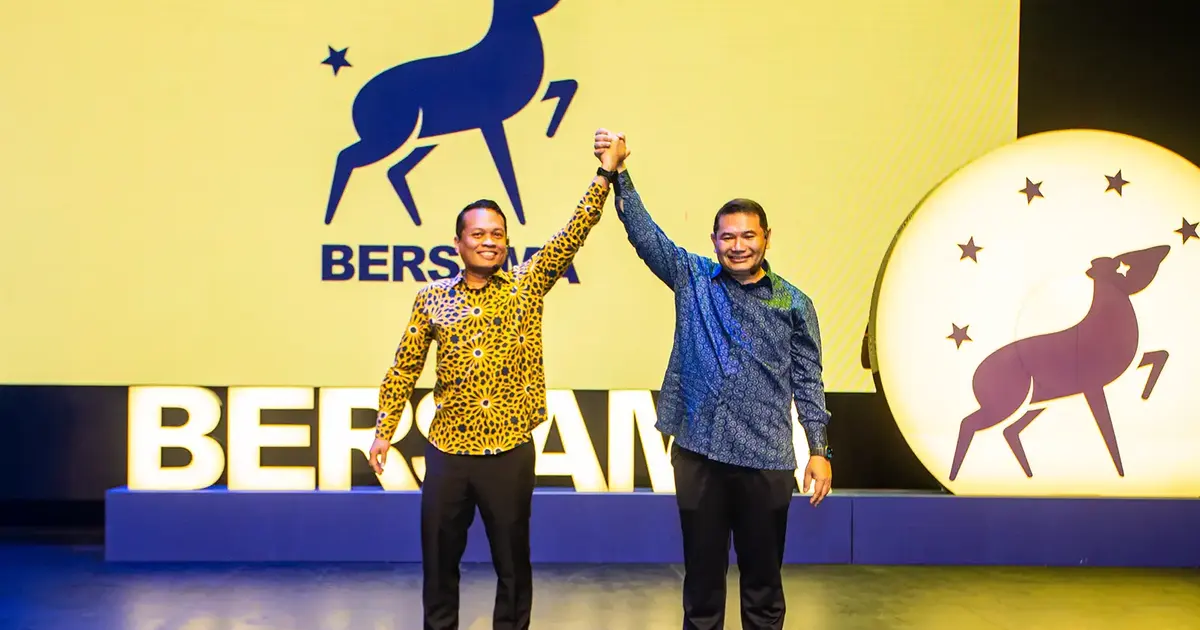
Bersama, the political party established in recent years, is drawing considerable interest from retired and former senior civil servants keen to contest in the forthcoming state elections in Johor and Negeri Sembilan, according to party leadership. This development, announced by a senior party figure, underscores the party's expanding recruitment strategy as it seeks to build political momentum in these two significant states.
The interest from experienced government administrators represents a notable recruitment avenue for Bersama, as the party positions itself as a credible political alternative. These potential candidates bring institutional knowledge of how state governments and federal agencies operate, experience that could prove valuable in legislative roles. The party's ability to attract such candidates suggests growing confidence among established figures in Malaysia's administrative ranks regarding Bersama's political viability and future prospects.
Retired civil servants often possess extensive networks within government structures and community organisations, assets that could strengthen Bersama's electoral machinery during campaigns. Their entry into party politics also signals a changing dynamic in Malaysian electoral politics, where experienced administrators increasingly view party competition as an avenue for continued public service rather than remaining outside the political sphere entirely. This trend has parallels in other Southeast Asian democracies where technocratic or professional backgrounds have become more common among electoral candidates.
Johor, as Malaysia's second most populous state and an economic powerhouse, represents strategically important electoral territory for any rising political party. The state's diverse economic base spanning agriculture, manufacturing, and services creates varied constituent interests that experienced administrators might address effectively. Negeri Sembilan, while smaller, occupies a geographically central position and has historically been politically competitive, making it equally significant for parties seeking to expand their reach.
Bersama's recruitment pitch to these experienced professionals likely emphasises the party's clean governance agenda and commitment to institutional reform—positioning that would resonate with administrators frustrated by current political dynamics. Former civil servants who have witnessed bureaucratic challenges firsthand often bring reform-oriented perspectives to electoral politics, potentially offering voters a different political proposition than established parties.
The timing of this recruitment drive coincides with broader discussions about Malaysia's political realignment. As traditional coalitions face internal pressures and voter sentiment shifts, emerging parties like Bersama are capitalising on opportunities to attract talented individuals previously absent from electoral competition. This expansion of the candidate pool in Malaysian politics reflects voter appetite for fresh political voices and governance approaches.
Successfully fielding experienced candidates in both states would enhance Bersama's credibility substantially. Voters often perceive candidates with administrative backgrounds as having practical competence in governance, even when such perception does not always translate into superior legislative performance. However, the perception itself can be electorally valuable, particularly in states where governance effectiveness and institutional accountability rank high among voter priorities.
The challenge for Bersama will be translating this interest into actual candidacies and then into electoral victories. Converting inquiries into committed candidates requires clear party positioning, campaign support, and internal selection processes that these potential candidates find acceptable. Additionally, former civil servants accustomed to meritocratic advancement within bureaucratic hierarchies may find themselves uncomfortable with the compromises and political negotiations inherent in party politics.
For Johor and Negeri Sembilan specifically, such candidates could address governance gaps that voters perceive in current state administrations. In Johor, with its economic significance and population size, experienced administrators could articulate nuanced positions on development, environment, and infrastructure—issues where technical knowledge matters. Negeri Sembilan voters, similarly, might respond positively to candidates who combine political ambition with demonstrated administrative competence.
This recruitment effort also reflects competition for talent within Malaysia's broader political sphere. Established parties have traditionally attracted experienced professionals seeking political careers, but their internal structures and leadership dynamics sometimes discourage fresh talent. Bersama's explicit outreach to retired civil servants represents an attempt to compete for the political centre and capture voters fatigued by conventional party options.
The success of this strategy depends partly on how effectively Bersama can support these candidates once they are nominated. Electoral campaigns require institutional resources, volunteer networks, and media management capabilities. Former civil servants entering electoral politics for the first time need different support systems than traditional party loyalists, particularly regarding campaign messaging and constituent engagement.
Morebroadly, this development reflects Malaysia's evolving political landscape where party boundaries matter less than they once did, and where candidates' professional backgrounds and perceived competence increasingly influence voter behaviour. As Malaysian democracy matures and voters become more sophisticated in their electoral choices, parties emphasising institutional expertise and reform-oriented governance may find this strategy particularly rewarding in coming election cycles.
%22%2F%3E%3C%2Fpattern%3E%3C%2Fdefs%3E%3Crect%20width%3D%22100%25%22%20height%3D%22100%25%22%20fill%3D%22url(%23ph3ryapg)%22%2F%3E%3Crect%20width%3D%22100%25%22%20height%3D%22100%25%22%20fill%3D%22url(%23ph3ryapp)%22%2F%3E%3Ctext%20x%3D%2250%25%22%20y%3D%2250%25%22%20text-anchor%3D%22middle%22%20dominant-baseline%3D%22central%22%20fill%3D%22rgba(255%2C255%2C255%2C0.95)%22%20font-family%3D%22Georgia%2C%20'Times%20New%20Roman'%2C%20serif%22%20font-weight%3D%22700%22%20font-size%3D%22272%22%20letter-spacing%3D%22-0.02em%22%3EFahmi%3C%2Ftext%3E%3C%2Fsvg%3E)
%22%2F%3E%3C%2Fpattern%3E%3C%2Fdefs%3E%3Crect%20width%3D%22100%25%22%20height%3D%22100%25%22%20fill%3D%22url(%23ph46dodg)%22%2F%3E%3Crect%20width%3D%22100%25%22%20height%3D%22100%25%22%20fill%3D%22url(%23ph46dodp)%22%2F%3E%3Ctext%20x%3D%2250%25%22%20y%3D%2250%25%22%20text-anchor%3D%22middle%22%20dominant-baseline%3D%22central%22%20fill%3D%22rgba(255%2C255%2C255%2C0.95)%22%20font-family%3D%22Georgia%2C%20'Times%20New%20Roman'%2C%20serif%22%20font-weight%3D%22700%22%20font-size%3D%22320%22%20letter-spacing%3D%22-0.02em%22%3E70%3C%2Ftext%3E%3C%2Fsvg%3E)