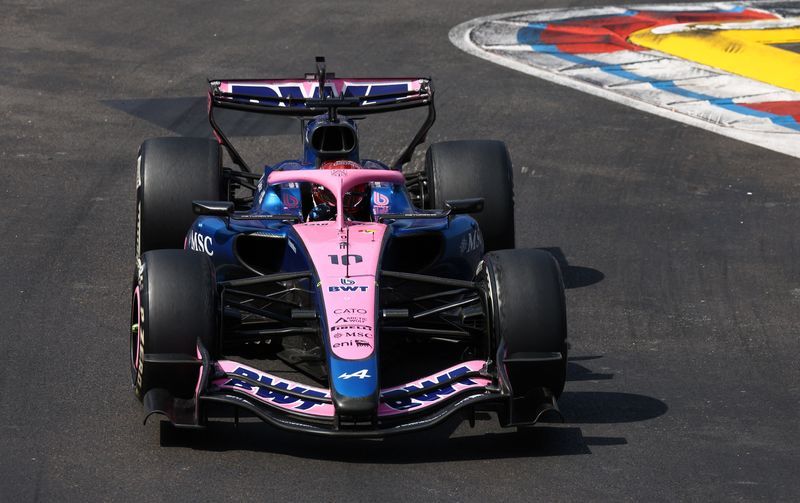
The Formula One world awaits a pivotal judgment that could reshape the sport's championship standings and establish precedent for how stewards handle penalty reversals. The FIA's international court of appeal heard arguments behind closed doors in Paris on Tuesday regarding June's Monaco Grand Prix, with a decision expected within two to three weeks. At stake is third place on the podium—a trophy that has already changed hands twice—along with crucial championship points that ripple through multiple teams' seasons and their title aspirations.
Pierre Gasly crossed the finish line in third place on June 7 for Alpine, but the Alpine driver's podium celebration proved premature. Race stewards subsequently handed him two five-second penalties for pit-lane speeding infractions, demoting him to seventh and promoting Red Bull's Isack Hadjar to the podium position. Hadjar stood on the third-place step, sprayed champagne, and received the plaudits due to a podium finisher. The champagne moment, however, lasted mere days.
On June 12, stewards reconsidered their decision after Alpine presented new evidence demonstrating a timekeeping error had occurred during the race. Accepting that the company's records showed the penalties had been applied in error, stewards reversed the decision entirely, restoring Gasly's third place and demoting Hadjar back down the order. The trophy changed hands once more as Hadjar returned his podium trophy to his Alpine rival. Yet this reversal triggered immediate discontent from other teams who felt the resolution was inequitable given how similar infractions had been handled for other drivers.
McLaren and Red Bull lodged appeals on June 16, objecting to the reversal on grounds that set a troubling precedent for penalty administration. The core complaint centres on inconsistent application of rules across different drivers who committed identical infractions. Oscar Piastri, McLaren's driver, also received pit-lane speeding penalties during the race—the same offence for which Gasly was penalised—but Piastri served his penalties in real time during the competition rather than having them applied post-race. Because Piastri served his penalties during the race itself, those cannot be retroactively overturned, costing the Australian significant positions and championship points.
George Russell of Mercedes, currently a title contender, further highlights the inconsistency. Russell also incurred a pit-lane speeding penalty during the Monaco race and accepted a drive-through penalty served during competition. Russell publicly stated he had requested the stewards apply his penalty post-race instead, hoping for a potential later review, but his request was denied. The disparity in treatment—with Gasly receiving the benefit of a post-race review while Russell's request for the same consideration was rejected—underscores why McLaren and Red Bull believe the situation undermines sporting integrity.
McLaren team principal Andrea Stella articulated the complaint with precision, noting that the reversal of Gasly's penalties raised substantial fairness concerns. Stella emphasised at the Dutch Grand Prix that while McLaren respects Formula One's governance, the situation presented both sporting principles and direct championship implications for his team. The McLaren boss distinguished between legitimate governance questions and his team's material interest in the final points distribution, acknowledging both dimensions of the appeal.
The stewards themselves recognised the fairness issue when they reversed Gasly's penalties, noting that the situation created unfair circumstances for other competitors who faced different outcomes for comparable infractions. In their written reasoning at the time, stewards observed that regulations do not empower them to retrospectively nullify penalties that drivers have already served during competition, and they questioned how such authority could logically function within motorsport's rulebook. This admission underscored the fundamental procedural problem underlying the appeal.
The race that triggered this controversy was won by Mercedes driver Kimi Antonelli, the championship leader, with Ferrari's Lewis Hamilton finishing second. The results cascade—with Hadjar's demotion affecting positions throughout the field—means that finishers across multiple positions had their final classification altered or potentially affected by the stewards' decision and subsequent reversal. The Montreal-based arbitration hearing on Tuesday occurred entirely behind closed doors, with no details emerging regarding arguments presented by either side or the judges' immediate reactions.
McLaren's motivation for pursuing this appeal extends beyond Piastri's individual points tally. The implications for the constructors' championship and the broader principle of consistent stewardship weigh heavily. With Formula One's margin between competitors often measured in single-digit points, the difference between fifth and seventh place—where Piastri now sits following the reversal—can determine playoff positioning in the championship race. McLaren's appeal represents not merely a team protecting its points but a push to clarify the sport's regulatory architecture around penalty administration.
The court's forthcoming decision will establish precedent regarding whether and when stewards may review and reverse served penalties, and under what circumstances procedural errors warrant complete reversal versus partial remedy. Should the appeal succeed, Hadjar would regain third place and associated points, pushing Piastri further down the order. If the court upholds the stewards' decision to reverse the original penalties, Gasly retains his podium finish and the championship points become locked in at current positions.
Formula One's next competitive action begins with the Italian Grand Prix at Monza on September 6, followed by the sport's debut in Madrid on September 13. The wait for resolution—lasting potentially through early September—means that multiple races could conclude before the Monaco standings are finalised, adding unusual complexity to championship calculations. Teams must manage their strategies and resource allocation without definitive clarity on points distributions from June's Monaco race, an unusual situation that adds pressure to both the appellate judges and the sport's administrative machinery to reach timely resolution.
This episode reveals underlying tensions within Formula One's regulatory framework regarding the timing and reversibility of penalties, tensions that will require clear judicial articulation to prevent future disputes. The court's reasoning will likely influence how stewards approach similar circumstances in future races, making the judgment significant well beyond the immediate matter of who receives Monaco's third-place trophy.

