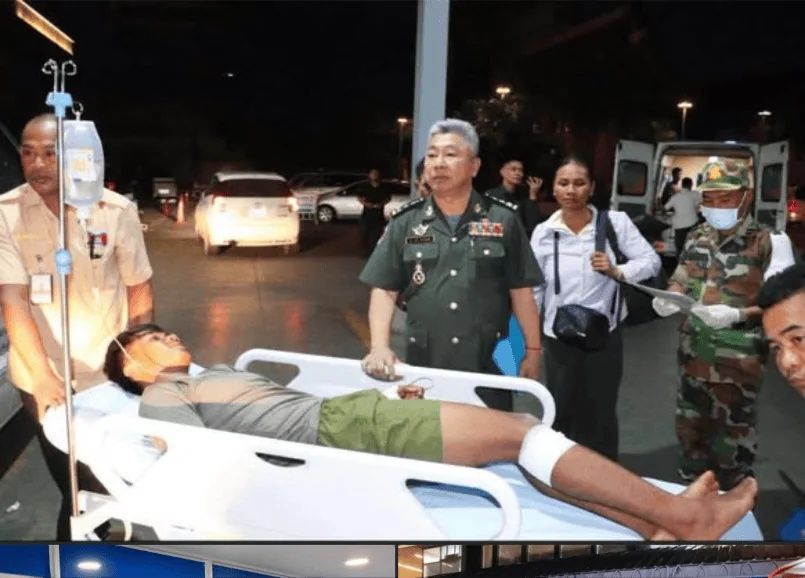
An explosive device detonated along the Cambodia-Thailand frontier on Sunday, leaving four Cambodian military personnel injured during routine patrol duties. The incident, which occurred in the afternoon, has prompted both nations to issue statements clarifying their respective roles, with each side emphasizing that no cross-border aggression took place. The explosion underscores the ongoing security challenges along one of Southeast Asia's most complex and sensitive international boundaries, where demarcation disputes and armed groups have historically created flashpoints.
Lieutenant General Maly Socheata, an undersecretary of state and spokeswoman for Cambodia's Ministry of National Defence, confirmed the incident happened at 12:35 p.m. on Sunday in a cashew plantation area spanning Chouk Kruos and Thma Don villages in Oddar Meanchey province, located in Cambodia's northwestern reaches. The soldiers were conducting a regular patrol operation when the blast occurred, injuring all four members of the unit. According to the Cambodian defence ministry, the wounded personnel have been transferred to appropriate medical facilities where they are receiving treatment from dedicated medical staff and other concerned officials.
The Cambodian-Thai border has long been one of the region's most problematic territorial divides. Disputes over demarcation of the boundary, combined with the presence of illegal armed groups, landmines, and unexploded ordnance dating back to earlier conflicts, have repeatedly created dangerous situations for civilian and military personnel. Oddar Meanchey province, where Sunday's incident occurred, sits in a particularly sensitive zone where border disagreements have occasionally flared into military confrontations. The presence of explosive devices in plantation areas suggests either legacy ordnance from historical conflicts or deliberately placed munitions, either of which poses serious risks to anyone operating in such regions.
Thailand's armed forces swiftly addressed the incident through official channels, with Thai Army spokesperson Winthai Suvaree issuing a statement on Sunday evening. The Thai military acknowledged that at the time of the explosion, Thai troops were conducting their own routine border patrol activities on the Thai side of the boundary. Thai personnel heard the blast emanating from Cambodian territory but did not participate in or contribute to the incident. The Royal Thai Army took particular care to emphasize that its forces deployed no weapons and did not discharge any grenades or other ordnance that could have caused the explosion.
Following standard protocols, Thai military units conducted a rapid investigation to determine the source and cause of the explosion. The investigation concluded that the blast originated entirely within Cambodian territory and resulted from causes unrelated to Thai military activity. This prompt clarification represents an effort to prevent misunderstandings that could potentially escalate tensions between the two neighbouring nations. Thailand's explicit statement denying involvement serves an important diplomatic function in border regions where incidents can quickly become politicized if either nation perceives blame or aggression from the other.
The incident highlights the persistent hazards that soldiers face along the Cambodia-Thailand frontier during routine operations. Oddar Meanchey province contains extensive cashew plantations, and the use of such agricultural areas for military patrols creates situations where personnel must remain vigilant not only for human security threats but also for residual explosive devices. The presence of such ordnance reflects decades of conflict and unrest in the border region, where mines laid during earlier periods continue to pose dangers long after hostilities have ceased.
From a Southeast Asian perspective, the incident demonstrates the importance of clear communication and rapid verification procedures between neighbouring militaries. The swift Thai statement clarifying non-involvement, combined with Cambodia's straightforward reporting of the incident, suggests a level of maturity in bilateral military relations despite historical tensions. Both nations appear to recognize the value of preventing incidents from spiralling into diplomatic crises through transparent information-sharing and coordinated investigation.
The four injured soldiers represent another addition to the ongoing toll that border regions exact on military personnel throughout Southeast Asia. While the circumstances of Sunday's explosion remain under investigation, the incident serves as a reminder of the complex security environment that persists along the Cambodia-Thailand boundary. The mix of demarcation disputes, unexploded ordnance, and irregular armed activity creates an inherently dangerous operational environment for patrol units.
Looking forward, the incident may prompt both nations to review their border patrol procedures and safety protocols. Military operations in plantation areas require particular attention to ground conditions and potential hazards. As ASEAN members, Cambodia and Thailand maintain diplomatic channels through regional mechanisms that allow for discussion of such incidents and efforts to improve border security cooperation. The swift and professional handling of Sunday's incident suggests both nations remain committed to preventing isolated incidents from undermining broader bilateral relations.

