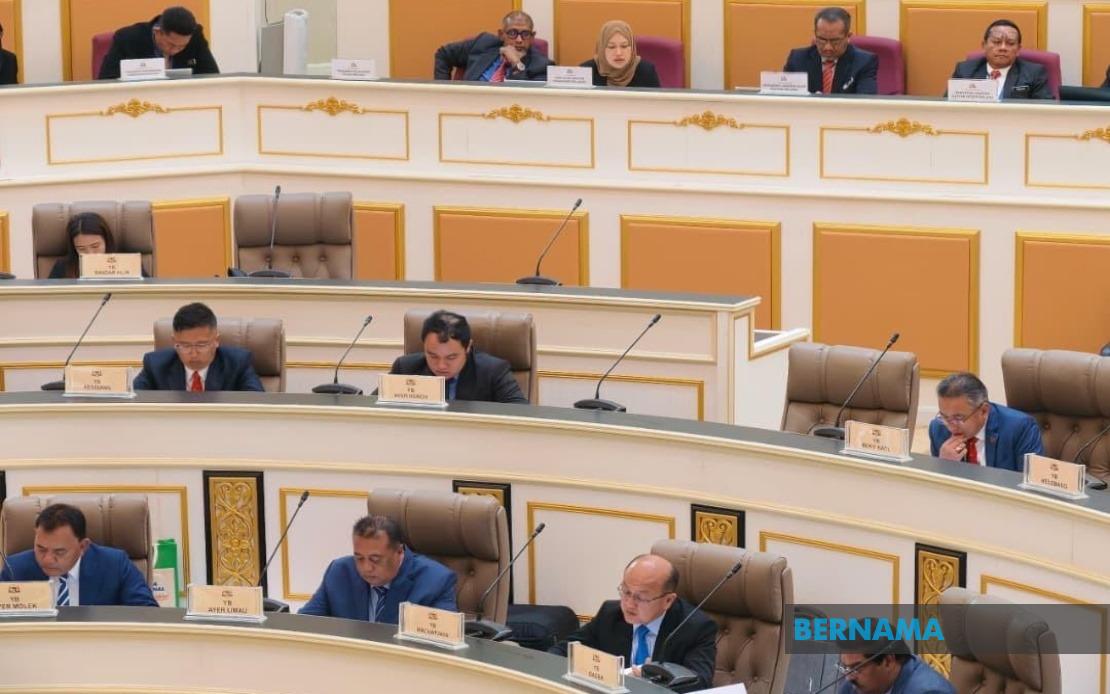
The political landscape of Melaka's State Legislative Assembly underwent a significant realignment when four Democratic Action Party assemblymen relocated to the opposition benches on the closing day of the assembly's sitting, marking a dramatic fracture in the governing coalition that has administered the state for the past several years. The move followed formal announcements made the previous day in which these legislators declared their withdrawal of support for the Barisan Nasional-led administration that had held majority control.
The four assemblymen repositioned across the chamber—Allex Seah Shoo Chin representing Kesidang, Low Chee Leong from Kota Laksamana, Leng Chau Yen from Banda Hilir, and Kerk Chee Yee from Ayer Keroh—now sit alongside members from Perikatan Nasional and Independent candidates who constitute the formal opposition grouping. This repositioning carries more than symbolic weight in parliamentary procedure; it reflects the measured loss of the government's working majority and signals potential complications for implementing state-level legislation and policy initiatives in coming sessions.
Notably, the situation remains fragmented even within the Pakatan Harapan coalition that these assemblymen previously represented. Adly Zahari, the sole assemblyman from Parti Amanah Negara and simultaneously serving as Melaka PH chairman, has retained his position within the government seating bloc rather than joining his four counterparts in the opposition section. This divided response highlights internal tensions within the broader opposition coalition and suggests divergent strategic calculations among component parties regarding their engagement with the state government.
The precipitating factor behind DAP's dramatic withdrawal was the passage of constitutional amendments to the Melaka State Constitution that would facilitate the appointment of nominated assemblymen, rather than requiring electoral competition for all seats. Melaka DAP chairman Khoo Poay Tiong characterised the legislative changes as fundamentally incompatible with democratic principles and electoral integrity, positioning the party's exit as a principled stance rooted in institutional governance concerns. This reasoning reflects broader philosophical disagreements within Malaysian political circles regarding the appropriate balance between appointed and elected representation at state level.
The timing of these developments created additional pressure when Prime Minister Datuk Seri Anwar Ibrahim, addressing DAP's intentions, appealed for the party to reconsider its withdrawal timeline. The Prime Minister's intervention underscored federal-level concern about the destabilisation of a state government and framed the decision as potentially diverting political attention from substantive development initiatives and public welfare considerations. His plea, however, proved unsuccessful in persuading DAP leadership to maintain the coalition arrangement, suggesting the party's determination to register its objection through concrete action rather than mere rhetorical opposition.
Assembly Speaker Datuk Ibrahim Durum sought to establish procedural clarity as the assembly prepared for the physical rearrangement of seating, emphasising expectations for professional conduct, courteous behaviour, and strict adherence to standing orders during the sitting. Such procedural reminders become particularly significant when assembly composition shifts substantially, as they seek to maintain institutional functioning despite underlying political volatility.
For Malaysian observers tracking coalition politics, the Melaka developments illustrate the fluid and contingent nature of state-level governance arrangements, particularly in contexts where government formation depends upon securing majorities among numerous smaller parties and independent candidates. The withdrawal of four assemblymen fundamentally alters the mathematical basis of government support, potentially complicating the passage of future legislation or necessitating strategic negotiations with Perikatan Nasional or independent representatives to maintain functional control. The event also demonstrates that principled stands on governance questions—in this case, the constitutional amendment expanding appointed representation—remain capable of triggering significant political realignments, even when such moves carry immediate costs to coalition stability.
The divergent responses within the broader Pakatan Harapan grouping, with Amanah maintaining its government alignment while DAP departed, suggest that component parties within electoral coalitions maintain independent organisational decision-making capacity despite coordinated opposition campaigns. This autonomy, while reflecting democratic pluralism within multi-party arrangements, also creates uncertainty for governing partners attempting to predict and secure continued legislative support. The Melaka assembly situation thus becomes a case study in the practical challenges of coalition management at the state level, where smaller parties possess disproportionate leverage in determining government viability.
The constitutional amendment that triggered this political crisis represents a broader policy debate occurring across Malaysian states regarding governance structure and representation models. DAP's opposition positions the party as a defender of electoral competition against what it characterises as executive prerogatives to bypass electoral processes. This framing resonates with constituencies concerned about institutional integrity, though observers note that appointed representation systems are not uniquely controversial across Malaysian political geography and reflect varied institutional traditions across different state administrations.
Looking forward, the repositioned DAP assemblymen join opposition forces whose collective strength now exceeds the depleted government bloc, potentially enabling opposition legislative initiatives or, conversely, creating conditions requiring government-opposition negotiations to advance priority measures. The stability of the Melaka administration will depend significantly on the willingness of Perikatan Nasional members or independent assemblymen to support government positions on key votes, fundamentally transforming the political dynamics that have characterised recent state-level governance.

