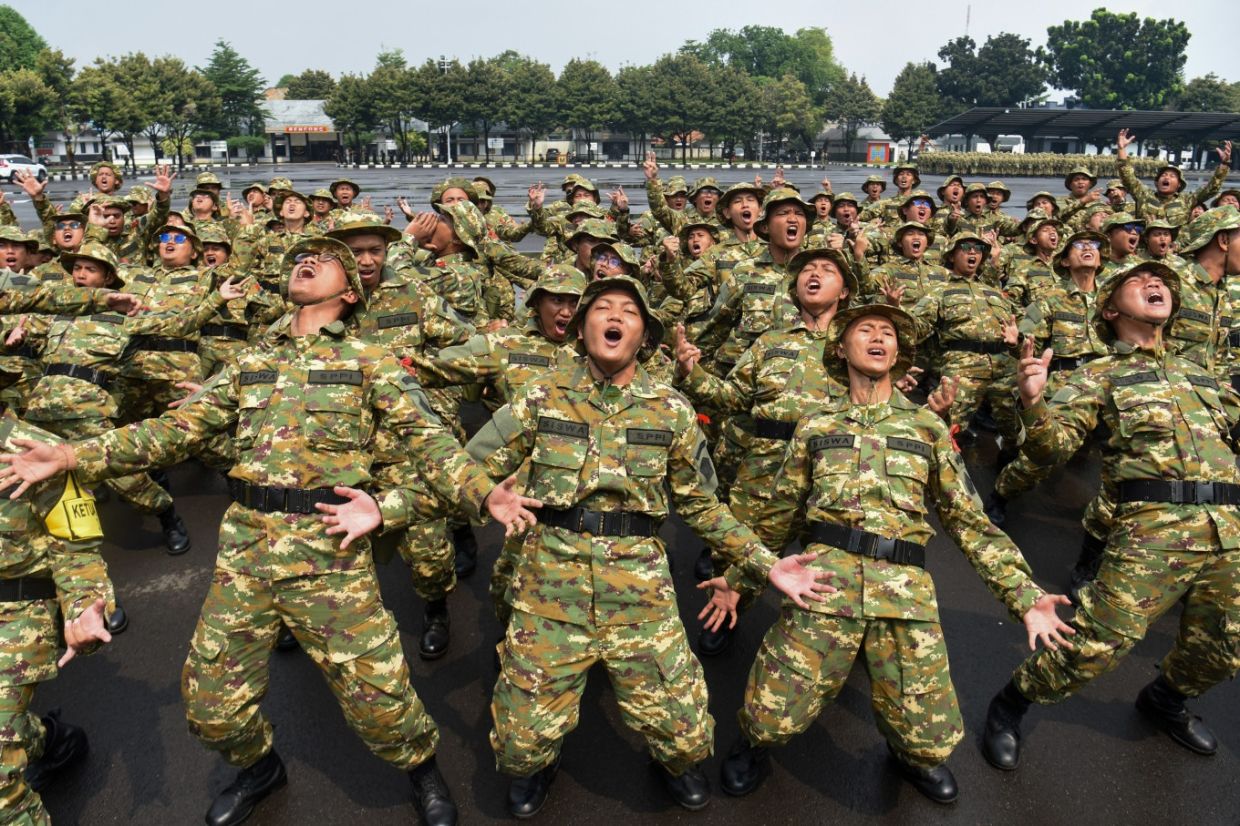
Indonesia's mandatory military-style training programme for managers of President Prabowo Subianto's flagship rural development initiatives has claimed four lives within days, intensifying scrutiny from lawmakers and civil society advocates who question whether the approach is appropriate for civilian cooperative work.
The fatalities occurred during the opening phase of a 30-day basic military training course administered by the Defence Ministry's reserve component, which involves more than 35,000 prospective managers across the country. Two deaths were reported in successive days—Anisa Muyassaroh collapsed from heat stroke during training in Balikpapan, East Kalimantan, while Yonanda Muhammad Taufiq suffered cardiac arrest following introductory activities at a facility in Baturaja, South Sumatra. Earlier incidents included Novia Rahmadhani Sihotang, who died in Jakarta after developing health complications linked to tuberculosis, and Muhammad Rifqi Renaldi Gunawan, who experienced breathing difficulties at an Air Force training centre in Jakarta before dying at hospital on Friday, June 26.
These deaths underscore longstanding tensions in Indonesia between civilian governance and military influence over state institutions. The Defence Ministry indicated it would undertake a comprehensive examination of the training's structure, including enhanced health screening procedures, early detection of pre-existing medical conditions, continuous participant monitoring, and improved emergency response capabilities. However, the reactive nature of these commitments—announced only after multiple deaths—has drawn criticism from human rights advocates and elected officials who argue the risks should have been anticipated and mitigated before training commenced.
Amnesty International Indonesia has characterised the military training requirement as fundamentally misaligned with cooperative principles, calling for immediate suspension of the programme. The rights organisation's executive director Usman Hamid argued that cooperative management should be taught through educational curricula emphasising business skills and financial literacy, not through military discipline and hierarchical command structures. Hamid also positioned the training within a broader pattern of what he described as creeping militarisation of civilian administration under Prabowo's government, drawing parallels to Indonesia's controversial New Order period when the military exercised extensive control over civilian institutions. This framing resonates with longstanding debates in Indonesia about the proper boundary between military and civilian spheres of governance.
Parliamentary oversight bodies have similarly raised concerns, though with somewhat more measured language reflecting their legislative role. Members of the House of Representatives Commission I, which supervises defence matters, have initiated monitoring of the programme's implementation. Dave Laksono, deputy chair of the commission and a member of the Golkar Party, acknowledged the training's stated objectives of fostering discipline, leadership and patriotism while simultaneously arguing that operational methods and medical protocols require substantial refinement. His position suggests lawmakers favour modifications rather than wholesale cancellation, though he emphasised that safety must become the paramount consideration in any revised framework.
Other parliamentarians have focused specifically on deficiencies in health screening procedures. Imas Aan Ubudiyah of the National Awakening Party has advocated for substantially more rigorous medical assessment before participants are enrolled, particularly given the physically demanding nature of military-style conditioning. She has proposed that risk mitigation standards, comprehensive health examinations, continuous medical supervision, and individual physical capability assessments become mandatory components of the training process. Such procedural safeguards would require restructuring the programme's initial phases and adding significant administrative capacity before training commences rather than attempting remedial measures after problems emerge.
The government's response has emphasised procedural rather than substantive concerns. Presidential Chief of Staff Dudung Abdurachman told media on Friday that preliminary evaluations of the four deaths had not identified evidence of negligence in training administration, suggesting instead that participants may have harboured undisclosed pre-existing health conditions or faced other factors beyond the training's direct control. He characterised the training as not particularly strenuous, implying that the deaths reflected individual vulnerabilities rather than systemic design flaws. This stance, while deflecting responsibility from training protocols, simultaneously acknowledges that future sessions must elevate emphasis on participant safety, creating an implicit tension in the government's position.
The training programme forms part of President Prabowo's broader rural development agenda, which aims to establish 80,000 cooperative units and develop 5,000 fishing villages by 2029. After completing their 30-day military training, participants will undergo an additional 15-day course focused on managerial instruction before assuming operational roles. This two-stage approach reflects an attempt to combine military values with civilian management competencies, yet the deaths suggest this combination strategy may be creating rather than resolving tensions. The sheer scale of the initiative—involving more than 35,000 participants and projecting to affect many more through cooperative operations—means that even small percentage mortality rates translate into substantial absolute numbers of deaths, a calculation that has likely influenced calls for programme suspension.
For Malaysian observers, the Indonesian situation offers instructive lessons regarding the risks of imposing military training requirements on civilian programme participants. Malaysia's own experience with civilian-military integration in development programmes, particularly in rural and indigenous communities, provides relevant comparative context. The Indonesian deaths highlight how inadequate pre-screening, insufficient medical oversight during intensive physical activities, and command structures that prioritise completion of training over participant welfare can produce tragic outcomes. Questions about whether hierarchical military discipline genuinely contributes to cooperative management effectiveness—as opposed to alternative pedagogical approaches—remain largely unexamined in both countries despite their salience for programme design.
The broader governance question extends beyond immediate safety protocols to whether military training represents the optimal method for developing cooperative leadership. Democratic cooperative principles traditionally emphasise inclusive decision-making, transparent financial management, and member accountability—values that may be better cultivated through business education and participatory management training than through military-style command hierarchies. Indonesia's experience suggests that simply adding health screening to an inherently problematic training framework addresses symptoms rather than underlying design questions. Whether Indonesian lawmakers and civil society can successfully pressure the government toward more fundamental programme restructuring, rather than incremental safety improvements, will likely determine whether the current initiative continues in its present form or undergoes substantive transformation.

