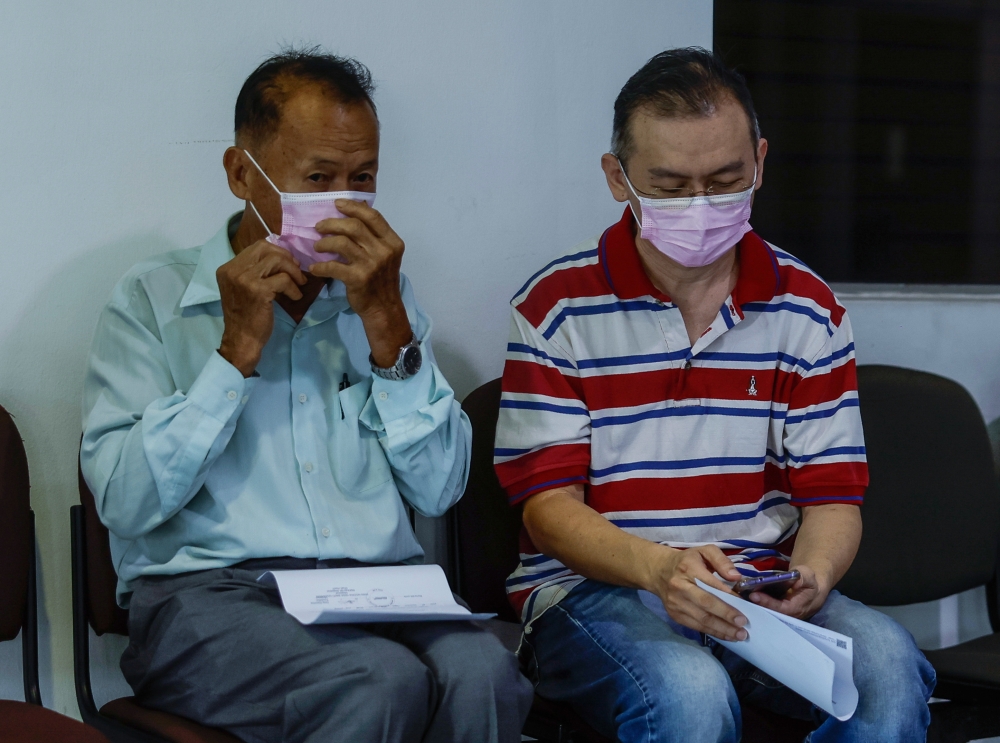
Four defendants were brought before the Sessions Court in Shah Alam on Wednesday to face charges stemming from allegedly false statements made during applications for the Perkeso Daya Kerjaya 2.0 employment assistance programme. The proceedings mark an escalation in authorities' efforts to combat fraud within Malaysia's social assistance schemes, particularly those administered by the Employees Provident Fund's social security arm.
The Perkeso Daya Kerjaya 2.0 initiative represents a significant government intervention designed to support Malaysian workers facing job displacement and economic hardship. Launched as part of broader economic resilience measures, the programme provides financial assistance and employment support to eligible individuals, making it an attractive target for those seeking to circumvent eligibility requirements. The emergence of fraudulent applications underscores the vulnerability of such schemes to exploitation, even as they serve genuine beneficiaries nationwide.
Court proceedings involving welfare programme fraud carry particular weight in Malaysia's judicial landscape, as they directly affect the distribution of limited public resources. When individuals submit false information to secure benefits they do not qualify for, the practical consequence extends beyond individual gain—it diverts funds from legitimately vulnerable Malaysians who depend on these safety nets. Investigators have indicated that the applications in question contained material misrepresentations regarding applicants' employment status and financial circumstances.
The decision to prosecute these cases reflects Perkeso's commitment to programme integrity and the government's zero-tolerance stance toward benefit fraud. Such enforcement actions serve a dual purpose: they deter potential fraudsters while demonstrating to the public that social assistance schemes operate with accountability mechanisms in place. In an era where public trust in institutions faces periodic strain, visible prosecution of wrongdoing helps legitimise government social spending.
Social security fraud investigations typically involve collaborative efforts between Perkeso investigators, the Malaysian police force, and the Attorney General's Chambers. The complexity of tracing false statements across application documents and supporting materials often requires forensic financial analysis and cross-verification with employment records. Authorities must establish not merely that information was incorrect, but that false statements were made knowingly and with intent to defraud—a higher threshold than simple error.
The Daya Kerjaya 2.0 scheme itself has expanded considerably since its inception, reflecting government recognition that unemployment and underemployment present persistent challenges in Malaysia's labour market. The programme's accessibility has grown to accommodate various categories of displaced workers, from those affected by retrenchment to individuals struggling with underemployment in the gig economy. This broadened scope, while beneficial for genuine beneficiaries, simultaneously increases the surface area for potential manipulation.
Forensic examination of fraudulent applications typically reveals common patterns: falsified employer references, fabricated payslips, misrepresented duration of unemployment, and inflated claims of financial hardship. Investigators analyse these documents against employment registry databases and cross-check with financial institutions to identify inconsistencies. The cases proceeding through Shah Alam court likely contain evidence of such documentary manipulation that investigators have compiled into prosecution files.
From a Southeast Asian perspective, Malaysia's approach to prosecuting benefit fraud aligns with regional trends toward strengthening social safety net administration. Countries across the bloc have increasingly invested in digitalisation of welfare systems and fraud detection capabilities, recognising that robust oversight enhances programme sustainability. As ageing populations and economic volatility increase demand for social assistance across ASEAN, protecting scheme integrity becomes strategically important for fiscal stability.
The Shah Alam prosecutions also carry implications for how potential applicants perceive risk-benefit calculations around submitting false information. Publicised court proceedings send a signal that even relatively modest fraud attempts face serious legal consequences, potentially including conviction, fines, and reputational damage. This deterrent effect, though difficult to quantify precisely, represents a valuable outcome of enforcement action beyond the immediate cases themselves.
Experts in social policy note that fraud prevention must balance deterrence with accessibility, ensuring that administrative safeguards do not inadvertently create barriers for genuine applicants. Overly burdensome verification requirements can discourage legitimate beneficiaries from applying, particularly among vulnerable populations with limited digital literacy or documentation capacity. The challenge for Perkeso involves strengthening fraud detection without compromising the programme's core mission of reaching those genuinely in need.
Looking ahead, these prosecutions may prompt policy discussions about enhanced application verification technologies and biometric authentication within social assistance systems. Malaysia has demonstrated technological sophistication in other governance domains, and similar innovations could reduce fraud opportunities while maintaining user experience for legitimate applicants. Such investments typically require capital outlay but yield long-term efficiency gains and fraud reduction benefits.
The cases now proceeding through Shah Alam Sessions Court represent a subset of problematic applications likely identified through systematic auditing processes. Perkeso's continued investigation and prosecution efforts signal that the organisation takes its stewardship responsibilities seriously at a time when public social spending attracts increasing scrutiny. As Malaysia navigates economic uncertainties ahead, maintaining confidence in the integrity of assistance programmes becomes crucial for sustaining public support for the social safety net itself.

