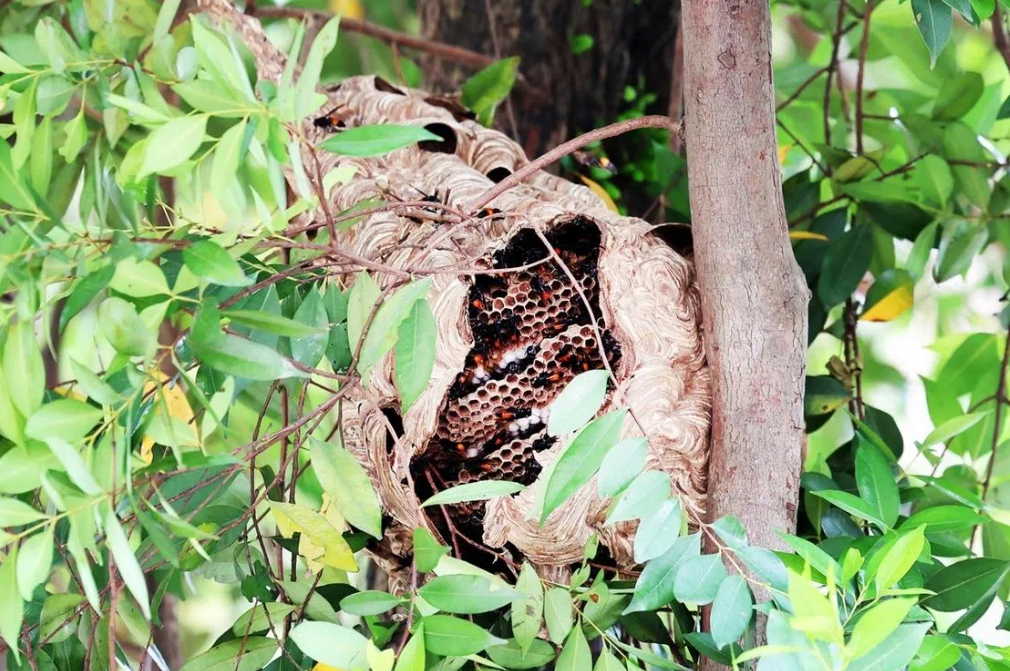
Four residents required hospital treatment at Singapore General Hospital following a hornet attack that unfolded near Redhill Market on the afternoon of July 10. The incident, which saw multiple people struck by an aggressive swarm, has renewed concerns about urban wildlife encounters in Singapore's densely populated residential areas and the risks posed by nesting insects in public spaces.
Authorities responded swiftly to the emergency. The Singapore Civil Defence Force and Tanjong Pagar Town Council received notifications around 1pm that afternoon regarding an incident on Redhill Lane. Upon investigation, officials pinpointed the source: a nest inhabited by hornets had been constructed on a tree along the footpath situated between Block 78 Redhill Lane and a Shell petrol station. The location's proximity to both residential units and a busy market created a heightened risk environment where unsuspecting residents could encounter the aggressive insects.
Accounts from witnesses provide a harrowing picture of the attack's severity. Chen, who was present at the market during the incident, recounted hearing a warning cry alerting people to the presence of hornets in the tree overhead. He observed that an elderly man became the focus of the insects' aggression, being pursued and stung repeatedly. Meanwhile, another witness, Mei Zhen, discovered a woman in her seventies in distress at a nearby toilet facility. The victim's condition was alarming: her ears displayed pronounced redness and swelling with visible bleeding, while she complained of headaches and dizziness—classic symptoms of a significant sting reaction.
Zhen's description of the attack intensity suggested the scale of the insect assault. She reported observing more than ten hornets simultaneously circling the victim's head, with individual insects crawling through her hair while others fell to ground level or struck the toilet door. Such behaviour indicates the swarm had perceived a direct threat and mobilised a coordinated defensive response, a characteristic of certain hornet species when their nest vicinity is approached.
The medical implications of hornet venom deserve careful consideration. According to information from the National University Hospital, hornets inflict substantially more damage than their smaller cousins, bees and wasps, because each sting delivers a considerably larger venom load. The chemical composition of hornet venom is particularly potent. Histamine present in the venom triggers acute allergic responses, while melittin generates intense pain at sting sites. Additional proteins including phospholipase and hyaluronidase introduce toxins capable of damaging human cellular tissue. In worst-case scenarios, victims may experience critical symptoms such as dangerously low blood pressure, reduced blood circulation to essential organs, or throat and airway swelling that restricts breathing.
Tanjong Pagar Town Council's response demonstrated established protocols for such emergencies. Officers immediately established a cordoned perimeter around the affected zone, preventing further public access to the hazard area. The council simultaneously engaged its contracted pest management specialist to undertake nest removal operations. Within the timeframe of the response, the nest was successfully extracted and safely disposed of, allowing the previously dangerous footpath to be reopened for normal public use without residual risk.
The council has issued guidance for residents who may encounter similar situations in future. Residents should prioritise calm conduct and swift relocation away from the immediate vicinity of any identified nest or visibly aggressive hornets. Seeking refuge inside a nearby building provides crucial protection from further stings. Critically, residents are strongly advised against attempting personal removal or disturbance of any nest, as such actions frequently provoke heightened aggression. Those who have already sustained stings must immediately depart the danger zone. Emergency services should be contacted via 995 if symptoms escalate or if medical intervention becomes urgently necessary.
This incident reflects an ongoing pattern of human-wildlife encounters within Singapore's urban ecosystem. The previous year witnessed multiple serious hornet-related emergencies. A separate attack incident at Sungei Buloh resulted in five individuals requiring hospitalisation, while a tragically fatal encounter occurred when a cyclist was attacked by hornets while traversing the Sembawang Park Connector. That fatality underscores the potential severity of hornet attacks when victims cannot escape or receive timely medical support.
For Malaysian readers and Southeast Asian observers, these incidents carry particular resonance given the region's tropical climate and humid conditions that support larger insect populations year-round. Singapore's experience provides valuable lessons about preventive measures, rapid response protocols, and public awareness campaigns regarding dangerous insects. As urbanisation expands across Southeast Asia and green spaces become integrated into residential developments, understanding coexistence strategies with potentially aggressive wildlife becomes increasingly important. The regional context—where similar hornet species inhabit Malaysia, Indonesia, and other neighbouring countries—suggests that developing robust community response frameworks and public education initiatives could prevent comparable incidents elsewhere in the region.
Authorities have sought additional information from the National Parks Board regarding longer-term management strategies and prevention approaches. Such inter-agency coordination reflects recognition that addressing hornet hazards requires sustained effort combining immediate emergency response with environmental management and public education initiatives.

