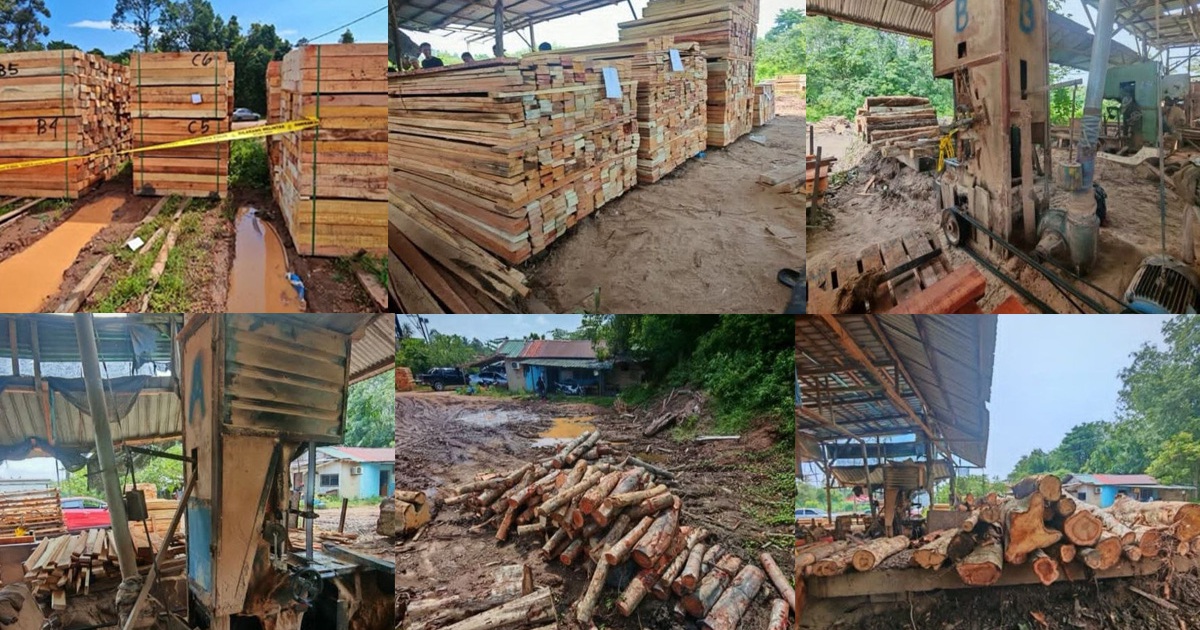
Enforcement authorities in Kelantan have intensified their crackdown on illegal logging operations, culminating in the arrest of four individuals including the operator of an unlicensed sawmill and three workers during a coordinated raid on a timber processing facility in Kampung Bukit Kechik. The operation, conducted in Tanah Merah district, represents part of a broader regional effort to combat unauthorised timber extraction and processing activities that have long plagued Peninsular Malaysia's states.
The apprehension of the sawmill operator alongside his workforce signals authorities' determination to target not just individual workers but the management structures enabling illegal timber trade networks. Over recent years, unlicensed timber operations have proliferated across Malaysia's forestry zones, often operating with minimal regulatory oversight and generating substantial illicit profits. The dismantling of such enterprises requires coordinated enforcement action that extends beyond simple confiscation of equipment to disrupting supply chains that feed illegal timber into domestic and international markets.
The seizure of approximately RM600,000 worth of timber stocks and machinery underscores the significant commercial scale of the illicit operation. This financial dimension reveals how profitable unauthorised timber processing has become, particularly in states where forestry management capacity may be stretched. The volume of confiscated materials suggests the facility had been operating continuously, accumulating substantial inventories of processed and unprocessed logs. Such operations typically rely on sourcing timber through various channels, including potentially illegal felling in state forests or theft of timber allocated for licensed operators.
Kelantan's timber sector has historically been susceptible to illegal activity owing to geographical factors and the density of forest reserves across the state. The Kampung Bukit Kechik area, situated in Tanah Merah district, has previously featured in enforcement reports, indicating it may be part of a known corridor for unlicensed processing activity. Authorities' targeting of this specific location reflects intelligence-gathering efforts aimed at dismantling recurring operations rather than treating timber enforcement as merely reactive.
The involvement of three workers arrested alongside the proprietor raises important questions about labour exploitation within illegal industries. Enforcement agencies often discover that workers in unlicensed sawmills lack proper workplace safety standards, employment contracts, and legal protections. These individuals may have limited knowledge of the operations' illegality or face economic coercion to participate. However, their arrest indicates authorities are pursuing accountability across organisational hierarchies rather than focusing prosecutorial attention solely on employers.
For Malaysia's forestry sector, persistent illegal operations undermine legitimate timber businesses operating under strict licensing requirements and sustainability standards. Licensed operators face competitive pressure from unlicensed rivals unconstrained by compliance costs, environmental assessments, and labour regulations. The seizure and arrest action therefore benefits compliant businesses by reducing unfair market competition. Additionally, illegal processing often involves poor environmental stewardship, including inadequate waste management and uncontrolled log handling that damages surrounding ecosystems.
The RM600,000 asset seizure demonstrates the capacity of confiscation to generate financial deterrence. Beyond criminal penalties imposed on convicted individuals, the loss of substantial equipment and inventory raises the operational costs of resuming illegal activity. Malaysia's forestry enforcement agencies have increasingly emphasised asset recovery as a enforcement tool, recognising that financial consequences may prove more effective than incarceration in deterring repeat offenders and disrupting organised timber trafficking networks that operate on profit-loss calculations.
Regional context matters significantly here. Southeast Asia remains a critical nexus in global illegal timber trafficking, with Malaysia serving as both a source of illicitly harvested logs and a transhipment point for timber originating in neighbouring jurisdictions. Illegal operations within Malaysian states contribute to broader regional sustainability challenges and feed into international smuggling networks. Kelantan's enforcement action, therefore, carries implications extending beyond state boundaries, potentially disrupting supply chains that serve regional demand for cheap, unregulated timber.
The raid's success likely depended on intelligence coordination among multiple agencies responsible for forestry, labour, customs, and law enforcement. Such interagency cooperation remains essential for effective timber enforcement, as single-agency approaches lack the comprehensive oversight needed to disrupt complex supply networks. The operation's timing and execution suggest improved coordination mechanisms, possibly reflecting recent policy initiatives to strengthen timber sector governance across Malaysian states.
Moving forward, the arrested individuals will face prosecution under relevant forestry statutes and potentially labour or environmental legislation depending on circumstances. Conviction outcomes will signal to operators the credibility of enforcement threats. Simultaneously, authorities must address underlying drivers of illegal timber operations, including inadequate pricing of legitimate timber, limited livelihood alternatives in rural areas, and porous forest boundaries. Without addressing these structural factors, enforcement success will remain episodic rather than generating systemic reform.
The sustainability of Malaysia's timber sector depends on consistent enforcement maintaining the integrity of licencing systems and environmental standards. This Kelantan operation exemplifies how targeted action can disrupt individual operations, but larger reforms require sustained investment in field monitoring, community engagement, and cooperative governance frameworks involving state authorities and forest-dependent communities. Long-term progress requires shifting economic incentives away from illegal activity toward legal alternatives.

