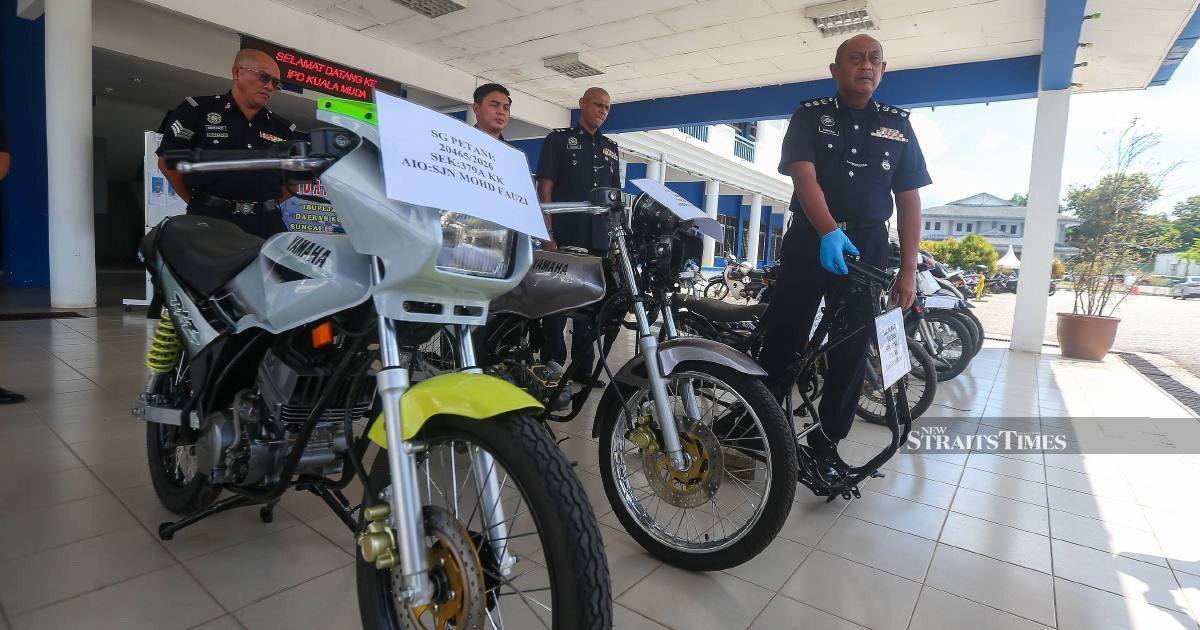
Police in Sungai Petani have arrested four teenage boys in connection with a series of motorcycle thefts that occurred near the Keretapi Tanah Melayu Bhd parking facility in the area. Three of the suspects are brothers, with the fourth teenager apprehended as part of the same operation on July 14. The arrests mark another significant breakthrough in tackling vehicle theft rings that have increasingly targeted public transport hubs across Malaysia.
The case highlights a troubling trend of organised crime involving minors who operate in coordinated groups to target motorcycles at transit-related locations. Sungai Petani, a major transport hub in Kedah, has experienced its share of petty crime centred around public facilities and parking areas. The KTMB parking zone near the town has become a focal point for such incidents, with commuters and vehicle owners expressing growing concerns about security at these transit points. Law enforcement agencies have identified the vulnerability of such locations, where seasonal traffic volume and limited surveillance can create opportunities for opportunistic and organised theft operations.
The involvement of three related teenagers in the same criminal operation suggests familial or household-level coordination rather than purely random individual criminal acts. This pattern has emerged in other motorcycle theft cases across the region, where younger family members facilitate crimes in ways that might evade initial suspicion. The fourth teenager's role in the group remains under investigation, though police have indicated that all four played distinct functions within the suspected theft ring. Such youth-focused criminal networks often operate with specialised roles, with some members acting as spotters, others handling logistics, and further individuals managing the disposition of stolen vehicles or parts.
Motorcycle theft remains a persistent crime category across Malaysia, with thieves typically targeting older models that lack modern anti-theft technology or vehicles left unattended during extended parking periods. Public transport facilities like KTMB stations represent high-risk zones because commuters often leave their motorcycles parked while they travel by rail for extended periods. The Sungai Petani location specifically serves travellers utilising the KTM Komuter network, meaning parked motorcycles might remain unattended for hours or even entire days. This creates a window of opportunity that organised theft groups have learned to exploit systematically.
The rapid arrest of all four suspects within the timeframe suggests coordinated police intelligence and swift operational response. Kedah police likely received tip-offs from the community or identified patterns through surveillance data related to multiple theft reports in the vicinity. The concentration of arrests around a single date indicates either a coordinated crackdown operation or the apprehension of the group at the moment they were engaged in or preparing for criminal activity. Such quick turnarounds are increasingly possible through improved inter-agency cooperation and information-sharing between police districts across Peninsular Malaysia.
Investigations into juvenile delinquency and youth involvement in organised theft rings typically require specialist handling. Malaysian law enforcement distinguishes between juvenile and adult offenders, with different procedural frameworks and sentencing considerations applying to teenagers below the age of eighteen. The arrested boys will likely be referred to the Juvenile Court system unless evidence emerges of particularly serious circumstances. Police are conducting comprehensive interviews to establish each individual's specific role, level of culpability, and whether they had prior involvement in similar offences.
The case also raises important questions about family dynamics and community support systems that may have failed to redirect these teenagers away from criminal pathways. Social workers and youth rehabilitation specialists typically become involved once charges are formalised, seeking to understand root causes and develop intervention programmes. Poverty, lack of educational opportunity, and limited access to recreational facilities have been identified as contributing factors in youth crime across Malaysian towns and rural areas. Sungai Petani, while relatively developed, has pockets of socioeconomic disadvantage that may correlate with youth delinquency.
For motorcycle owners and commuters across Kedah and neighbouring states, the case underscores the importance of heightened vigilance when parking vehicles at public facilities. Installing modern security devices, using visible deterrents, and parking in well-lit areas with surveillance cameras can significantly reduce theft risk. Many transport authorities have responded to persistent theft problems by upgrading parking infrastructure, though widespread implementation remains inconsistent across Malaysia's public transport network. The incident also highlights the continuing need for community awareness campaigns about vehicle security and crime prevention.
Beyond the immediate arrests, this case will likely prompt local police to reassess security protocols at the KTMB facility and intensify patrols in surrounding areas. Sungai Petani, serving as an important commercial and transport junction, requires sustained attention to petty crime that affects public confidence in using public facilities. The broader implications extend to how Malaysian law enforcement addresses youth crime—balancing rehabilitation with public safety, and considering whether punitive or restorative approaches prove more effective in breaking cycles of offending among teenagers. As investigations proceed through the judicial system, the case will contribute to understanding patterns of juvenile delinquency in Kedah's transport sector.

