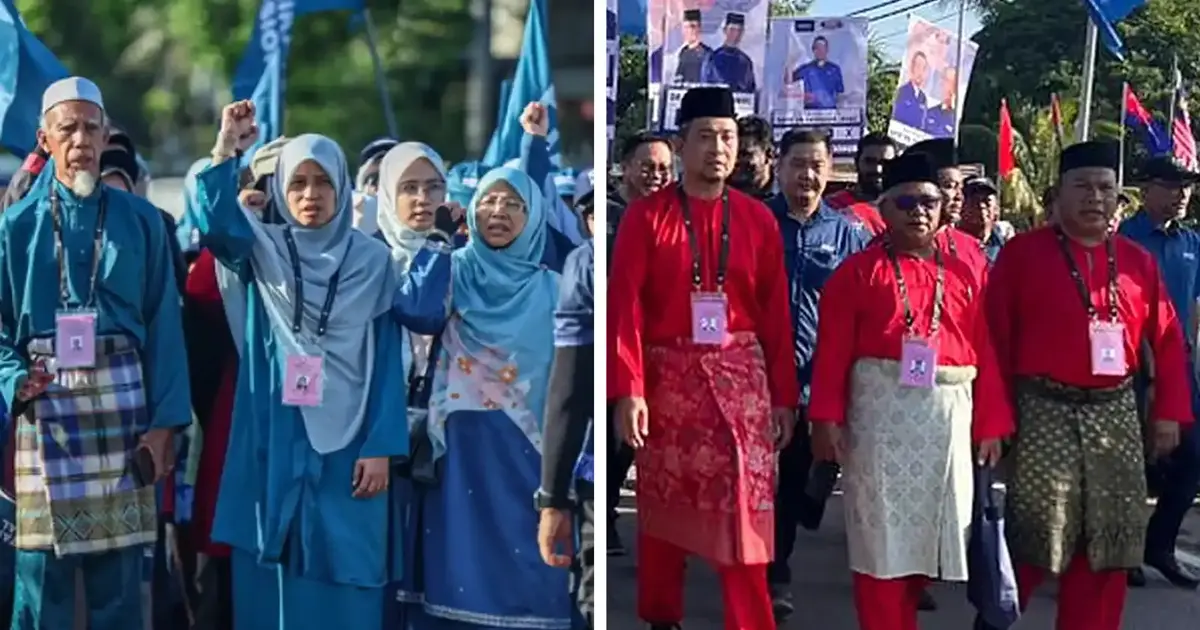
A fragmented Perikatan Nasional coalition faces mounting challenges in persuading Johor voters to back its candidates, with political analysts warning that the visible split between PAS and Bersatu could prove costly at the ballot box. The two parties' separate campaign activities have raised concerns among observers about message confusion and voter scepticism, with the coalition's inability to present a unified front potentially damaging its electoral momentum.
The electoral dynamics in Johor carry particular significance for both parties. Johor remains a strategically important state where PAS and Bersatu have historically competed for influence within the Malay-Muslim voter base. A divided campaign approach threatens to dilute their combined appeal and allow opposing coalitions to exploit the internal discord. Analysts suggest that voters increasingly view coalition fragments with suspicion, interpreting separate campaign trails as evidence of ideological disagreement or personal rivalry rather than practical campaign strategy.
PAS, which has focused on religious and Islamic governance themes, runs the risk of appearing inconsistent when operating alongside Bersatu without a clear demarcation of policy positions. The party's messaging on Islamic issues and moral governance could be muddied if Bersatu simultaneously emphasises different priorities such as economic reform or anti-corruption. This messaging disconnect becomes particularly acute in Johor, where religious conservatism and economic pragmatism both hold significant sway among voters.
Bersatu's challenge mirrors PAS's dilemma from a different angle. The party struggled to establish clear organisational identity following its departure from Barisan Nasional and entry into Perikatan Nasional. A fractured campaign allows the party even less opportunity to crystallise a distinct brand that differentiates it from PAS while maintaining coalition coherence. Without effective coordination, Bersatu risks appearing subordinate to PAS or confused about its own strategic direction.
Voter behaviour research indicates that Malaysian electorates become increasingly cynical when major political coalitions appear divided during active campaigns. The public visibility of separate campaign events, competing rally schedules, and divergent messaging gradually erodes what political scientists term "coalition legitimacy"—the sense that parties function as a coherent unit rather than as competing organisations sharing the same electoral banner. In Johor's diverse demographic landscape, this erosion of confidence particularly harms efforts to consolidate support among swing voters and first-time voters who rely heavily on coalition coherence as a voting heuristic.
Previous state elections across Malaysia have demonstrated that coalition fragmentation consistently produces lower-than-expected results for the splintered camps. When voters perceive internal disagreement, they often choose either to abstain or to switch allegiance to opposition coalitions that project greater unity. Johor's electoral history shows that turnout fluctuations frequently correlate with voter perceptions of ruling coalition stability. A fragmented PN campaign could therefore dampen grassroots mobilisation efforts and reduce effective voter turnout among sympathetic demographics.
The timing of the campaign fragmentation compounds these concerns. Early campaign periods establish narrative frames that prove difficult to alter subsequently. If voters form initial impressions of PN disarray through exposure to separate PAS and Bersatu events, later attempts to project unity struggle against entrenched perceptions. Campaign strategists familiar with Malaysian electoral dynamics note that the first two weeks of intensive campaigning disproportionately shape voter attitudes, meaning the current fractured approach may have outsized negative consequences.
Regional implications extend beyond Johor's state-level contests. Perikatan Nasional's performance in Johor could influence coalition dynamics heading toward future federal-level negotiations and coalition-building exercises. Should PN perform disappointingly due to internal divisions, both component parties would face pressure to reassess their coalition commitment, potentially triggering further fragmentation. Conversely, a strong unified result would strengthen PN's negotiating position within Malaysia's broader political architecture.
The absence of a coordinated campaign strategy also complicates resource allocation and volunteer mobilisation. Party workers receive mixed signals about priorities and campaign focus, reducing organisational efficiency. Voters encountering multiple campaign messages simultaneously often experience confusion rather than reinforcement of key policy points. This inefficiency extends campaign costs while reducing campaign effectiveness—a particularly pressing concern for both PAS and Bersatu, which lack the financial resources commanded by larger established parties.
Analysts emphasise that reversing voter confidence erosion requires immediate demonstration of genuine coalition unity rather than purely tactical coordination. Symbolic gestures such as joint rallies or coordinated policy announcements, while helpful, carry limited persuasive power if voters perceive them as damage control rather than authentic strategic alignment. The coalition would need to articulate a compelling shared vision that explains why separate campaigns actually serve voter interests—a difficult narrative to establish credibly.
The Johor election thus functions as a critical test of whether Perikatan Nasional can operate effectively as a coalition despite internal strains. The outcome may determine whether the coalition framework proves sustainable for future electoral cycles or whether the fragmentation visible during this campaign portends deeper structural problems within the political alignment.

